

Understanding the Modern Process for Call Center Operations
The process for call center management has evolved dramatically over the past decade. What once relied entirely on human agents handling every inbound and outbound interaction has transformed into a sophisticated ecosystem where artificial intelligence, automation, and human expertise work in harmony. For tech-savvy business leaders, understanding this evolution is critical to scaling operations, reducing costs, and enhancing customer responsiveness.
Traditional call center processes often struggled with inefficiencies: missed calls during off-hours, inconsistent service quality, high operational costs, and limited scalability. According to research from Forrester State of Customer Service Operations Report, modern contact centers implementing AI-driven automation are seeing significant improvements in Average Handle Time (AHT), First Call Resolution (FCR), and Customer Satisfaction (CSAT) scores. These benchmarks demonstrate that the process for call center operations must now incorporate intelligent automation to remain competitive.
Today's call center process integrates multiple touchpoints: intelligent routing systems, AI voice agents, CRM synchronization, real-time analytics, and seamless escalation protocols. Whether you're a founder of an SME or a customer support manager at an enterprise, understanding how to architect this process can directly impact your bottom line and customer retention rates.
Core Components of an Effective Call Center Process
Building a robust process for call center operations requires understanding its fundamental building blocks. These components work together to create a seamless customer experience while optimizing operational efficiency.
Intelligent Call Routing and Distribution
The first step in any call center process is determining how incoming calls are routed. Modern systems use AI-powered algorithms to analyze caller intent, historical data, and agent availability to direct calls to the most appropriate resource. This eliminates the frustrations of traditional IVR systems that force customers through endless menu options.
Smart routing considers factors like caller ID, previous interaction history, time of day, and even sentiment analysis from initial voice inputs. For businesses looking to implement lead qualification processes, intelligent routing ensures high-value prospects reach skilled agents immediately while routine inquiries are handled by AI agents.
AI Voice Agent Integration
The integration of AI voice agents represents a paradigm shift in the process for call center operations. These agents handle routine inquiries, appointment scheduling, FAQ responses, and even complex transactions without human intervention. OpenMic.ai offers API-first solutions that enable businesses to deploy intelligent voice AI agents capable of managing both inbound and outbound calls with natural language understanding.
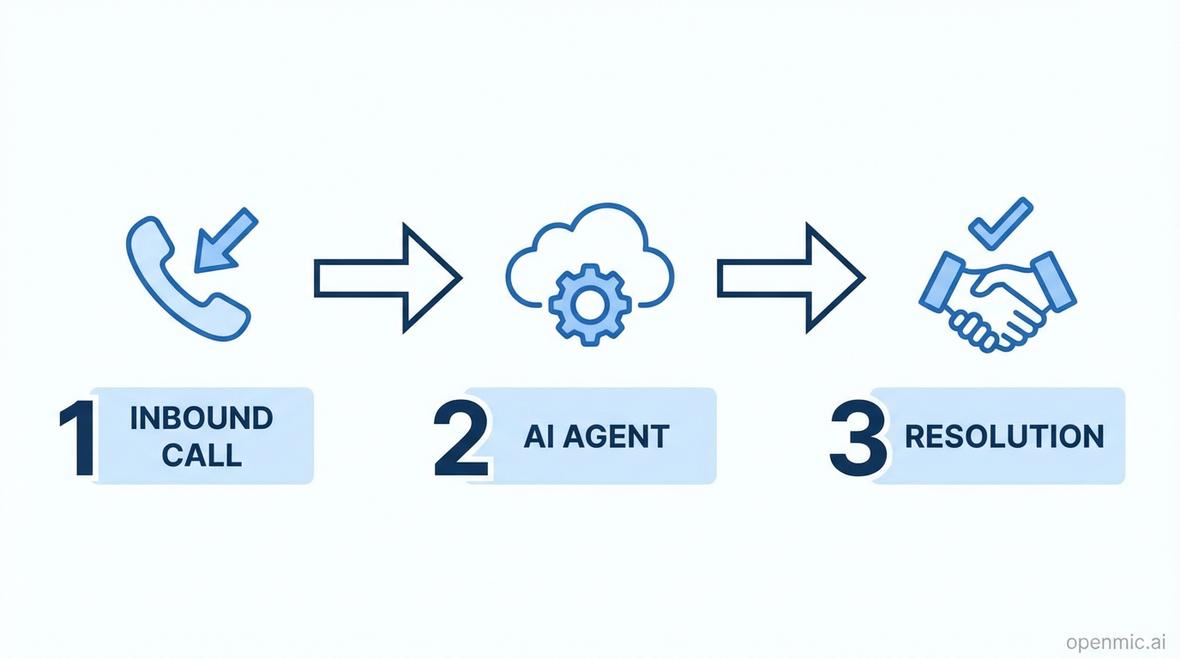
AI agents excel at handling high-volume, repetitive tasks that would otherwise consume significant human resources. They operate 24/7 without fatigue, maintain consistent service quality, and can scale instantly during demand spikes. For industries like healthcare, real estate, and car dealerships, this capability transforms customer accessibility and responsiveness.
CRM Integration and Data Synchronization
An effective call center process requires seamless integration with Customer Relationship Management (CRM) systems. Every interaction whether handled by AI or human agents must be logged, categorized, and made accessible for future reference. This creates a unified customer profile that informs every subsequent interaction.
Modern platforms support integration with popular CRMs like HubSpot, Salesforce, Pipedrive, and Zoho. For example, voice AI agents for HubSpot automatically update contact records, log call details, and trigger follow-up workflows based on conversation outcomes. This level of automation eliminates manual data entry and ensures no customer information falls through the cracks.
Quality Monitoring and Analytics
Continuous improvement requires robust monitoring and analytics capabilities. The process for call center management must include real-time dashboards that track key performance indicators: call volume, resolution rates, average handle time, customer satisfaction scores, and agent performance metrics.
Advanced analytics leverage machine learning to identify patterns, predict call volumes, and surface opportunities for process optimization. Sentiment analysis tools evaluate customer emotions during interactions, flagging at-risk accounts or particularly positive experiences that warrant follow-up.
Implementing an AI-Powered Call Center Process
Transitioning from traditional call center operations to an AI-enhanced process requires strategic planning and phased implementation. Here's a comprehensive roadmap for business leaders and developers.
Assessment and Planning Phase
Begin by auditing your current call center operations. Identify pain points: Are you experiencing high call abandonment rates? Is after-hours support a challenge? Are human agents overwhelmed with repetitive inquiries? Document call volume patterns, common inquiry types, and customer satisfaction metrics to establish baseline performance.
Next, define clear objectives. Are you aiming to reduce operational costs by a specific percentage? Improve first-call resolution rates? Extend service hours without proportional staff increases? These goals will guide technology selection and implementation priorities.
Technology Selection and Integration
Choosing the right AI voice platform is crucial. Evaluate providers based on several criteria: natural language processing capabilities, integration ecosystem, customization options, security compliance, and pricing structure. For businesses seeking API-first platforms with extensive integration capabilities, exploring OpenMic.ai integrations provides insight into what modern solutions can offer.
Consider industry-specific requirements. Healthcare organizations need HIPAA-compliant solutions, financial services require robust security protocols, and retail businesses benefit from multilingual support. The top conversational voice AI platforms in 2025 offer varying strengths across these dimensions.
Pilot Testing and Iteration
Rather than attempting a full-scale rollout immediately, implement a pilot program focusing on specific use cases. Common starting points include appointment booking, FAQ handling, or voice surveys. These scenarios offer clear success metrics and limited risk if adjustments are needed.
During the pilot phase, gather feedback from both customers and agents. Monitor AI performance metrics closely: accuracy rates, escalation frequency, customer satisfaction scores, and resolution times. Use this data to refine conversation flows, update knowledge bases, and optimize routing logic.
Full Deployment and Continuous Optimization
Once pilot results validate your approach, proceed with broader deployment. Establish clear escalation protocols so AI agents know when to transfer calls to human specialists. Create comprehensive training programs to help your team work alongside AI tools effectively.
The process for call center optimization never truly ends. Continuously analyze performance data, gather customer feedback, and stay informed about emerging AI capabilities. Regular reviews ensure your system evolves with changing customer expectations and business needs.
Industry-Specific Call Center Processes
Different industries have unique requirements that shape their call center processes. Understanding these nuances helps tailor implementations for maximum effectiveness.
Healthcare Call Centers
Healthcare call centers handle sensitive patient information and must comply with strict regulatory requirements. The process for call center operations in healthcare includes appointment scheduling, prescription refills, insurance verification, and symptom triage. AI voice agents in this space must demonstrate exceptional accuracy and empathy while maintaining HIPAA compliance.
Solutions like AI in healthcare transformation showcase how intelligent automation reduces administrative burden on medical staff while improving patient access to care. AI receptionist solutions can handle routine inquiries 24/7, ensuring patients receive timely responses even outside business hours.
Real Estate Call Centers
Real estate professionals face the challenge of capturing leads immediately potential buyers and sellers often contact multiple agents simultaneously, and response time directly impacts conversion rates. The call center process for real estate must prioritize rapid lead capture, qualification, and routing to available agents.
AI voice agents excel at initial lead screening, gathering property preferences, budget information, and timeline details before connecting prospects with human agents. This approach, detailed in guides about AI voice agents for real estate lead screening, ensures agents spend time with qualified prospects while AI handles initial filtering.
Automotive Dealership Call Centers
Car dealerships juggle sales inquiries, service appointments, parts orders, and financing questions. The process for call center operations in automotive retail must accommodate diverse inquiry types while maintaining personalized service that reflects the high-value nature of vehicle purchases.
AI solutions transform how dealerships handle after-hours calls, service scheduling, and follow-up communications. Exploring how voice AI compares to traditional BDC operations reveals significant efficiency gains and cost savings while maintaining or improving customer satisfaction.
Overcoming Common Challenges in Call Center Processes
Implementing and managing an effective call center process presents several challenges. Anticipating these obstacles and preparing solutions ensures smoother operations.
Handling Complex Inquiries
While AI voice agents handle routine tasks exceptionally well, complex inquiries requiring nuanced judgment still benefit from human expertise. The key is designing seamless escalation protocols that transition conversations smoothly when AI reaches its limitations. Clear triggers for escalation specific keywords, customer frustration indicators, or inquiry complexity thresholds ensure customers receive appropriate support without unnecessary transfers.
Maintaining Personalization at Scale
Customers expect personalized service regardless of whether they're speaking with AI or human agents. The process for call center operations must leverage CRM data to provide context-aware interactions. AI agents should greet returning customers by name, reference previous interactions, and tailor recommendations based on purchase history or stated preferences.
Managing Change Resistance
Introducing AI into call center operations sometimes triggers concerns among existing staff about job security or changing responsibilities. Address this proactively through transparent communication about how AI augments rather than replaces human agents. Position AI as handling repetitive tasks so agents can focus on complex problem-solving and relationship building work that's more engaging and valuable.
Ensuring Data Security and Compliance
Call centers handle sensitive customer information, making security and compliance non-negotiable. The process for call center operations must include robust encryption, access controls, audit logging, and compliance with industry-specific regulations like GDPR, HIPAA, or PCI-DSS. When evaluating AI platforms, verify their security certifications and data handling practices thoroughly.
Measuring Call Center Process Success
Effective measurement is essential for continuous improvement. Establish key performance indicators that align with your business objectives and track them consistently.
Operational Efficiency Metrics
Track metrics like Average Handle Time (AHT), First Call Resolution (FCR), call abandonment rates, and agent utilization rates. These indicators reveal operational efficiency and highlight areas needing process refinement. Comparing pre- and post-AI implementation metrics quantifies the impact of automation investments.
Customer Experience Metrics
Customer Satisfaction (CSAT) scores, Net Promoter Score (NPS), and Customer Effort Score (CES) measure how well your call center process serves customers. Supplement quantitative metrics with qualitative feedback through post-call surveys and periodic customer interviews to understand satisfaction drivers and pain points.
Financial Performance Metrics
Calculate cost per contact, revenue per call, and return on investment for technology implementations. These financial metrics justify continued investment in process improvements and demonstrate value to stakeholders. For businesses evaluating different solutions, comparing options like exploring OpenMic.ai pricing against operational savings helps inform purchasing decisions.
Future Trends in Call Center Processes
The process for call center operations continues evolving rapidly. Staying informed about emerging trends positions your organization for sustained competitive advantage.
Advanced Natural Language Understanding
Next-generation AI voice agents will demonstrate even more sophisticated natural language understanding, handling increasingly complex conversations with minimal human intervention. Contextual awareness will improve, enabling AI to navigate multi-turn dialogues, understand implicit needs, and proactively offer relevant solutions.
Predictive Analytics and Proactive Outreach
Rather than purely reactive service models, future call center processes will leverage predictive analytics to identify customer needs before they prompt contact. AI systems will initiate proactive outreach for appointment reminders, renewal notifications, or personalized product recommendations, creating more value while reducing inbound call volume.
Omnichannel Integration
Customers interact with businesses across multiple channels phone, email, chat, social media, and in-person. The future process for call center operations will seamlessly integrate all these touchpoints, maintaining conversation continuity regardless of channel. Customers will start interactions via chat, continue by phone, and complete via email without repeating information.
Emotional Intelligence in AI
Emerging AI capabilities include sophisticated emotion detection and appropriate response modulation. Future AI agents will recognize customer frustration, anxiety, or satisfaction and adjust their communication style accordingly. This emotional intelligence narrows the gap between AI and human interactions, enhancing customer comfort with automated service.
Frequently Asked Questions About Call Center Processes
What is the typical process for call center operations?
The typical process for call center operations includes call reception and routing, initial customer interaction (via AI or human agent), inquiry resolution or escalation, data logging in CRM systems, quality monitoring, and follow-up actions. Modern processes incorporate AI voice agents for routine tasks while human agents handle complex inquiries requiring judgment or emotional intelligence.
How does AI improve the call center process?
AI improves call center processes by handling high-volume routine inquiries, providing 24/7 availability, reducing average handle time, improving first-call resolution rates, and eliminating human error in data entry. AI agents scale instantly during demand spikes without proportional cost increases, making operations more efficient and cost-effective.
What industries benefit most from AI-powered call center processes?
Industries with high call volumes and routine inquiry patterns benefit most, including healthcare (appointment scheduling), real estate (lead qualification), automotive (service appointments), financial services (account inquiries), and e-commerce (order tracking). Any industry facing challenges with after-hours coverage or scaling support during peak periods gains significant value from AI integration.
How do you measure call center process effectiveness?
Measure effectiveness using operational metrics (Average Handle Time, First Call Resolution, abandonment rates), customer experience metrics (CSAT, NPS, Customer Effort Score), and financial metrics (cost per contact, ROI on technology investments). Regular monitoring and benchmarking against industry standards reveal process strengths and improvement opportunities.
What are the security considerations for AI in call center processes?
Security considerations include data encryption (in transit and at rest), access controls, compliance with regulations like GDPR or HIPAA, secure API integrations, regular security audits, and transparent data handling practices. Choose AI platforms with established security certifications and proven track records in handling sensitive customer information.
Conclusion
The process for call center operations has fundamentally transformed through AI integration, offering unprecedented opportunities for efficiency, scalability, and customer satisfaction. By understanding core components intelligent routing, AI voice agents, CRM integration, and analytics business leaders can architect processes that balance automation with human expertise. Industry-specific customization, rigorous measurement, and continuous optimization ensure implementations deliver sustained value. As AI capabilities advance, the gap between automated and human service continues narrowing, making now the ideal time to modernize your call center operations. Whether you're addressing missed calls, reducing operational costs, or enhancing customer responsiveness, embracing AI-powered processes positions your organization for competitive advantage in 2025 and beyond.