

Introduction
In today's fast-paced digital economy, businesses face mounting pressure to deliver exceptional customer experiences while controlling operational costs. Customer service automation has emerged as the definitive solution, transforming how organizations interact with their customers across every touchpoint. From AI-powered voice agents to intelligent chatbots, automation is no longer a luxury it's a competitive necessity.
The shift toward automated customer support is driven by evolving consumer expectations and technological advancements. Modern customers demand instant responses, 24/7 availability, and personalized interactions. Traditional support models simply cannot scale to meet these demands without astronomical cost increases. According to research, the customer service automation market is projected to reach $12.33 billion by 2030 at a 16.6% CAGR, reflecting the massive adoption across industries.
This comprehensive guide explores the landscape of customer service automation in 2026, examining the technologies, benefits, implementation strategies, and emerging trends that are reshaping customer support operations worldwide.
What Is Customer Service Automation?
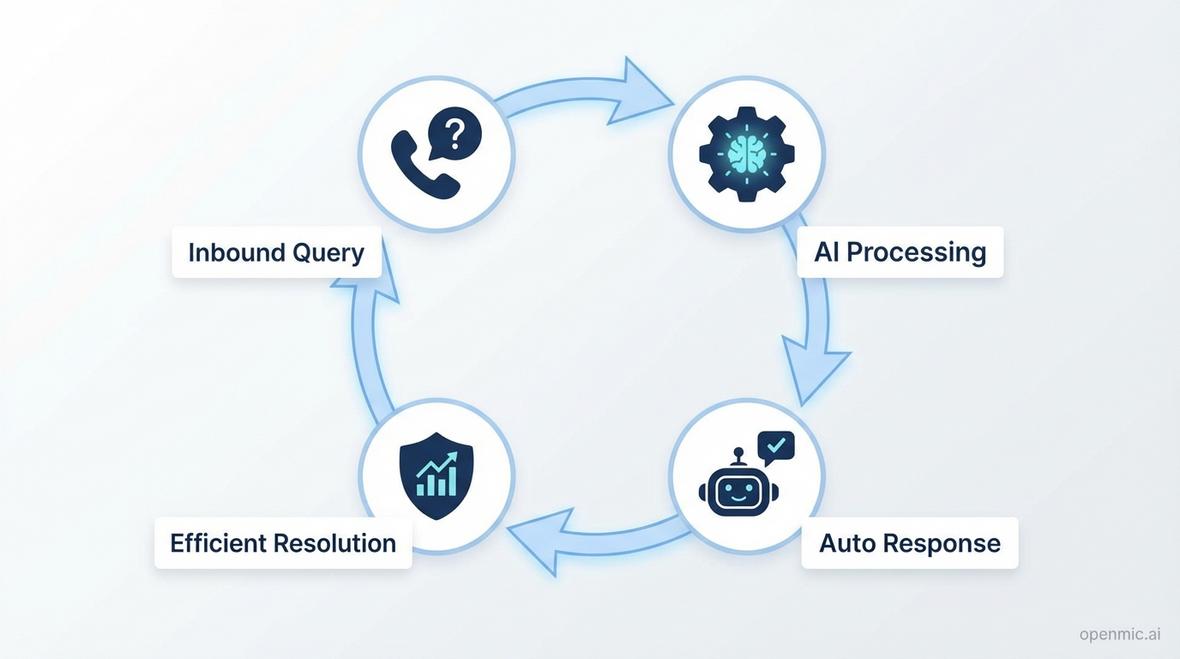
Customer service automation refers to the use of technology to handle customer inquiries, requests, and interactions without direct human intervention. This encompasses a wide range of solutions including AI chatbots, voice agents, automated email responses, interactive voice response (IVR) systems, and self-service portals.
Modern automation goes far beyond simple rule-based responses. Today's systems leverage advanced technologies such as natural language processing (NLP), machine learning, and conversational AI to understand context, detect sentiment, and provide intelligent, personalized responses that closely mimic human interactions.
The core components of effective customer service automation include:
- AI-Powered Chatbots: Text-based conversational agents that handle common inquiries across websites, apps, and messaging platforms.
- Voice AI Agents: Intelligent phone systems that can conduct natural conversations, schedule appointments, qualify leads, and resolve issues through voice interactions.
- Self-Service Knowledge Bases: Comprehensive FAQ systems and searchable databases that empower customers to find answers independently.
- Automated Ticketing Systems: Smart routing and categorization tools that direct customer issues to the appropriate channels or agents.
- Workflow Automation: Backend processes that trigger actions based on customer interactions, such as sending confirmation emails or updating CRM records.
Platforms like OpenMic.ai specialize in providing API-first voice AI solutions that seamlessly integrate with existing business systems, enabling enterprises to deploy sophisticated automation without extensive technical overhead.
The Transformative Benefits of Customer Service Automation
Organizations implementing customer service automation experience profound operational and strategic advantages. The benefits extend far beyond simple cost reduction, touching every aspect of customer engagement and business performance.
Dramatic Cost Reduction
The financial impact of automation is perhaps its most compelling benefit. Research indicates that AI agents reduce cost per call by 50% while simultaneously improving customer satisfaction scores. This dramatic reduction stems from decreased labor requirements, lower training costs, and improved first-call resolution rates.
Traditional call centers incur significant expenses related to hiring, training, benefits, infrastructure, and turnover. Automation reduces dependency on large human workforces while enabling existing agents to focus on complex, high-value interactions that truly require human expertise.
Round-the-Clock Availability
Modern customers expect support whenever they need it, regardless of time zones or business hours. Customer service automation enables truly global operations by providing consistent, high-quality support 24/7/365 without the cost multiplier of overnight shifts or weekend staffing.
This constant availability is particularly valuable for businesses operating across multiple geographic markets or serving customers with diverse schedules. Voice AI solutions from providers like OpenMic.ai for healthcare ensure that patient inquiries, appointment scheduling, and urgent concerns are addressed immediately, improving outcomes and satisfaction.
Infinite Scalability
One of the most significant limitations of traditional customer service is scalability. Handling volume spikes whether due to product launches, seasonal demand, or viral marketing campaigns requires either maintaining excess capacity or accepting degraded service levels during peak periods.
Automated systems scale instantly and infinitely. Whether handling ten calls or ten thousand simultaneously, AI-powered solutions maintain consistent response times and service quality. This elasticity is particularly valuable for growing businesses and those with unpredictable demand patterns.
Consistency and Quality Control
Human agents, despite best intentions, deliver variable service quality due to factors like fatigue, mood, experience level, and individual interpretation of policies. Customer service automation ensures every interaction follows established protocols, uses approved language, and delivers accurate information.
This consistency strengthens brand reputation and reduces compliance risks, particularly in regulated industries like healthcare, financial services, and legal sectors where precise communication is critical.
Enhanced Data Collection and Insights
Every automated interaction generates valuable data. Conversation transcripts, sentiment analysis, common pain points, and resolution pathways create rich datasets that inform product development, marketing strategies, and service improvements.
Advanced analytics platforms integrated with automation solutions provide actionable insights that would be impossible to extract manually from thousands of customer interactions. Businesses can identify trending issues, optimize response strategies, and proactively address problems before they escalate.
Key Technologies Powering Customer Service Automation
Understanding the technological foundation of customer service automation is essential for making informed implementation decisions. Several core technologies work in concert to enable sophisticated automated experiences.
Natural Language Processing (NLP)
NLP enables machines to understand, interpret, and generate human language in contextually appropriate ways. Modern NLP systems can detect intent, extract entities, understand sentiment, and handle complex linguistic structures including idioms, slang, and regional variations.
The evolution of transformer-based language models has dramatically improved NLP accuracy, enabling conversational AI to handle increasingly complex inquiries without human escalation.
Machine Learning and Adaptive Systems
Machine learning algorithms allow automated systems to improve continuously based on interaction data. These systems identify patterns, predict customer needs, and refine responses over time without explicit programming for every scenario.
Reinforcement learning techniques enable AI agents to optimize conversation flows, identifying which approaches yield the highest customer satisfaction and resolution rates.
Advanced Voice Recognition and Synthesis
Voice-based customer service automation relies on sophisticated speech-to-text and text-to-speech technologies. Modern systems achieve near-human accuracy in understanding diverse accents, handling background noise, and producing natural-sounding speech with appropriate prosody and emotion.
Platforms like OpenMic.ai's voice AI agents leverage cutting-edge voice technologies to deliver seamless phone interactions that customers often cannot distinguish from human agents.
Integration Capabilities and APIs
Effective automation requires seamless integration with existing business systems including CRM platforms, helpdesk software, payment processors, and knowledge bases. API-first architectures enable rapid deployment and flexible customization without extensive redevelopment.
Solutions offering robust integration capabilities, such as OpenMic.ai's integration ecosystem, dramatically reduce implementation timelines and enable automation to access the contextual information necessary for personalized interactions.
Strategic Implementation of Customer Service Automation
Successful automation implementation requires thoughtful planning, phased deployment, and continuous optimization. Organizations that follow structured implementation frameworks achieve faster ROI and higher adoption rates.
Assess and Identify Automation Opportunities
Begin by analyzing current customer service operations to identify high-volume, repetitive interactions that are ideal automation candidates. Common targets include:
- Appointment scheduling and reminders
- Order status inquiries
- Basic troubleshooting and FAQ responses
- Lead qualification and initial contact
- Payment reminders and account updates
Evaluate each interaction type based on volume, complexity, and business impact. Start with high-volume, low-complexity scenarios to build confidence and demonstrate value before tackling more sophisticated use cases.
Choose the Right Automation Platform
Platform selection significantly impacts implementation success. Consider factors including:
- Ease of implementation: No-code or low-code solutions reduce technical barriers.
- Integration capabilities: Native connections to your existing tech stack are essential.
- Scalability: Ensure the platform can grow with your business.
- Customization: Tailor responses and workflows to match your brand and processes.
- Analytics and reporting: Comprehensive insights drive continuous improvement.
- Security and compliance: Verify adherence to industry regulations and data protection standards.
For businesses prioritizing voice-based automation, specialized providers like OpenMic.ai offer purpose-built solutions with superior call quality and natural conversation capabilities.
Design Intelligent Conversation Workflows
Map detailed conversation flows that anticipate customer intents and provide clear pathways to resolution. Effective workflows include:
- Clear opening statements that set expectations
- Efficient intent recognition and routing
- Contextual follow-up questions that gather necessary information
- Graceful escalation paths to human agents when needed
- Confirmation steps that verify understanding and resolution
Avoid overly rigid scripts that frustrate customers. Build flexibility into workflows that allow for natural conversation patterns and unexpected inputs.
Maintain the Human Option
While automation delivers tremendous value, research shows that 79% of consumers prefer human customer service over AI for complex or sensitive issues. The most successful implementations balance automation efficiency with human expertise.
Design systems that recognize when human intervention would be more appropriate and provide seamless escalation. Studies indicate that 89% say positive service needs balance between automation, AI, and humans, highlighting the importance of hybrid approaches.
Test, Launch, and Continuously Optimize
Conduct thorough testing before full deployment. Use pilot programs with limited customer segments to identify issues and refine responses. Monitor key performance indicators including:
- Resolution rate (percentage of inquiries resolved without escalation)
- Average handling time
- Customer satisfaction scores
- Containment rate (percentage of interactions fully automated)
- Error and misunderstanding frequency
Establish continuous improvement processes that incorporate customer feedback, conversation analysis, and performance data. Regular optimization ensures automation remains effective as customer needs and business requirements evolve.
Customer Service Automation Across Industries
Different sectors leverage customer service automation in unique ways, tailoring solutions to industry-specific challenges and customer expectations.
Healthcare and Medical Practices
Healthcare organizations face unique communication challenges including appointment scheduling, insurance verification, prescription refills, and after-hours triage. AI-powered solutions handle routine administrative tasks, allowing medical staff to focus on patient care.
Platforms like OpenMic.ai for healthcare provide HIPAA-compliant voice agents that manage patient communications while maintaining strict privacy standards.
Real Estate
Real estate professionals use automation for lead qualification, property inquiry responses, showing scheduling, and follow-up communications. Voice AI can engage potential buyers immediately, capturing information and routing qualified leads to agents for personalized attention.
Solutions tailored for real estate automation integrate with CRM systems to ensure seamless lead management and maximize conversion rates.
Automotive Dealerships
Car dealerships leverage customer service automation for service appointment scheduling, sales inquiries, test drive bookings, and follow-up communications. Automated systems ensure no lead goes unanswered, even outside business hours.
Voice AI platforms designed for automotive dealerships understand industry-specific terminology and processes, delivering relevant, accurate responses to common customer questions.
Legal Services
Law firms use automation for initial client intake, appointment scheduling, case status updates, and general inquiries. This enables attorneys to focus billable hours on substantive legal work while ensuring prospective clients receive immediate attention.
Specialized solutions for legal practices maintain confidentiality and professional standards while streamlining client communications.
Challenges and Considerations
While customer service automation offers substantial benefits, organizations must address several challenges to maximize success.
Customer Acceptance and Trust
Some customers remain skeptical of automated systems, particularly for complex or sensitive issues. Building trust requires transparency about when customers are interacting with AI and providing easy access to human agents when preferred.
Handling Complexity and Edge Cases
Automated systems excel at routine interactions but may struggle with unusual scenarios, strong emotional content, or highly technical inquiries. Robust escalation protocols ensure these situations receive appropriate human attention.
Integration with Legacy Systems
Organizations with older technology stacks may face integration challenges. API-first platforms and middleware solutions can bridge these gaps, but careful planning is essential to ensure seamless data flow between systems.
Ongoing Maintenance and Updates
Customer service automation is not a 'set and forget' solution. Regular updates are necessary to reflect product changes, policy updates, and evolving customer needs. Establishing clear ownership and maintenance processes prevents degradation over time.
The Future of Customer Service Automation in 2026 and Beyond
Customer service automation continues to evolve rapidly, with several emerging trends shaping the future landscape.
Hyper-Personalization
Next-generation systems leverage customer history, preferences, and behavior patterns to deliver uniquely tailored interactions. Predictive analytics anticipate needs before customers articulate them, creating proactive support experiences.
Multimodal Experiences
Future automation seamlessly blends voice, text, visual, and video interactions within single customer journeys. Customers might start a conversation via chat, escalate to voice, and receive visual confirmation all without repeating information.
Emotional Intelligence and Empathy
Advanced sentiment analysis enables AI to detect frustration, confusion, or satisfaction and adjust tone, pace, and approach accordingly. Emotionally intelligent automation builds stronger customer relationships and improves outcomes.
Continued Expansion and Adoption
Current data shows that only 25% of call centers fully integrate AI automation, indicating substantial growth potential. As technologies mature and costs decrease, adoption will accelerate across organizations of all sizes.
Frequently Asked Questions
What types of customer inquiries are best suited for automation?
High-volume, routine inquiries with predictable patterns work best for automation. Examples include appointment scheduling, order status checks, password resets, basic product information, and frequently asked questions. Complex issues requiring judgment, empathy, or creative problem-solving are better handled by human agents.
How much does customer service automation cost?
Costs vary widely based on solution complexity, volume, and features. Entry-level chatbot platforms may start at a few hundred dollars monthly, while enterprise voice AI solutions can range from thousands to tens of thousands per month. However, ROI is typically achieved rapidly through labor cost reduction and efficiency gains.
Will automation replace human customer service agents?
Rather than wholesale replacement, customer service automation augments human capabilities. Automated systems handle routine tasks, freeing human agents to focus on complex, high-value interactions. The most effective models combine automation efficiency with human expertise for optimal customer experiences.
How long does it take to implement customer service automation?
Implementation timelines depend on solution complexity and organizational readiness. Simple chatbots can be deployed in days or weeks, while comprehensive voice AI systems with deep CRM integration may require several months. Phased approaches allow businesses to realize value quickly while expanding capabilities over time.
What industries benefit most from customer service automation?
Virtually every customer-facing industry benefits from automation. Healthcare, financial services, retail, telecommunications, real estate, automotive, hospitality, and e-commerce all leverage automation extensively. The specific applications vary by industry, but the core benefits of cost reduction, scalability, and improved customer experience apply universally.
Conclusion
Customer service automation has evolved from a futuristic concept to an operational imperative for businesses seeking competitive advantage in 2026. The technology delivers measurable benefits including dramatic cost reduction, unlimited scalability, consistent quality, and enhanced customer insights. While challenges exist, thoughtful implementation strategies and balanced human-AI approaches overcome these obstacles effectively. As AI capabilities continue advancing and adoption accelerates across industries, organizations that embrace customer service automation position themselves for sustained growth and superior customer experiences. Whether through voice AI, chatbots, or comprehensive omnichannel solutions, the future of customer service is undeniably automated, intelligent, and customer-centric.