
Introduction
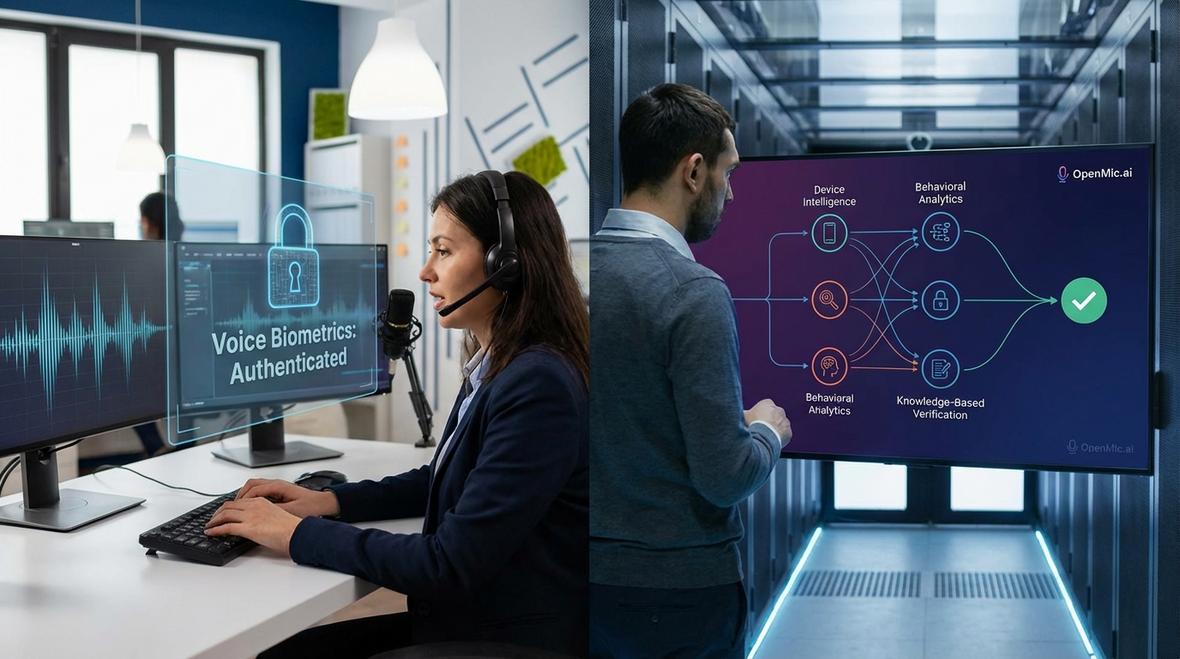
Call center identity verification has become a critical security measure as businesses face escalating fraud threats and increasingly sophisticated attack vectors. With FTC consumer fraud losses reaching $12.5 billion and a 17.54% year-over-year increase in identity theft, organizations can no longer rely on outdated verification methods. Modern call centers must implement robust, multi-layered authentication systems that balance security with customer experience.
For tech-savvy business leaders managing customer support operations, understanding call center identity verification is essential for protecting both customers and business assets. This comprehensive guide explores the latest verification technologies, implementation strategies, and emerging trends that are reshaping how organizations authenticate callers in 2026.
Understanding Call Center Identity Verification
Call center identity verification refers to the process of confirming that a caller is who they claim to be before granting access to sensitive information or account services. This authentication process protects customer data, prevents unauthorized account access, and ensures compliance with data protection regulations.
Why Identity Verification Matters in Call Centers
Traditional knowledge-based authentication (KBA) methods such as asking for mother's maiden name or the last four digits of a social security number have become increasingly vulnerable. Cybercriminals can easily obtain this information through data breaches, social media mining, or phishing attacks. The consequences of inadequate verification extend beyond financial losses to include:
- Regulatory penalties for data breaches and compliance violations
- Reputational damage and loss of customer trust
- Increased operational costs from fraud investigation and remediation
- Customer frustration from security-related friction
Modern AI contact centers are leveraging advanced verification technologies to address these challenges while maintaining seamless customer experiences.
The Regulatory Landscape Driving Verification Standards
Compliance requirements continue to evolve, with new legislation mandating stronger identity verification protocols. The Australia Digital ID Legislation Impact demonstrates a 17.2% CAGR with 15 million myIDs and 80 million transactions, as the Digital ID Act 2024 creates a trusted environment for digital interactions and drives demand for privacy-focused verification services with minimal data retention.
Organizations operating in regulated industries including healthcare, financial services, and telecommunications must ensure their call center identity verification processes meet stringent standards for data protection and customer consent.
Multi-Factor Authentication Methods for Call Centers
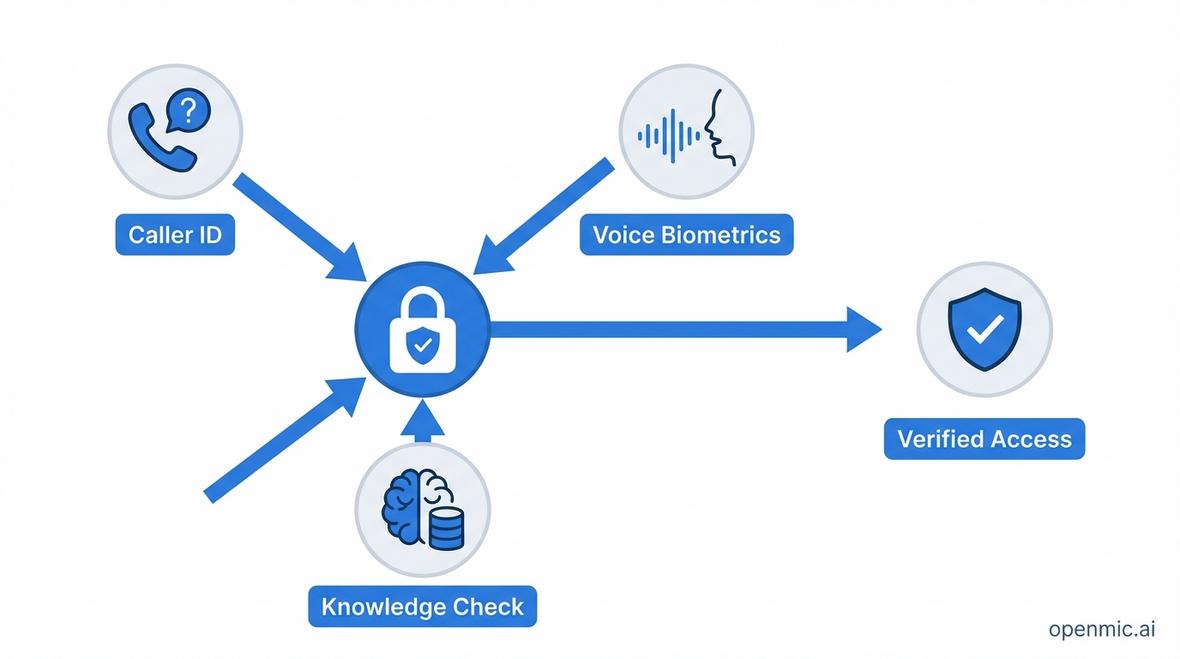
Effective call center identity verification relies on combining multiple authentication factors to create layered security. The image above illustrates how three different verification inputs Caller ID, Voice Biometrics, and Knowledge Checks converge to create a comprehensive authentication system that grants verified access.
Voice Biometrics: The Future of Passive Authentication
Voice biometric technology analyzes over 100 unique vocal characteristics including pitch, tone, cadence, and pronunciation patterns to create a distinctive voiceprint for each customer. This passive authentication method works seamlessly in the background during natural conversation, eliminating the need for customers to answer security questions.
Benefits of voice biometric authentication include:
- Reduction in average handle time by 30-45 seconds per call
- Enhanced security through liveness detection that prevents recording playback attacks
- Improved customer satisfaction by eliminating repetitive security questioning
- Scalability across millions of customer voiceprints
However, organizations must address emerging challenges. According to industry research on deepfake detection evolution, identity verification is shifting from visual verification to signal origin verification, as 2026 trends show verification moving beyond document scanning to verify the authenticity of biometric signals in real-time.
Enhanced Knowledge-Based Verification
While traditional static KBA questions have become vulnerable, dynamic knowledge-based verification leverages recent account activity and contextual information that only the legitimate customer would know. These questions might include:
- Recent transaction amounts or merchant names
- Recent account changes or service requests
- Device identifiers from authenticated sessions
- Geographic locations of recent interactions
Advanced platforms implement dynamic risk-based call center verification with context-aware authentication requirements, where suspicious login events automatically increase verification requirements, enabling fraud and IT teams to work from centralized risk intelligence.
Caller ID Validation and Device Intelligence
Modern call center identity verification systems analyze caller ID information in conjunction with device intelligence to detect anomalies. This includes:
- Validating that the calling number matches registered customer phone numbers
- Detecting number spoofing attempts through carrier-level authentication
- Analyzing call patterns and frequency to identify suspicious behavior
- Cross-referencing device fingerprints with known customer devices
This multi-dimensional approach creates friction for fraudsters while maintaining a frictionless experience for legitimate customers calling from recognized devices.
AI-Powered Call Center Verification Solutions
Artificial intelligence is revolutionizing call center identity verification by enabling real-time risk assessment, behavioral analysis, and adaptive authentication protocols. OpenMic.ai provides an API-first platform that integrates advanced AI voice agents capable of conducting sophisticated verification processes while maintaining natural conversational flow.
Conversational AI for Natural Authentication
Modern conversational AI implementations can conduct identity verification through natural dialogue without explicitly asking security questions. The AI agent analyzes conversation patterns, response timing, and contextual knowledge to build confidence scores around caller identity.
Key capabilities include:
- Natural language understanding that detects evasive or inconsistent responses
- Sentiment analysis that identifies stress patterns associated with fraudulent attempts
- Contextual awareness that validates caller knowledge through casual conversation
- Escalation protocols that seamlessly transfer suspicious calls to specialized fraud teams
Behavioral Analytics and Anomaly Detection
AI-powered systems continuously learn normal customer behavior patterns and flag deviations that may indicate fraud. These systems analyze:
- Typical call frequency and duration patterns
- Common request types and service usage
- Geographic consistency of contact points
- Language patterns and vocabulary usage
When anomalies are detected, the system can automatically increase authentication requirements or route calls to specialized verification teams. This adaptive approach ensures that legitimate customers experience minimal friction while potential fraud attempts face enhanced scrutiny.
Addressing Non-Human Identity Challenges
As AI agents become more prevalent in customer interactions, organizations must now verify not just human identities but also authenticate legitimate AI agents. Research indicates a non-human identity growth of 44% year-over-year with a 144:1 ratio to human identities, creating emerging requirements for 'Know Your Agent' (KYA) measures as AI agents and autonomous systems proliferate in enterprise identity verification workflows.
This evolution requires verification systems that can distinguish between authorized AI assistants, unauthorized bots, and human callers adding a new dimension to call center identity verification strategies.
Implementation Best Practices for Call Center Identity Verification
Successfully deploying robust verification systems requires careful planning, technology selection, and ongoing optimization. Organizations should follow these best practices to maximize security while maintaining positive customer experiences.
Adopt Risk-Based Authentication Strategies
Not every interaction requires the same level of verification. Risk-based authentication adjusts security requirements based on contextual factors:
- Low-risk scenarios: Customers calling from recognized devices for routine inquiries may only need basic verification
- Medium-risk scenarios: Requests for account changes or sensitive information trigger multi-factor authentication
- High-risk scenarios: Large transactions, account access from new devices, or suspicious patterns require enhanced verification including manager approval
This tiered approach balances security needs with customer convenience, reducing authentication fatigue for routine interactions while maintaining strong protection for high-risk scenarios.
Seamless Integration with Existing Infrastructure
Effective call center identity verification must integrate with existing customer relationship management (CRM) systems, fraud detection platforms, and communication infrastructure. OpenMic.ai offers extensive integration capabilities that connect with leading business platforms, enabling unified customer data access and verification workflows.
Integration considerations include:
- Real-time data synchronization between verification systems and customer databases
- API-first architectures that support flexible deployment models
- Webhook support for triggering verification workflows based on system events
- Comprehensive logging and audit trails for compliance documentation
Training Call Center Agents on Verification Protocols
While AI-powered systems handle much of the technical verification process, human agents remain essential for handling exceptions, escalations, and complex fraud scenarios. Comprehensive training programs should cover:
- Understanding verification technology capabilities and limitations
- Recognizing social engineering tactics and manipulation attempts
- Following escalation procedures for suspicious interactions
- Balancing security requirements with customer empathy
- Compliance requirements and regulatory obligations
Regular training updates ensure agents stay current with evolving fraud tactics and new verification technologies. While AI enhances call center operations, human judgment remains critical for complex verification scenarios.
Industry-Specific Call Center Identity Verification Requirements
Different industries face unique verification challenges based on regulatory requirements, fraud risk profiles, and customer expectations. Understanding these sector-specific needs is essential for implementing effective authentication protocols.
Healthcare and HIPAA Compliance
Healthcare call centers must verify patient identity before discussing protected health information (PHI) to comply with HIPAA regulations. Verification methods must balance security with accessibility, particularly when patients call from hospital settings or during medical emergencies.
Healthcare-specific verification considerations include:
- Multi-factor authentication that doesn't impede urgent medical consultations
- Voice biometrics that accommodate health-related voice changes
- Alternative verification pathways for patients with cognitive impairments
- Proxy authentication protocols for authorized family members or caregivers
Financial Services and Banking
Financial institutions face stringent regulatory requirements and high fraud risk, making robust call center identity verification essential. Conversational AI is reshaping banking customer experience by enabling secure, efficient verification processes that protect both customers and financial assets.
Banking verification systems typically include:
- Multi-layered authentication for account access and transactions
- Transaction velocity checks that flag unusual activity patterns
- Out-of-band verification for high-risk requests using SMS or email confirmation
- Enhanced due diligence for politically exposed persons (PEPs) and high-net-worth clients
Debt Collection and FDCPA Compliance
Debt collection operations must verify debtor identity before discussing account details to comply with the Fair Debt Collection Practices Act (FDCPA) and protect consumer privacy. Verification challenges include:
- Authenticating debtors without revealing debt information to unauthorized parties
- Handling verification for co-signers and guarantors
- Maintaining verification records for compliance audits
- Implementing mini-Miranda warnings before identity verification
Modern AI voice solutions for debt collection automate compliant verification workflows while ensuring all regulatory requirements are met.
Emerging Trends in Call Center Identity Verification for 2026
The identity verification landscape continues to evolve rapidly as new technologies emerge and fraud tactics become more sophisticated. Organizations must stay ahead of these trends to maintain effective security postures.
Continuous Authentication Throughout Calls
Rather than authenticating callers only at the beginning of interactions, continuous authentication monitors identity signals throughout the entire call duration. This approach detects mid-call fraud attempts, such as:
- Call transfers to unauthorized third parties
- Voice synthesis or deepfake attacks introduced mid-conversation
- Changes in background noise patterns suggesting location spoofing
Continuous authentication provides ongoing confidence scoring, automatically triggering re-verification or call termination when confidence levels drop below acceptable thresholds.
Zero-Knowledge Verification Protocols
Privacy-conscious consumers increasingly demand verification methods that don't expose sensitive personal information to call center agents or systems. Zero-knowledge protocols allow identity confirmation without revealing underlying data, using cryptographic techniques to prove knowledge without disclosure.
This approach aligns with data minimization principles and reduces organizational liability in the event of data breaches. The Digital ID Act 2024 is driving demand for privacy-focused verification services with minimal data retention requirements.
Blockchain-Based Identity Management
Distributed ledger technologies enable decentralized identity verification where customers control their own identity credentials and selectively share verification attestations with service providers. This model offers:
- Customer sovereignty over personal identity data
- Reduced organizational liability for storing sensitive information
- Interoperable verification credentials across multiple service providers
- Immutable audit trails for compliance documentation
While still emerging, blockchain-based identity solutions are gaining traction in industries with complex verification requirements and multi-party interactions.
Measuring Call Center Identity Verification Effectiveness
Organizations must establish key performance indicators (KPIs) to assess verification system performance and identify optimization opportunities. Critical metrics include:
Security Metrics
- False Acceptance Rate (FAR): Percentage of unauthorized users incorrectly authenticated
- False Rejection Rate (FRR): Percentage of legitimate users incorrectly denied access
- Fraud Detection Rate: Percentage of fraud attempts successfully identified and blocked
- Time to Fraud Detection: Average duration between fraud attempt initiation and system detection
Operational Metrics
- Average Verification Time: Duration required to complete authentication process
- Authentication Success Rate: Percentage of customers successfully verified on first attempt
- Agent Override Frequency: Rate at which agents bypass automated verification systems
- Cost Per Verification: Total verification system costs divided by authentication volume
Customer Experience Metrics
- Customer Effort Score: Perceived difficulty of completing verification process
- Authentication Abandonment Rate: Percentage of customers who disconnect during verification
- Net Promoter Score Impact: Correlation between verification experience and overall satisfaction
- Complaint Volume: Customer grievances related to verification processes
Regular analysis of these metrics enables continuous improvement of call center identity verification systems, optimizing the balance between security effectiveness and customer experience.
Selecting the Right Call Center Identity Verification Platform
Choosing an appropriate verification solution requires evaluating multiple factors beyond basic authentication capabilities. Organizations should assess:
Core Technology Capabilities
- Support for multiple verification modalities (voice biometrics, KBA, device intelligence)
- Real-time risk assessment and adaptive authentication
- Scalability to handle peak call volumes without performance degradation
- Accuracy rates and resistance to emerging fraud tactics including deepfakes
Integration and Deployment Flexibility
- API-first architecture supporting flexible integration patterns
- Compatibility with existing telephony infrastructure and CRM systems
- Cloud-native deployment options with high availability guarantees
- Webhook support for event-driven workflow automation
OpenMic.ai's integration with Zapier MCP provides connectivity to over 8,000 applications, enabling comprehensive verification workflows across business systems.
Compliance and Privacy Considerations
- GDPR, CCPA, and regional data protection compliance
- Industry-specific regulatory adherence (HIPAA, PCI-DSS, GLBA)
- Data residency options for geographic compliance requirements
- Comprehensive audit logging and compliance reporting capabilities
Vendor Evaluation Criteria
- Proven track record with reference customers in similar industries
- Transparent pricing models without hidden verification costs
- Responsive customer support and implementation assistance
- Regular security audits and penetration testing
- Product roadmap alignment with emerging verification trends
Organizations should conduct proof-of-concept testing with real call scenarios before committing to enterprise-wide deployments, ensuring the selected platform meets specific operational requirements.
Frequently Asked Questions About Call Center Identity Verification
What is the most secure method for call center identity verification?
No single method provides complete security. The most effective approach combines multiple verification factors such as voice biometrics, knowledge-based authentication, and device intelligence with risk-based assessment that adjusts requirements based on contextual factors. Multi-factor authentication significantly reduces fraud risk while maintaining acceptable customer experience.
How does voice biometric verification work?
Voice biometric systems analyze unique vocal characteristics including pitch, tone, cadence, rhythm, and pronunciation patterns to create a distinctive voiceprint for each customer. During calls, the system compares the caller's voice against stored voiceprints in real-time, providing passive authentication without requiring customers to answer security questions.
Can AI-powered verification systems be fooled by deepfakes?
While deepfake technology continues to advance, modern verification systems are evolving to detect synthetic voices through signal origin verification and liveness detection. These systems analyze acoustic properties that differentiate genuine human speech from AI-generated audio, though organizations must continuously update detection capabilities as deepfake technology improves.
How do I balance security requirements with customer experience?
Implement risk-based authentication that adjusts verification requirements based on transaction risk, customer history, and contextual factors. Low-risk interactions require minimal verification, while high-risk scenarios trigger enhanced authentication. This approach provides strong security where needed while reducing friction for routine interactions.
What are the compliance requirements for call center identity verification?
Requirements vary by industry and jurisdiction. Healthcare organizations must comply with HIPAA, financial services must follow GLBA and PCI-DSS, and all organizations handling European customer data must comply with GDPR. Consult with legal counsel to ensure verification processes meet applicable regulatory requirements for your specific business context.
Conclusion
Call center identity verification has evolved from simple knowledge-based questions to sophisticated multi-factor authentication systems leveraging AI, biometrics, and behavioral analytics. As fraud threats intensify and regulatory requirements expand, organizations must implement robust verification protocols that protect customer data without creating excessive friction.
The most effective verification strategies combine multiple authentication modalities with risk-based assessment, continuous monitoring, and seamless integration with existing business systems. By staying informed about emerging technologies from deepfake detection to blockchain identity management and regularly measuring verification effectiveness, organizations can maintain security postures that protect both customers and business assets.
For businesses seeking to implement advanced call center identity verification, OpenMic.ai offers an API-first platform with comprehensive integration capabilities, AI-powered voice agents, and flexible deployment options tailored to specific industry requirements.