
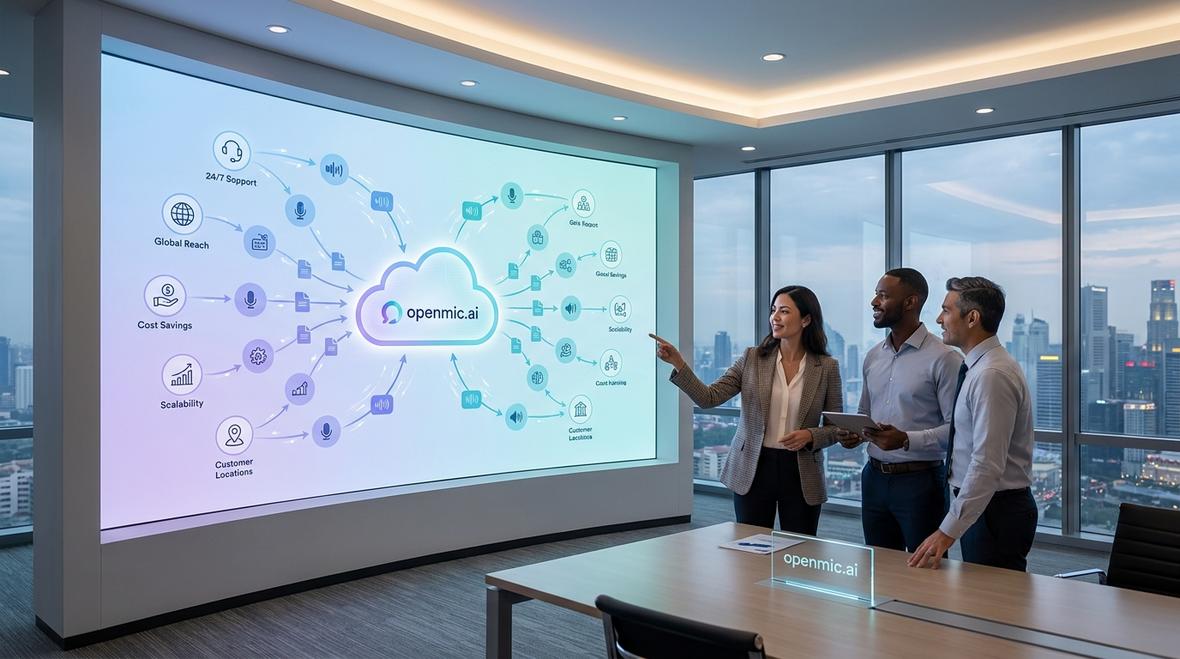
In today's hyper-competitive business landscape, customer experience defines success. Yet maintaining an in-house call center can be prohibitively expensive, operationally complex, and difficult to scale. The benefits of outsourcing call centers extend far beyond simple cost reduction they encompass strategic advantages like 24/7 availability, access to specialized expertise, rapid scalability, and the ability to focus internal resources on core business functions.
This comprehensive guide explores why businesses of all sizes are turning to outsourced call center solutions, how modern AI-powered platforms like OpenMic.ai are revolutionizing customer communication, and what decision-makers need to know before making the transition.
Understanding Call Center Outsourcing in 2026
Call center outsourcing involves partnering with a third-party service provider whether a traditional BPO (Business Process Outsourcing) firm or an advanced AI-driven platform to manage inbound and outbound customer communications. This model has evolved significantly from the offshore call centers of the past to today's sophisticated, technology-enabled solutions that blend human expertise with artificial intelligence.
Modern outsourcing encompasses multiple service models: traditional human-staffed centers, hybrid models combining human agents with automation, and fully AI-powered voice agent platforms. Each approach offers distinct advantages depending on your business needs, customer demographics, and operational priorities.
Primary Benefits of Outsourcing Call Centers
Significant Cost Reduction
The most immediate and tangible benefit of outsourcing call centers is substantial cost savings. Operating an in-house call center requires significant capital investment in infrastructure, technology, real estate, and human resources. According to U.S. job openings and turnover trends data, contact center positions experience high turnover rates, creating ongoing recruitment and training expenses that can consume 20-30% of operational budgets.
Outsourcing transforms these fixed costs into variable expenses, allowing businesses to pay only for the capacity they need. Traditional outsourcing can reduce operational costs by 30-50%, while AI-powered solutions like AI receptionist services can deliver savings exceeding 70% by eliminating the need for round-the-clock human staffing entirely.
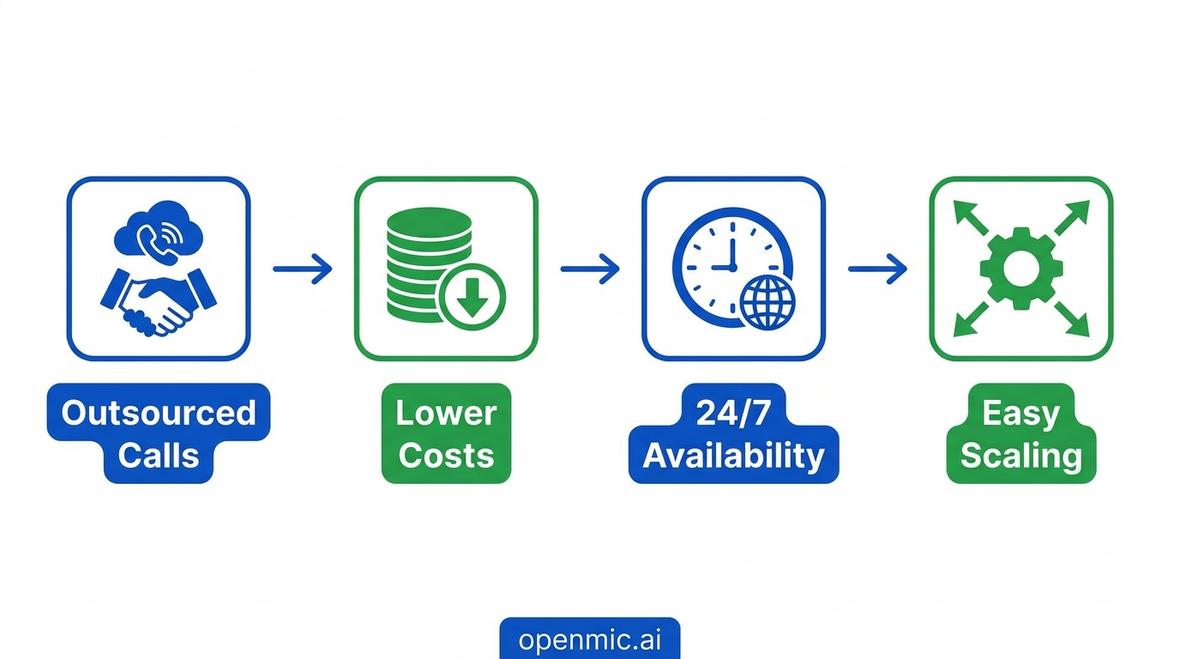
The cost structure becomes predictable and scalable, with no unexpected expenses for equipment failures, facility maintenance, or emergency staffing. Businesses eliminate expenses related to payroll taxes, benefits, office space, utilities, telephony infrastructure, and compliance overhead.
24/7 Availability Without Premium Labor Costs
Customer expectations have fundamentally shifted modern consumers expect support availability outside traditional business hours. Providing 24/7 coverage with in-house staff requires complex shift scheduling, premium pay for night and weekend shifts, and maintaining adequate staffing levels during low-volume periods.
Outsourced call centers, particularly those leveraging AI voice agents, provide continuous availability without the cost penalties associated with human night shifts. This ensures customers receive immediate assistance regardless of time zone or business hours, directly improving satisfaction and reducing abandoned calls.
For businesses operating across multiple geographic markets, this global availability becomes even more critical. An AI-powered solution can handle inquiries in multiple languages simultaneously, something that would require extensive staffing investments with traditional approaches.
Rapid Scalability and Flexibility
Business demand rarely remains constant. Seasonal fluctuations, marketing campaigns, product launches, and unexpected events can cause dramatic spikes in call volume. Scaling an in-house call center to accommodate these variations requires months of planning, hiring, and training often resulting in overstaffing during slow periods or inadequate coverage during peaks.
The benefits of outsourcing call centers include elastic scalability that matches capacity to demand in real-time. Traditional outsourcing partners maintain larger talent pools that can be allocated as needed, while AI platforms scale instantly without any human resource constraints. This flexibility extends to scaling down as well, avoiding the difficult personnel decisions associated with workforce reductions.
According to research from Forrester customer service research, businesses using scalable outsourced models report 40% better capacity utilization compared to fixed in-house operations, directly improving cost efficiency and service quality metrics.
Access to Specialized Expertise and Technology
Building world-class customer service capabilities requires significant expertise in training, quality assurance, performance management, and technology integration. Outsourcing partners especially established providers bring years of accumulated best practices, proven methodologies, and access to cutting-edge technologies that would be cost-prohibitive for individual businesses to develop independently.
Modern call center technology stacks include advanced features like intelligent call routing, sentiment analysis, real-time transcription, CRM integration, and predictive analytics. AI-powered platforms such as conversational AI platforms incorporate natural language processing, machine learning, and voice synthesis technologies that continuously improve through interaction.
This expertise extends beyond technology to include industry-specific knowledge. Healthcare providers benefit from HIPAA-compliant call handling, financial services gain access to fraud detection capabilities, and retail businesses leverage upselling and cross-selling expertise all without investing in developing these specialized competencies internally.
Improved Focus on Core Business Functions
Every hour leadership spends managing call center operations is time diverted from strategic initiatives, product development, market expansion, and revenue-generating activities. The administrative burden of workforce management, technology maintenance, compliance monitoring, and performance optimization can consume disproportionate management attention.
Outsourcing call center operations allows leadership to refocus on core competencies and strategic differentiation. Instead of troubleshooting telephony infrastructure or managing agent schedules, teams can concentrate on innovation, competitive positioning, and customer experience strategy. This focus typically translates into improved business outcomes across all functional areas.
Enhanced Customer Experience and Satisfaction
Contrary to outdated perceptions, modern outsourced call centers particularly AI-powered solutions often deliver superior customer experiences compared to in-house operations. Professional outsourcing partners specialize in customer interactions, implementing rigorous quality assurance programs, continuous training, and performance monitoring that many businesses lack the resources to maintain internally.
AI voice agents provide consistent, accurate responses without the variability inherent in human performance. They never experience bad days, fatigue, or emotional reactions, ensuring every customer receives the same high-quality experience. Advanced natural language capabilities allow these systems to understand context, handle complex inquiries, and even detect emotional cues to adjust tone appropriately.
For businesses in sectors like healthcare, legal services, or real estate, specialized outsourcing partners understand industry nuances and compliance requirements, delivering experiences that feel authentic and informed rather than generic.
Modern Call Center Outsourcing Models
Traditional BPO Services
Traditional Business Process Outsourcing involves contracting with companies that provide human agents to handle customer communications. These services can be onshore (domestic), nearshore (neighboring countries), or offshore (distant locations with cost advantages). Each geography offers different trade-offs between cost, cultural alignment, language proficiency, and time zone coverage.
Traditional BPO works well for complex scenarios requiring nuanced judgment, emotional intelligence, and the ability to handle unpredictable situations. However, it maintains many of the cost structures and scalability limitations of in-house operations, albeit with improved efficiency through specialization.
AI-Powered Voice Automation
The most transformative development in call center outsourcing is the emergence of AI-powered voice agent platforms. These solutions use advanced conversational AI to handle customer interactions with natural, human-like voice capabilities. Unlike traditional IVR systems with rigid menu structures, modern AI agents understand natural language, context, and intent.
Platforms like OpenMic.ai offer API-first architectures that integrate seamlessly with existing business systems CRMs, scheduling tools, payment processors, and knowledge bases. This integration allows AI agents to access real-time information, complete transactions, and provide personalized responses based on customer history and preferences.
The economic advantages are substantial: AI voice agents operate continuously without breaks, handle unlimited concurrent conversations, and cost a fraction of human-staffed alternatives. For high-volume, routine interactions, this model delivers unmatched efficiency.
Hybrid Human-AI Models
Many forward-thinking businesses adopt hybrid approaches that leverage AI for routine inquiries while routing complex or emotionally sensitive issues to human agents. This model optimizes cost efficiency while maintaining the human touch where it matters most.
AI handles the high-volume, repetitive tasks appointment scheduling, order status inquiries, password resets, FAQ responses freeing human agents to focus on complex problem-solving, relationship building, and high-value interactions. This division of labor typically improves both efficiency metrics and agent job satisfaction.
Industry-Specific Benefits of Outsourcing Call Centers
Healthcare and Medical Practices
Healthcare providers face unique challenges: strict HIPAA compliance requirements, complex scheduling needs, insurance verification, and patients who require empathetic, accurate communication. Outsourcing to specialized voice AI for healthcare solutions addresses these challenges while reducing administrative burden.
AI receptionists can manage appointment scheduling, send reminders, handle prescription refill requests, and provide basic medical information all while maintaining compliance with healthcare privacy regulations. This allows clinical staff to focus on patient care rather than phone management.
Automotive Dealerships
Car dealerships handle diverse communication needs: sales inquiries, service appointments, parts orders, and follow-up campaigns. AI voice agents designed for car dealership operations can qualify leads, schedule test drives, send service reminders, and even conduct satisfaction surveys.
The benefits of outsourcing call centers in automotive retail include capturing after-hours leads, reducing response times, and ensuring consistent follow-up critical factors in an industry where speed to contact directly correlates with conversion rates.
Real Estate Agencies
Real estate professionals spend significant time fielding inquiries, scheduling property showings, and qualifying prospects. AI voice agents for real estate can handle initial contact, gather buyer criteria, schedule viewings, and provide property information allowing agents to focus on high-value activities like negotiations and client relationships.
Debt Collection and Financial Services
Financial institutions and collection agencies benefit enormously from AI-powered outbound calling capabilities. AI voice agents for debt collection can conduct payment reminders, negotiate arrangements, and update account information while maintaining compliance with FDCPA regulations and treating customers respectfully.
These systems provide consistent messaging, accurate documentation, and the ability to reach customers across multiple time zones without the labor costs associated with human collection teams.
Key Considerations When Outsourcing Call Centers
Security and Compliance
When outsourcing customer communications, data security and regulatory compliance are paramount. Evaluate potential partners' security certifications (SOC 2, ISO 27001), compliance frameworks (HIPAA, PCI-DSS, GDPR), and data handling practices. Understanding where data is stored, how it's encrypted, and who has access is critical for protecting customer information and maintaining regulatory compliance.
Integration Capabilities
The effectiveness of outsourced call centers depends heavily on integration with existing business systems. Modern solutions should offer robust APIs and pre-built integrations with popular CRM platforms, scheduling tools, and business applications. Seamless data flow ensures agents (human or AI) have access to customer history, preferences, and account information needed to deliver personalized experiences.
Customization and Brand Alignment
Your call center represents your brand to customers. Whether using human agents or AI voice technology, ensure the solution can be customized to reflect your brand voice, terminology, and service standards. AI platforms should allow voice selection, script customization, and behavior configuration to create experiences that feel authentically aligned with your brand identity.
Performance Monitoring and Analytics
Effective outsourcing requires visibility into performance metrics. Look for solutions that provide comprehensive analytics covering call volume, resolution rates, customer satisfaction, average handle time, and other key performance indicators. Real-time dashboards and detailed reporting enable continuous optimization and ensure service level agreements are being met.
Getting Started with Call Center Outsourcing
Transitioning to an outsourced call center model requires careful planning and execution. Begin by documenting your current call patterns, volumes, and types of inquiries. Identify which interactions are routine and suitable for automation versus those requiring human judgment.
Evaluate potential partners based on their technology capabilities, industry experience, security credentials, and pricing models. Request demonstrations and pilot programs to validate performance before full deployment. For AI-powered solutions like OpenMic.ai, the implementation timeline is typically measured in days rather than months, allowing rapid realization of benefits.
Establish clear success metrics and service level agreements. Monitor performance closely during the initial transition period and maintain open communication channels with your outsourcing partner to address issues quickly and optimize configurations based on real-world performance.
The Future of Outsourced Call Centers
The call center industry continues evolving rapidly, driven by advances in artificial intelligence, natural language processing, and integration technologies. The distinction between 'outsourcing' and 'automation' is blurring as AI-powered platforms deliver capabilities previously requiring human agents.
Future developments will include even more sophisticated emotional intelligence, multilingual capabilities without language barriers, predictive customer service that anticipates needs before customers call, and seamless omnichannel experiences that maintain context across voice, chat, email, and social channels.
For businesses evaluating their customer communication strategies, the question is no longer whether to outsource, but which model traditional BPO, AI automation, or hybrid best aligns with their operational needs, customer expectations, and strategic objectives. The benefits of outsourcing call centers have never been more compelling, and the barriers to entry have never been lower.
Conclusion
The benefits of outsourcing call centers extend far beyond cost reduction to encompass strategic advantages in scalability, technology access, operational focus, and customer experience. Modern AI-powered platforms have revolutionized what's possible, delivering human-quality interactions at machine scale and economics. Whether you choose traditional BPO services, cutting-edge AI voice agents like OpenMic.ai, or a hybrid approach, outsourcing call center operations allows businesses to deliver exceptional customer experiences while focusing resources on core competencies and strategic growth. As customer expectations continue rising and competitive pressures intensify, outsourcing has evolved from cost optimization tactic to strategic imperative for businesses committed to operational excellence and customer-centric growth.