
What Is an AI Voice Call Center?
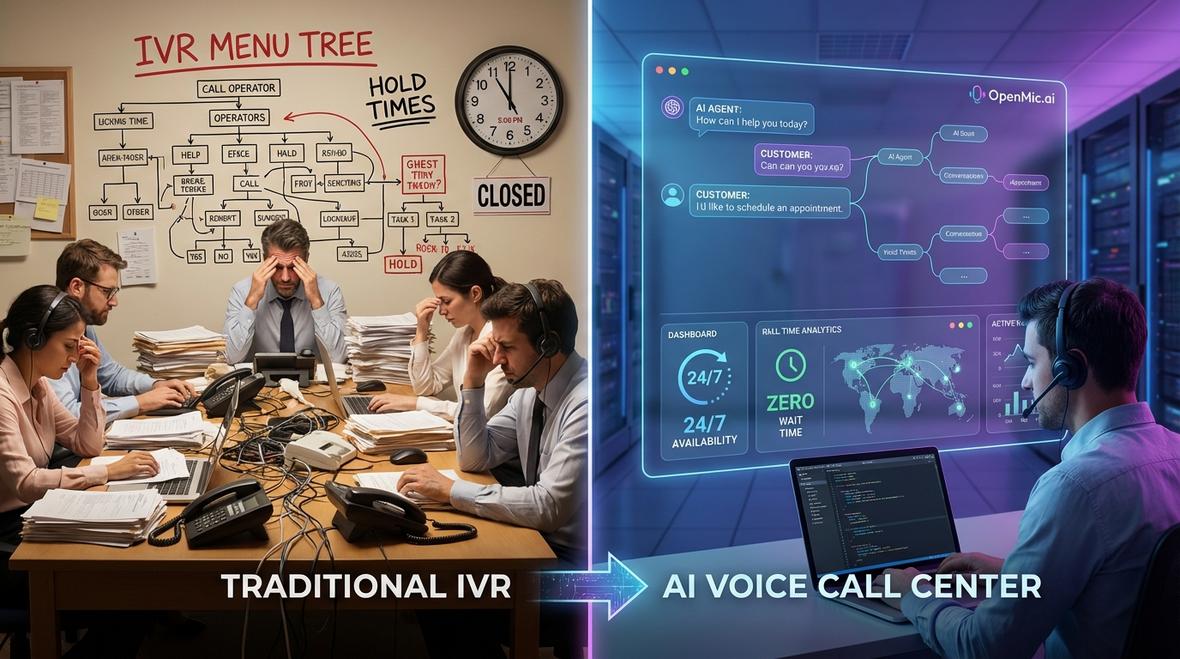
An AI voice call center represents the evolution of customer communication infrastructure, combining conversational artificial intelligence, natural language processing, and voice recognition technologies to automate both inbound and outbound calling operations. Unlike traditional interactive voice response (IVR) systems that frustrate callers with rigid menu trees, modern AI voice call centers deliver human-like conversations that understand context, intent, and emotion while providing instant resolutions across multiple languages and time zones.
For business leaders evaluating contact center modernization, the ai voice call center approach offers compelling advantages: 24/7 availability without staffing costs, consistent service quality regardless of call volume, and seamless integration with existing CRM and business systems. According to research from Forrester, enterprises using voice AI report 3-year ROI between 331% and 391%, with payback periods under six months and 25-50% average handle time reduction. These metrics demonstrate why forward-thinking organizations are rapidly adopting AI-powered voice solutions.
The technology behind an ai voice call center combines several advanced capabilities: speech-to-text transcription that captures caller input with high accuracy, natural language understanding that interprets meaning beyond literal words, dialogue management that maintains conversation context across multiple turns, and text-to-speech synthesis that delivers responses in natural-sounding voices. Leading platforms like OpenMic.ai integrate these components into API-first architectures that allow developers to deploy sophisticated voice agents in days rather than months.
Why Modern Businesses Need AI Voice Call Centers
Traditional call center models face mounting challenges that make them increasingly unsustainable for growing organizations. High operational costs consume 60-70% of customer service budgets through staffing, training, infrastructure, and turnover expenses. Scalability limitations prevent rapid expansion during peak periods without significant capital investment. Inconsistent service quality varies based on individual agent knowledge, mood, and experience levels. Limited availability leaves customers without support during nights, weekends, and holidays when many prefer to engage with businesses.
The ai voice call center model addresses these pain points systematically. Automated voice agents handle unlimited concurrent calls without incremental costs, scaling instantly during demand surges without hiring cycles. Every interaction follows optimized scripts while adapting to individual customer needs, ensuring consistency that human teams struggle to maintain across hundreds or thousands of agents. AI systems operate continuously without breaks, vacations, or shift changes, capturing leads and resolving issues that traditional centers would miss during off-hours.
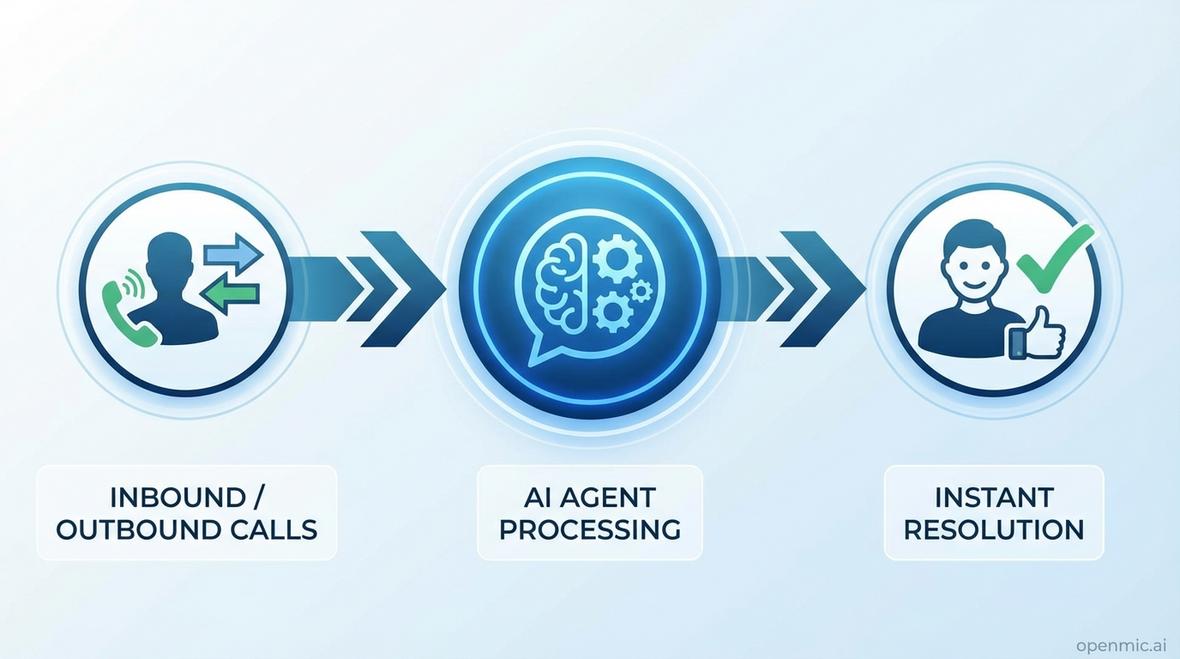
Beyond cost and availability advantages, ai voice call centers deliver capabilities impossible for human-only operations. Real-time sentiment analysis detects customer frustration and adjusts responses accordingly. Instant access to complete customer histories enables personalized interactions without hold times for information retrieval. Multilingual support serves diverse customer bases without hiring specialized agents. Automated quality assurance analyzes 100% of conversations rather than small samples, identifying improvement opportunities that manual monitoring misses.
Industry-Specific Applications Transforming Operations
Different sectors leverage ai voice call center technology to address unique operational challenges. In healthcare, voice AI agents handle appointment scheduling, prescription refill requests, and patient intake while maintaining HIPAA compliance through secure data handling. Real estate professionals deploy AI for lead screening and property inquiry qualification, ensuring human agents focus on high-value prospects. Automotive dealerships use conversational AI for service appointment booking and after-hours lead capture, preventing revenue loss from missed calls.
Financial services organizations implement ai voice call centers for payment reminders, account verification, and fraud detection alerts. Debt collection agencies leverage AI to conduct compliant outreach at scale while maintaining detailed interaction records. Restaurant chains automate reservation management and delivery order processing, reducing wait times and order errors. Law firms deploy AI receptionists for initial client intake and 24/7 reception services, capturing leads outside business hours.
Core Capabilities of Leading AI Voice Call Centers
Enterprise-grade ai voice call center platforms provide comprehensive feature sets that support diverse communication scenarios. Intelligent call routing directs conversations to appropriate resources based on caller intent, account history, and agent availability. Advanced systems implement AI-powered call routing that continuously learns from outcomes to optimize distribution strategies.
Natural conversation flow distinguishes modern AI from legacy IVR systems. Leading platforms handle interruptions, clarification requests, and topic changes naturally, maintaining context throughout multi-turn dialogues. They recognize when customers deviate from expected paths and adapt gracefully rather than forcing rigid navigation structures. This conversational flexibility dramatically improves customer satisfaction compared to traditional automated systems.
Integration Ecosystem and Data Connectivity
The value of an ai voice call center multiplies through seamless integration with business systems. Modern platforms connect with CRM systems like HubSpot, Salesforce, and Pipedrive, automatically logging call details, updating contact records, and triggering workflow automations. Organizations using HubSpot, Pipedrive, or Odoo CRM can deploy voice agents that access customer data in real-time, personalizing interactions based on purchase history, support tickets, and engagement patterns.
Calendar integrations enable AI agents to check availability and book appointments directly into scheduling systems. Payment processing connections allow voice bots to collect payments during calls using secure tokenization. Help desk integrations create support tickets from voice conversations, ensuring seamless handoffs when human intervention becomes necessary. Platforms like OpenMic.ai offer extensive integration libraries that connect with thousands of business applications through native APIs and middleware platforms.
Advanced Analytics and Continuous Improvement
Sophisticated ai voice call centers provide comprehensive analytics that transform voice data into actionable intelligence. Call transcription creates searchable records of every conversation, enabling teams to identify common issues, effective responses, and emerging trends. Sentiment analysis tracks emotional tone throughout interactions, highlighting friction points and satisfaction drivers. Conversion tracking correlates conversation elements with business outcomes, revealing which approaches generate sales, bookings, or resolutions.
These analytics enable continuous optimization through A/B testing of greetings, scripts, and offers. Machine learning models identify patterns that predict customer behavior, allowing proactive interventions. Quality assurance dashboards surface outlier conversations requiring review, focusing human attention where it matters most. Over time, these systems become increasingly effective as they learn from thousands of interactions, developing nuanced understanding that exceeds individual human agent capabilities.
Implementation Strategy for AI Voice Call Centers
Successfully deploying an ai voice call center requires strategic planning beyond simple technology selection. Organizations should begin with use case prioritization, identifying high-volume, repetitive interactions that deliver immediate ROI. Common starting points include appointment scheduling, FAQ handling, lead qualification, and payment reminders. These applications demonstrate value quickly while building organizational confidence in AI capabilities.
Script development forms the foundation of effective voice AI. Rather than transplanting existing IVR trees, teams should design conversational flows that leverage AI flexibility. Effective scripts anticipate customer variations, provide clear value propositions, and include graceful error handling. They balance efficiency with empathy, resolving issues quickly while acknowledging customer emotions. Leading platforms offer implementation guides that accelerate script creation through proven templates and best practices.
Testing and Optimization Cycles
Before full deployment, thorough testing validates AI performance across diverse scenarios. Teams should conduct structured testing with various accents, speech patterns, background noise levels, and unexpected inputs. This reveals edge cases requiring additional training data or logic adjustments. Pilot programs with limited call volumes allow refinement based on real customer interactions before scaling to full production.
Post-launch optimization continues indefinitely as AI systems learn from growing datasets. Regular analysis identifies underperforming conversation paths, unclear prompts, and unhandled intents. Iterative improvements address these gaps, gradually expanding the range of conversations AI handles independently. Organizations should establish feedback loops where customer service teams review escalated calls and suggest script enhancements, creating continuous improvement cycles that compound value over time.
Cost Analysis and ROI Considerations for AI Voice Call Centers
Understanding the financial impact of ai voice call centers requires comparing total cost of ownership against traditional models. Traditional call centers incur agent salaries ($30,000-$50,000 annually per full-time equivalent), benefits (20-30% of salary), training costs ($3,000-$5,000 per agent), infrastructure expenses (phones, computers, workspace), and management overhead. A 50-agent operation easily exceeds $2 million in annual operating costs before accounting for turnover and quality issues.
AI-powered alternatives dramatically alter this equation. Platform subscription costs typically range from $0.05-$0.25 per minute of conversation, depending on features and volume. An operation handling 100,000 minutes monthly (roughly equivalent to 15-20 full-time agents) would incur $5,000-$25,000 in platform costs a fraction of human agent expenses. Setup and integration services add one-time costs of $10,000-$50,000 for enterprise deployments, while ongoing optimization may require $1,000-$5,000 monthly for advanced customization.
The return on investment extends beyond direct cost savings. Reduced missed calls capture revenue previously lost to voicemail and abandoned queues. Faster resolution times improve customer satisfaction and retention. 24/7 availability generates leads and sales during periods traditional centers leave unserviced. Consistent quality reduces errors, refunds, and escalations that create hidden costs. Organizations should model ROI across these dimensions rather than focusing solely on cost-per-contact comparisons.
Selecting the Right AI Voice Call Center Platform
The market offers numerous ai voice call center solutions with varying capabilities, pricing models, and target audiences. Evaluation criteria should include voice quality and naturalness, as robotic-sounding systems undermine customer experience regardless of functional capabilities. Language support matters for organizations serving diverse markets, with leading platforms offering 50+ languages and accent variations. Customization flexibility determines whether solutions adapt to unique business processes or force organizations into rigid templates.
Integration depth separates enterprise-ready platforms from basic offerings. Solutions with pre-built connectors for major CRM, ERP, and communication systems accelerate deployment and reduce technical dependencies. Compliance and security features become critical for regulated industries, requiring platforms with SOC 2 certification, HIPAA compliance capabilities, and robust data governance controls. Scalability architecture ensures systems handle growth without performance degradation or cost explosions.
Platform Comparison and Vendor Evaluation
Organizations frequently evaluate multiple vendors before committing to ai voice call center implementations. Common comparisons include platforms like Bland AI, Retell AI, Vapi, and Synthflow. Key differentiators include API design philosophy, with API-first platforms offering greater flexibility for custom implementations versus no-code builders that prioritize speed over sophistication.
Pricing transparency varies significantly across vendors. Some platforms publish clear per-minute rates while others require sales conversations for custom quotes. Hidden costs around setup fees, premium features, and usage tiers can dramatically impact total expenses. Organizations should request detailed pricing breakdowns including worst-case scaling scenarios to avoid budget surprises. Trial periods and proof-of-concept projects allow hands-on evaluation before long-term commitments.
Future Trends Shaping AI Voice Call Center Evolution
The trajectory of ai voice call center technology points toward increasingly sophisticated capabilities. Emotion AI advances enable systems to detect subtle vocal cues indicating frustration, confusion, or satisfaction, adjusting responses to match customer emotional states. Predictive analytics anticipate customer needs before explicit requests, proactively offering relevant solutions based on account patterns and conversation context. Multimodal integration combines voice with SMS, email, and chat channels, maintaining conversation continuity across communication preferences.
Agentic AI represents a significant evolution beyond scripted conversations. These systems autonomously break down complex requests into subtasks, execute multi-step processes, and make contextual decisions without predefined paths. The distinction between AGI and agentic AI becomes relevant as voice systems gain reasoning capabilities that approach human-level problem-solving in specific domains.
Regulatory considerations will increasingly shape AI voice deployments. Transparency requirements may mandate disclosure of AI interaction, while data privacy regulations restrict how conversation recordings can be stored and analyzed. Accessibility standards ensure voice systems accommodate users with speech impairments or cognitive differences. Forward-thinking organizations design compliance into initial implementations rather than retrofitting later.
Overcoming Common Implementation Challenges
Despite compelling benefits, organizations encounter predictable obstacles when deploying ai voice call centers. Change management represents the most significant non-technical challenge, as existing staff fear job displacement and resist workflow changes. Successful implementations frame AI as augmentation rather than replacement, positioning voice agents as tools that eliminate tedious tasks so humans focus on complex, high-value interactions requiring empathy and judgment.
Data quality issues undermine AI effectiveness when training sets contain outdated information, inconsistent formats, or incomplete records. Organizations should conduct data audits before deployment, cleansing CRM systems and knowledge bases that inform voice agent responses. Establishing data governance processes ensures ongoing accuracy as business offerings and policies evolve.
Integration complexity varies based on existing technology stacks. Legacy systems lacking modern APIs require middleware or custom development to connect with AI platforms. Organizations should budget adequate time and resources for integration work, recognizing that API-first architectures like those offered by OpenMic.ai significantly reduce technical friction compared to closed systems requiring extensive customization.
Measuring Success: KPIs for AI Voice Call Centers
Quantifying ai voice call center performance requires metrics that capture both operational efficiency and customer experience quality. Containment rate measures the percentage of calls resolved by AI without human transfer, indicating automation maturity. Targets vary by use case, with simple FAQ scenarios achieving 80-90% containment while complex support interactions may start at 40-50% before optimization.
Average handle time tracks conversation duration from greeting to resolution. AI typically reduces handle time by 25-50% compared to human agents through instant information access and elimination of hold periods. However, efficiency must balance with effectiveness overly aggressive time optimization can sacrifice thorough issue resolution.
Customer satisfaction scores provide direct feedback on experience quality. Post-call surveys, sentiment analysis, and Net Promoter Score tracking reveal whether automation maintains or improves satisfaction relative to human interactions. Leading implementations achieve satisfaction parity or improvement through consistent service quality and 24/7 availability that exceeds traditional center limitations.
Business outcome metrics connect voice AI to revenue and growth. Appointment show rates, lead qualification accuracy, payment collection percentages, and sales conversion rates demonstrate direct business impact beyond operational cost savings. Organizations should establish baseline measurements before AI deployment and track improvements quarterly to validate investment returns.
Frequently Asked Questions About AI Voice Call Centers
How quickly can an AI voice call center be deployed?
Implementation timelines vary based on complexity and integration requirements. Simple use cases with straightforward scripts can launch within 2-4 weeks using modern platforms. Enterprise deployments with extensive CRM integration, custom workflows, and compliance requirements typically require 6-12 weeks from kickoff to production. Organizations using API-first platforms like OpenMic.ai often achieve faster deployment through pre-built integrations and streamlined configuration processes.
Can AI voice agents handle complex customer issues?
Modern ai voice call centers effectively manage complexity through contextual understanding and dynamic conversation flows. They excel at multi-step processes like appointment scheduling with availability checking, payment collection with verification protocols, and troubleshooting guided by diagnostic logic. However, highly nuanced situations requiring judgment, negotiation, or empathy beyond current AI capabilities still benefit from human agent involvement. Optimal implementations use AI for structured scenarios while seamlessly transferring complex edge cases to human specialists.
What happens when AI cannot resolve a customer inquiry?
Sophisticated systems implement intelligent escalation protocols that recognize when human intervention becomes necessary. AI agents detect confusion through repeated clarifications, explicit transfer requests, or sentiment indicators suggesting frustration. Transfers include comprehensive context conversation history, customer data, and attempted solutions enabling human agents to continue seamlessly without requiring customers to repeat information. This hybrid approach combines AI efficiency with human expertise for optimal outcomes.
How do AI voice call centers handle accents and speech variations?
Leading platforms train speech recognition models on diverse voice datasets representing multiple accents, dialects, and speaking patterns. They employ confidence scoring that requests clarification when transcription certainty falls below thresholds rather than proceeding with potentially incorrect interpretations. Continuous learning from production conversations improves accuracy over time, particularly for organization-specific terminology and customer base characteristics. Modern systems achieve 90-95% transcription accuracy across varied speakers when properly configured.
Are AI voice call centers cost-effective for small businesses?
Economics favor AI adoption across business sizes, though ROI calculations differ. Small businesses benefit from eliminating missed calls and extending availability without hiring full-time staff. Even modest call volumes of 500-1,000 minutes monthly justify AI investment when compared to part-time receptionist costs or lost revenue from unserviced inquiries. Many platforms offer flexible pricing that scales with usage, eliminating large upfront investments that previously limited automation to enterprises.
Conclusion
The ai voice call center represents a fundamental transformation in customer communication, moving beyond cost reduction to enable capabilities impossible with human-only operations. Organizations implementing voice AI gain 24/7 availability, unlimited scalability, consistent quality, and comprehensive analytics while dramatically reducing operational expenses. The technology has matured beyond experimental status into production-ready solutions delivering measurable ROI across industries from healthcare to financial services. As natural language processing continues advancing and integration ecosystems expand, the competitive advantage of AI-powered voice communication will only intensify. Forward-thinking leaders recognize that the question has shifted from whether to adopt voice AI to how quickly they can implement it effectively. Platforms offering API-first architecture, extensive integration support, and enterprise-grade security position organizations for success in this voice-first future of customer engagement.