

Introduction
Artificial intelligence is reshaping how businesses communicate with customers, and AI voice agents are at the forefront of this transformation. These intelligent systems combine natural language processing, machine learning, and voice recognition to automate conversations, qualify leads, schedule appointments, and provide 24/7 customer support. As we move through 2026, the adoption of AI voice technology has accelerated dramatically across industries ranging from healthcare and real estate to automotive and retail.
According to Voice AI Agents Market Growth USD 10.95B at 37.2% CAGR, the voice AI agents market is forecasted to grow by $10.95B from 2024-2029 at 37.2% CAGR, driven by hyper-realistic conversational AI, proactive agents, and multimodal experiences. This explosive growth reflects the increasing demand for intelligent automation solutions that can handle complex customer interactions while reducing operational costs.
In this comprehensive guide, we'll explore everything you need to know about AI voice agents from how they work and their key benefits to implementation strategies and industry-specific applications. Whether you're a business owner looking to automate customer service or a technology decision-maker evaluating voice AI platforms, this article will provide the insights you need to make informed decisions.
What Are AI Voice Agents?
AI voice agents are sophisticated software programs that use artificial intelligence to conduct natural, human-like conversations over the phone or through voice interfaces. Unlike traditional interactive voice response (IVR) systems that rely on rigid menu structures, modern voice AI agents understand context, respond dynamically to user queries, and learn from every interaction.
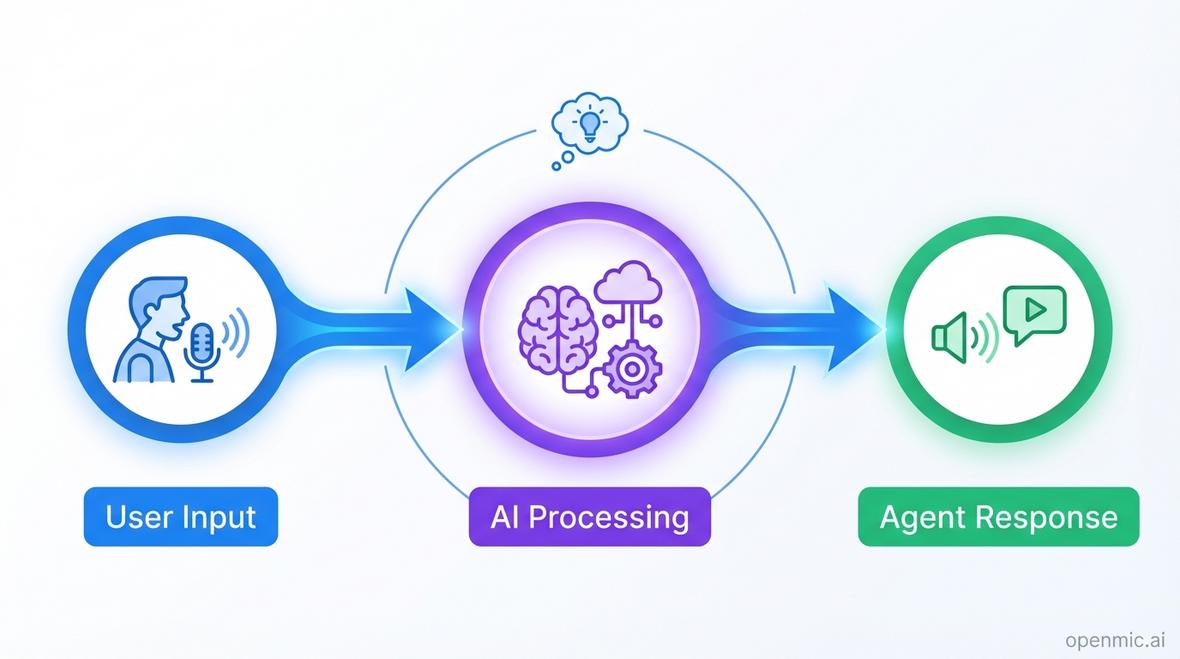
These intelligent systems typically consist of three core components: speech recognition technology that converts spoken words into text, natural language understanding (NLU) that interprets meaning and intent, and text-to-speech synthesis that generates natural-sounding responses. Advanced AI voice agents can handle interruptions, understand multiple languages, detect emotional cues, and even adapt their tone based on the conversation context.
Key Capabilities of Modern AI Voice Agents
- Natural Language Processing: Understanding complex queries and conversational nuances
- Contextual Awareness: Maintaining conversation history and referencing previous interactions
- Multi-turn Dialogues: Managing extended conversations with multiple topics
- CRM Integration: Accessing and updating customer data in real-time
- Sentiment Analysis: Detecting customer emotions and adjusting responses accordingly
- Appointment Scheduling: Coordinating calendars and booking meetings autonomously
- Lead Qualification: Asking targeted questions to assess prospect readiness
- Payment Processing: Securely handling transactions through voice commands
Companies implementing voice AI technology through platforms like OpenMic AI are experiencing significant improvements in customer satisfaction, operational efficiency, and revenue generation. These systems work around the clock, ensuring no lead goes unattended and every customer inquiry receives immediate attention.
Why Businesses Need AI Voice Agents in 2026
The business landscape has evolved dramatically, with customer expectations reaching unprecedented heights. Modern consumers demand immediate responses, personalized interactions, and seamless experiences across all touchpoints. Traditional call centers struggle to meet these demands due to high costs, limited availability, and inconsistent service quality.
Research shows that 71% Consumers Use Voice Assistants for Product Research, with 71% of consumers using voice assistants to browse and research products before purchase, driving demand in retail and customer engagement sectors. This behavioral shift represents a massive opportunity for businesses that embrace voice AI technology early.
Significant Cost Reduction
One of the most compelling reasons to adopt AI voice agents is the substantial cost savings they deliver. Traditional call centers require significant investments in infrastructure, hiring, training, and ongoing management. Employee turnover in call centers often exceeds 30% annually, creating constant recruitment and training expenses. Voice AI eliminates these challenges by providing consistent service at a fraction of the cost.
Businesses implementing solutions like AI contact centers report operational cost reductions of 40-60% compared to traditional staffing models. These savings come from reduced labor expenses, eliminated training costs, and the ability to handle unlimited concurrent calls without additional infrastructure investments.
Unlimited Scalability and Flexibility
Unlike human agents who can handle only one conversation at a time, AI voice agents can manage thousands of simultaneous interactions without degradation in service quality. This scalability proves invaluable during peak periods, product launches, or marketing campaigns when call volumes spike unexpectedly.
Industries like real estate, car dealerships, and healthcare benefit tremendously from this scalability. A single AI voice agent can handle lead qualification calls, schedule property viewings, answer frequently asked questions, and route complex inquiries to human specialists all simultaneously and without breaks.
24/7 Availability and Global Reach
Customer inquiries don't follow business hours. Research indicates that over 40% of potential leads contact businesses outside traditional 9-5 schedules. Without voice AI coverage, these opportunities are lost to competitors who respond faster. AI voice agents ensure your business never misses an opportunity, providing instant responses at any time of day or night.
For businesses operating across multiple time zones or serving international markets, voice AI offers multilingual capabilities that eliminate language barriers. Advanced systems can detect the caller's language preference and seamlessly switch between dozens of languages, ensuring every customer receives service in their preferred language.
Industry-Specific Applications of AI Voice Agents
The versatility of AI voice agents makes them valuable across virtually every industry. However, certain sectors have seen particularly transformative results from voice AI implementation.
Healthcare and Medical Practices
Healthcare providers face unique challenges including appointment scheduling, patient intake, insurance verification, and after-hours emergencies. AI voice agents for dental practices and medical offices automate routine administrative tasks, allowing staff to focus on patient care rather than phone management.
Voice AI systems can handle appointment reminders, reducing no-show rates by up to 35%. They verify insurance information before visits, collect patient symptoms for triage, and even conduct post-appointment follow-ups to monitor recovery progress. For sensitive situations requiring human judgment, the AI seamlessly transfers calls to appropriate medical staff with complete context.
Real Estate and Property Management
The real estate industry thrives on quick response times and consistent lead nurturing. AI voice agents for real estate lead screening qualify prospects by asking about budget, location preferences, timeline, and financing status before connecting them with agents.
Property managers use voice AI to handle maintenance requests, schedule property viewings, answer questions about available units, and collect rental applications. This automation allows human agents to focus exclusively on high-value activities like negotiating deals and building client relationships.
Automotive Dealerships
Car dealerships implementing AI voice agents report dramatic improvements in lead conversion and customer satisfaction. Voice AI handles service appointment scheduling, answers questions about vehicle inventory, provides financing information, and even conducts follow-up calls after test drives.
The technology proves especially valuable for automating service appointment scheduling, reducing the administrative burden on dealership staff while ensuring customers can book maintenance at their convenience. After-hours lead capture capabilities ensure dealerships never miss potential sales opportunities.
Financial Services and Debt Collection
The financial sector has embraced voice AI for customer service, fraud detection, and payment collections. AI voice agents for debt collection conduct sensitive conversations with appropriate empathy, offer payment plan options, send reminders, and escalate cases that require human intervention.
These systems maintain detailed records of every interaction, ensuring compliance with regulations like the Fair Debt Collection Practices Act. They can process payments securely over the phone, eliminating friction in the collection process and improving recovery rates.
Home Services and Construction
Contractors, HVAC companies, and home service providers use AI voice agents to manage appointment scheduling, provide service quotes, answer common questions about services, and conduct customer satisfaction surveys. Solutions like AI voice agents for roofing businesses ensure these companies never miss emergency service calls while maintaining professional communication standards.
How to Implement AI Voice Agents in Your Business
Successfully deploying AI voice agents requires strategic planning and careful execution. The implementation process typically involves several key phases that ensure the technology aligns with your business objectives and delivers measurable results.
Assessment and Planning
Begin by identifying which customer interactions would benefit most from automation. Common starting points include appointment scheduling, FAQ handling, lead qualification, and after-hours coverage. Analyze your current call patterns to understand peak times, common queries, and conversation flows.
Document your specific use cases and success metrics. Are you aiming to reduce wait times, increase lead conversion, lower operational costs, or improve customer satisfaction scores? Clear objectives guide technology selection and implementation priorities.
Choosing the Right Platform
Not all voice AI platforms offer the same capabilities or ease of implementation. Evaluate platforms based on integration capabilities, customization options, scalability, pricing models, and vendor support. Look for solutions that integrate seamlessly with your existing CRM and business tools.
Platforms like OpenMic AI integrations offer connections to popular business systems including HubSpot, Salesforce, Zoho CRM, and Pipedrive, ensuring your voice AI data flows seamlessly across your technology stack.
Training and Customization
Generic voice AI provides limited value. The most effective implementations involve training the AI on your specific business processes, terminology, products, and brand voice. This customization ensures the AI represents your company professionally and handles industry-specific scenarios appropriately.
Create comprehensive conversation scripts that address common scenarios while allowing flexibility for unexpected questions. Build in escalation paths for complex situations that require human expertise, ensuring customers receive appropriate assistance regardless of inquiry complexity.
Testing and Continuous Optimization
Before full deployment, conduct thorough testing with internal teams and select customers. Identify conversation breakpoints, misunderstandings, or scenarios where the AI struggles. Use these insights to refine scripts, improve natural language understanding, and enhance response quality.
Voice AI implementation is not a 'set it and forget it' solution. Continuously monitor conversation transcripts, customer feedback, and performance metrics. Regular optimization ensures your AI voice agents improve over time, handling increasingly complex scenarios with greater accuracy.
Best Practices for AI Voice Agent Success
Organizations achieving the best results from voice AI implementation follow several proven best practices that maximize technology value while maintaining positive customer experiences.
Maintain Transparency
Always inform callers they're interacting with an AI assistant. Transparency builds trust and sets appropriate expectations. Most customers appreciate the efficiency of AI interaction as long as they know human assistance remains available when needed.
Enable Seamless Human Handoffs
Even the most sophisticated AI voice agents encounter situations requiring human judgment. Design your system to recognize these scenarios and transfer smoothly to human agents with complete context. Nothing frustrates customers more than repeating information they've already provided.
Prioritize Personalization
Integrate your voice AI with customer databases to access interaction history, preferences, and previous purchases. Personalized conversations significantly improve customer satisfaction and conversion rates. Customers appreciate when the AI 'remembers' their preferences and previous interactions.
Ensure Compliance and Security
Voice AI systems handling sensitive information must comply with relevant regulations including HIPAA for healthcare, PCI-DSS for payments, and GDPR for European customers. Implement robust security measures for data encryption, storage, and access controls.
The Future of AI Voice Agents
The evolution of AI voice agents continues accelerating with emerging technologies that will further transform customer interactions. Advances in emotional intelligence, multilingual capabilities, and predictive analytics are making voice AI increasingly sophisticated and valuable.
Multimodal experiences combining voice, text, and visual elements will become standard, allowing customers to seamlessly switch between communication channels within a single interaction. Proactive AI agents will anticipate customer needs based on behavioral patterns, reaching out with relevant information before customers even ask.
Integration with augmented reality and Internet of Things devices will expand voice AI applications beyond traditional phone conversations. Imagine AI assistants guiding customers through complex product setups, troubleshooting technical issues with visual support, or providing real-time assistance during in-person experiences.
Measuring ROI from AI Voice Agents
Quantifying the return on investment from AI voice agents involves tracking multiple metrics across operational efficiency, customer experience, and revenue generation. Key performance indicators include:
- Cost per Conversation: Compare AI interaction costs against traditional call center expenses
- First Contact Resolution: Percentage of inquiries resolved without human intervention
- Average Handle Time: Duration from initial contact to issue resolution
- Lead Conversion Rate: Percentage of AI-qualified leads converting to customers
- Customer Satisfaction Scores: Post-interaction ratings and feedback
- After-Hours Conversion: Revenue generated from calls outside business hours
- Appointment Show Rates: Confirmation and reminder effectiveness
- Employee Productivity: Time saved on routine inquiries allowing focus on complex tasks
Organizations implementing comprehensive voice AI solutions typically see positive ROI within 3-6 months, with ongoing value increasing as systems learn and improve over time.
Overcoming Common Implementation Challenges
While AI voice agents deliver substantial benefits, implementation does present challenges that organizations should anticipate and plan for accordingly.
Integration Complexity
Connecting voice AI to existing business systems can prove technically challenging, especially for organizations with legacy infrastructure. Working with experienced vendors who provide robust integration support and pre-built connectors to popular platforms minimizes these difficulties.
Change Management
Employees may resist voice AI adoption, fearing job displacement or skeptical of technology effectiveness. Address these concerns through transparent communication about how AI augments rather than replaces human workers. Demonstrate how automation of routine tasks allows staff to focus on more engaging, higher-value activities.
Handling Conversational Complexity
Human conversations involve nuance, emotion, and unpredictability that AI systems must navigate carefully. Start with well-defined use cases having clear conversation patterns before expanding to more complex scenarios. Continuous learning from actual interactions helps AI handle increasingly sophisticated conversations over time.
Frequently Asked Questions
How accurate are AI voice agents compared to human agents?
Modern AI voice agents achieve 90-95% accuracy in understanding and responding to queries within their trained domains. For routine inquiries and structured conversations, AI often outperforms humans in consistency and accuracy. However, complex situations requiring empathy, creative problem-solving, or judgment still benefit from human involvement.
Can AI voice agents handle multiple languages?
Yes, advanced voice AI platforms support dozens of languages with the ability to detect language preference automatically and switch seamlessly during conversations. This multilingual capability makes voice AI particularly valuable for businesses serving diverse customer populations or operating internationally.
What happens when AI voice agents can't answer a question?
Properly configured AI voice agents recognize when they lack information or encounter scenarios beyond their capabilities. In these situations, they acknowledge the limitation and seamlessly transfer the caller to a human agent with complete context from the AI conversation, ensuring the customer doesn't need to repeat information.
How long does it take to implement AI voice agents?
Implementation timelines vary based on use case complexity and integration requirements. Simple deployments like appointment scheduling can go live within 2-4 weeks, while comprehensive customer service automation with extensive CRM integration may require 2-3 months. The investment in proper planning and customization pays dividends in long-term performance.
Are AI voice agents suitable for small businesses?
Absolutely. Voice AI technology has become increasingly accessible to businesses of all sizes. Many platforms offer flexible pricing models based on usage rather than requiring large upfront investments. Small businesses often see proportionally greater benefits from voice AI since every missed call represents a larger percentage of potential revenue.
Conclusion
AI voice agents represent a fundamental shift in how businesses communicate with customers, offering unprecedented scalability, consistency, and efficiency. As the technology continues advancing and consumer comfort with voice AI grows, adoption will accelerate across every industry. The substantial market growth projected through 2029 reflects the transformative value these systems deliver.
Organizations that embrace AI voice agents strategically position themselves for competitive advantage through reduced costs, improved customer experiences, and enhanced operational efficiency. Whether you're looking to automate appointment scheduling, qualify leads more effectively, provide 24/7 customer support, or scale your business without proportional cost increases, voice AI offers proven solutions.
The question is no longer whether to implement AI voice technology, but how quickly you can deploy it to capture the significant benefits it offers. Explore platforms like OpenMic AI to discover how voice AI can transform your customer engagement strategy in 2026 and beyond.