

Introduction
The rapid evolution of artificial intelligence has ushered in a new era of business communication, and at the forefront of this transformation is the AI voice agent. These intelligent systems are revolutionizing how companies interact with customers, automate repetitive tasks, and scale operations without proportionally increasing headcount. According to Gartner: Conversational assistants to resolve 70% of customer-service journeys by 2028, conversational assistants will resolve 70% of customer-service journeys by 2028, and by 2029 AI systems are expected to autonomously conduct up to 80% of common customer-service conversations.
For tech-savvy business leaders, developers, and operations managers within SMEs and enterprises, understanding AI voice agents is no longer optional it's essential. This comprehensive guide explores what AI voice agents are, how they work, their business applications, implementation strategies, and why platforms like OpenMic.ai are leading the charge in voice automation technology.
What Is an AI Voice Agent?
An AI voice agent is an advanced software system that leverages artificial intelligence, natural language processing (NLP), and machine learning to conduct voice-based conversations with humans. Unlike traditional Interactive Voice Response (IVR) systems that follow rigid, menu-driven scripts, AI voice agents understand context, interpret intent, process natural language, and generate human-like responses in real time.
Core Components of AI Voice Agents
Modern AI voice agents consist of several integrated technologies working in concert:
- Automatic Speech Recognition (ASR): Converts spoken words into text with high accuracy
- Natural Language Understanding (NLU): Interprets the meaning and intent behind the transcribed text
- Dialog Management: Determines the appropriate response based on conversation context and business logic
- Natural Language Generation (NLG): Creates contextually relevant responses in natural language
- Text-to-Speech (TTS): Converts generated text responses into natural-sounding speech
- Integration Layer: Connects with CRM systems, databases, and business applications
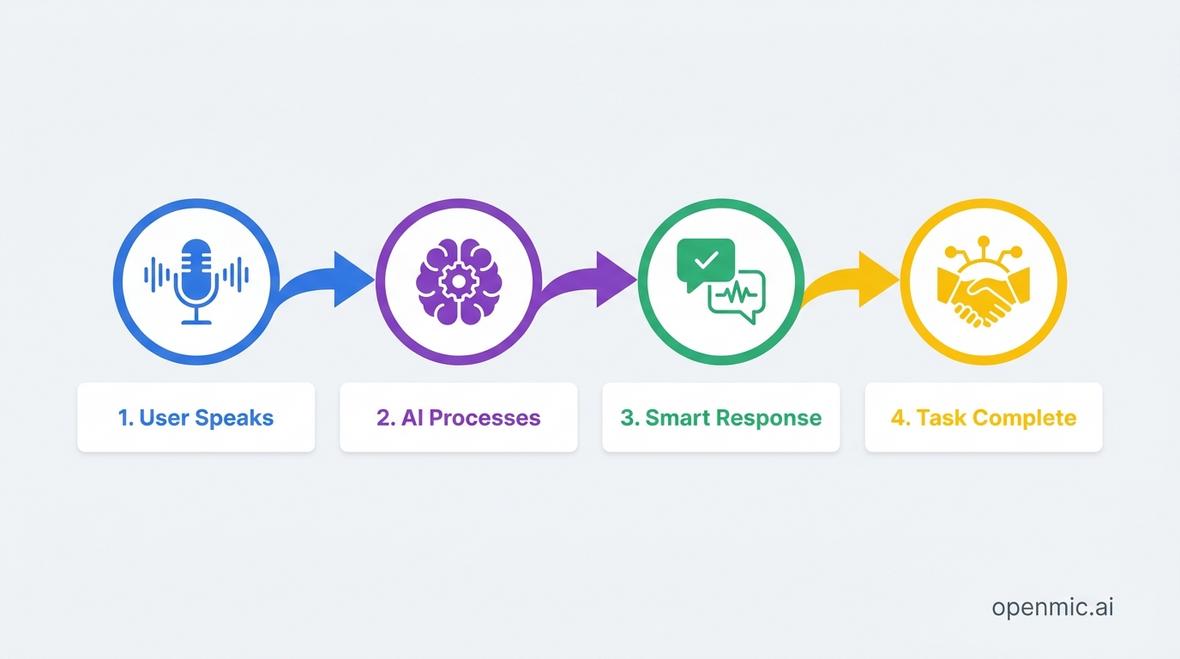
How AI Voice Agents Differ from Traditional IVR
Traditional IVR systems require callers to navigate through numbered menus ('Press 1 for sales, press 2 for support'), creating frustration and often leading to abandoned calls. AI voice agents, by contrast, allow customers to speak naturally, understand complex queries, handle interruptions, and provide personalized responses based on caller history and context. The shift from rigid menu systems to conversational interfaces represents a fundamental transformation in customer experience.
Business Applications of AI Voice Agents
The versatility of AI voice agents makes them valuable across numerous business functions and industries. Here are the most impactful applications:
Inbound Call Handling and Customer Support
AI voice agents excel at managing inbound customer inquiries, providing instant responses to common questions, routing complex issues to appropriate human agents, and operating 24/7 without breaks. This capability addresses one of the primary pain points for growing businesses: missed calls that translate directly to lost revenue. FAQ agents can handle repetitive questions while freeing human agents for higher-value interactions.
Outbound Sales and Lead Qualification
Outbound applications represent significant opportunities for revenue generation. AI voice agents can conduct lead qualification at scale, following up with prospects, scheduling appointments, and nurturing leads through sales funnels. Research from IBM Research: Voice-based AI agents and economic gaps in digital health delivery demonstrates that voice-based AI agents show high acceptance rates and can significantly reduce service delivery costs while improving access.
Appointment Scheduling and Management
For service-based businesses, appointment scheduling consumes substantial administrative time. AI voice agents automate this process by checking availability, booking appointments, sending reminders, and handling rescheduling requests. Appointment booking agents integrate seamlessly with calendar systems and CRM platforms to ensure synchronized scheduling across the organization.
Industry-Specific Applications
Different industries leverage AI voice agents in specialized ways:
- Healthcare: Patient appointment scheduling, prescription refills, symptom assessment, and follow-up calls
- Real Estate: Lead screening, property information, showing scheduling, and follow-up communication
- Automotive: Service appointment booking, test drive scheduling, and lead nurturing for dealerships
- Legal: Initial client intake, appointment scheduling, and case status updates
- Retail: Order status inquiries, product information, and cart abandonment follow-up
Platforms like OpenMic.ai for healthcare and car dealerships offer industry-tailored solutions that understand sector-specific terminology and workflows.
Key Benefits of Implementing AI Voice Agents
Organizations implementing AI voice agents report substantial operational and financial benefits:
Significant Cost Reduction
Traditional call centers incur substantial costs: agent salaries, training, infrastructure, and management overhead. AI voice agents reduce these expenses by handling routine interactions autonomously, operating without breaks or benefits, and scaling instantly during peak periods without additional hiring. Businesses typically see 40-60% cost reductions in customer service operations after implementation.
24/7 Availability and Instant Response
Customer expectations have evolved modern consumers expect immediate assistance regardless of time zones or business hours. AI voice agents provide round-the-clock availability, eliminating missed calls and capturing leads that would otherwise be lost during after-hours periods. This constant availability directly translates to increased revenue and improved customer satisfaction.
Unlimited Scalability
During product launches, seasonal peaks, or marketing campaigns, call volumes can spike dramatically. Traditional call centers struggle to scale quickly, often resulting in long wait times and abandoned calls. AI voice agents scale instantly to handle thousands of simultaneous conversations without degradation in response quality or speed.
Consistency and Compliance
Human agents vary in knowledge, tone, and adherence to scripts. AI voice agents deliver consistent experiences across every interaction, follow compliance requirements precisely, and maintain brand voice uniformly. This consistency is particularly valuable in regulated industries like healthcare, finance, and legal services.
Enhanced Data Collection and Insights
Every conversation with an AI voice agent generates valuable data: common customer questions, sentiment analysis, conversation outcomes, and interaction patterns. This data provides actionable insights for product development, marketing strategies, and operational improvements. AI contact centers leverage these insights to continuously optimize customer experience.
Implementation Considerations for AI Voice Agents
Successfully deploying AI voice agents requires careful planning and consideration of several factors:
Integration with Existing Systems
AI voice agents must integrate seamlessly with your existing technology stack: CRM platforms, telephony systems, databases, and business applications. API-first platforms like OpenMic.ai integrations provide pre-built connectors for popular systems including HubSpot, Salesforce, Pipedrive, and Zapier, enabling rapid deployment without extensive custom development.
Voice Quality and Natural Conversation
The quality of AI-generated speech significantly impacts user experience. Modern text-to-speech engines produce remarkably natural voices, but businesses should evaluate voice options, test conversation flows, and ensure the voice aligns with brand identity. Latency the delay between user speech and agent response must remain imperceptible, typically under 300 milliseconds, to maintain natural conversation flow.
Conversation Design and Training
Effective AI voice agents require thoughtful conversation design: defining use cases, mapping conversation flows, creating fallback strategies, and establishing escalation paths to human agents when necessary. The system must be trained on industry-specific terminology, common customer questions, and appropriate responses aligned with business policies.
Security and Compliance
Voice interactions often involve sensitive information personal data, payment details, health information. Ensure your AI voice agent platform provides enterprise-grade security: data encryption, compliance with GDPR, HIPAA, and other regulations, secure API authentication, and audit trails for all interactions. This is particularly critical for industries handling sensitive customer data.
Choosing the Right AI Voice Agent Platform
The market offers numerous AI voice agent platforms, each with different capabilities, pricing models, and integration options. Key evaluation criteria include:
Essential Evaluation Criteria
- API-First Architecture: Developer-friendly platforms with robust APIs enable custom integrations and flexible deployment
- Multi-Channel Support: Beyond phone calls, consider platforms supporting SMS, chat, and other channels
- Customization Capabilities: The ability to customize voices, conversation flows, and business logic
- Analytics and Reporting: Comprehensive dashboards showing call metrics, conversation outcomes, and performance data
- Pricing Transparency: Clear pricing models without hidden fees or surprising overage charges
- Scalability: The platform should handle your current volume and scale as your business grows
- Support and Documentation: Quality technical documentation, responsive support, and implementation assistance
Why OpenMic.ai Stands Out
OpenMic.ai addresses the specific needs of tech-savvy business leaders and developers seeking powerful, secure, and highly integrable voice AI solutions. The platform offers an API-first architecture designed for seamless integration, enterprise-grade security suitable for regulated industries, flexible deployment options for both inbound and outbound use cases, transparent pricing without hidden costs, and comprehensive documentation with developer-friendly tools. Businesses can explore OpenMic.ai pricing to understand the cost structure and find a plan that fits their needs.
Step-by-Step Implementation Guide
Deploying an AI voice agent involves several phases, from initial planning through continuous optimization:
Phase 1: Define Objectives and Use Cases
Begin by identifying specific business problems you want to solve: Are you losing leads due to missed calls? Is your support team overwhelmed with repetitive questions? Do you need to scale outbound sales efforts? Define measurable success criteria for your implementation.
Phase 2: Select and Configure Platform
Choose a platform that meets your technical and business requirements. Configure your account, set up integrations with existing systems, and establish security protocols. OpenMic.ai guides provide step-by-step instructions for common implementation scenarios.
Phase 3: Design Conversation Flows
Map out conversation paths for your primary use cases: greeting scripts, common question responses, information gathering sequences, and escalation triggers. Test these flows internally before deployment to identify potential issues.
Phase 4: Pilot and Iterate
Launch with a limited pilot group or specific use case. Monitor performance closely, gather feedback from both customers and internal stakeholders, and iterate on conversation design. This phased approach minimizes risk while providing valuable learning opportunities.
Phase 5: Scale and Optimize
After successful pilot validation, gradually expand deployment across additional use cases and customer segments. Continuously analyze performance data, optimize conversation flows based on real interactions, and expand capabilities over time.
Real-World Impact: Industry Examples
AI voice agents are transforming operations across diverse industries with measurable results:
Healthcare: Reducing Administrative Burden
Medical practices spend countless hours on appointment scheduling and patient inquiries. A peer-reviewed study: Generative AI voice agents in medicine and patient interaction efficiency demonstrates that AI voice agents in clinical workflows can clarify ambiguous statements, capture data in real time, and potentially reduce clinician time burden significantly. Healthcare providers using AI voice agents report 50-70% reductions in administrative staff time spent on scheduling.
Real Estate: Never Missing a Lead
In competitive real estate markets, responding quickly to inquiries determines success. Real estate AI voice agents answer prospect calls immediately, qualify leads based on budget and timeline, schedule property showings, and follow up systematically. Agents report 35-50% increases in qualified appointments from automated lead screening.
Automotive: Transforming Dealership Operations
Car dealerships face unique challenges: high call volumes, complex inventory questions, and the need for immediate response. AI voice agents handle service appointment scheduling, test drive bookings, and initial sales inquiries, allowing human staff to focus on in-person customer experiences. Dealerships typically see 25-40% increases in appointment show rates through automated reminders and confirmations.
Future Trends in AI Voice Agent Technology
The AI voice agent landscape continues evolving rapidly with several emerging trends:
Emotion Recognition and Adaptive Response
Next-generation AI voice agents will detect emotional states from voice tone and adjust responses accordingly showing empathy when customers are frustrated, enthusiasm when they are excited, and patience when they are confused. This emotional intelligence will further close the gap between AI and human interactions.
Multilingual and Accent Adaptation
Advanced voice agents will seamlessly switch between languages mid-conversation and adapt to regional accents and dialects with improved accuracy. This capability expands market reach for businesses operating in diverse geographic regions.
Predictive and Proactive Engagement
Future AI voice agents will move beyond reactive responses to proactive engagement: identifying customers likely to churn and initiating retention conversations, recognizing upsell opportunities and making relevant suggestions, and predicting customer needs before explicit requests.
Frequently Asked Questions
How much does an AI voice agent cost?
Pricing varies by platform, usage volume, and features. Most platforms charge per minute of conversation or per call, with typical costs ranging from $0.05 to $0.25 per minute. Enterprise solutions may offer custom pricing for high-volume deployments. OpenMic.ai provides transparent pricing models designed for businesses of all sizes.
Can AI voice agents handle complex customer issues?
AI voice agents excel at handling routine, predictable interactions and can manage moderately complex scenarios with proper training. For highly complex or emotionally sensitive situations, well-designed systems seamlessly transfer to human agents while providing context from the AI conversation.
How long does implementation take?
Implementation timelines range from a few days for simple use cases to several weeks for complex, multi-system integrations. API-first platforms with pre-built integrations significantly accelerate deployment. Many businesses have functional AI voice agents operational within 1-2 weeks.
Do customers prefer AI or human agents?
Customer preference depends on the situation. For quick, straightforward inquiries (checking order status, scheduling appointments, getting basic information), customers often prefer the speed and convenience of AI agents. For complex problems or emotionally charged situations, human interaction remains preferred. The key is offering appropriate escalation paths.
What ROI can I expect from AI voice agents?
ROI varies by implementation, but businesses typically report: 40-60% reduction in customer service costs, 25-50% increase in lead capture and conversion, 70-90% reduction in missed calls, and payback periods of 3-6 months. The highest returns come from organizations with high call volumes and significant manual handling costs.
Conclusion
AI voice agents represent a fundamental shift in business communication, offering unprecedented opportunities to scale operations, reduce costs, and enhance customer experiences. As Gartner research indicates, conversational assistants will soon resolve the majority of customer-service journeys, making adoption not just advantageous but necessary for competitive businesses. For tech-savvy leaders seeking powerful, secure, and integrable solutions, platforms like OpenMic.ai provide the enterprise-grade capabilities needed to deploy intelligent voice automation effectively. Whether you are looking to automate appointment scheduling, scale outbound sales, or provide 24/7 customer support, AI voice agents offer measurable business value with rapid implementation timelines. The question is no longer whether to implement AI voice agents, but how quickly you can deploy them to gain competitive advantage in your market.