
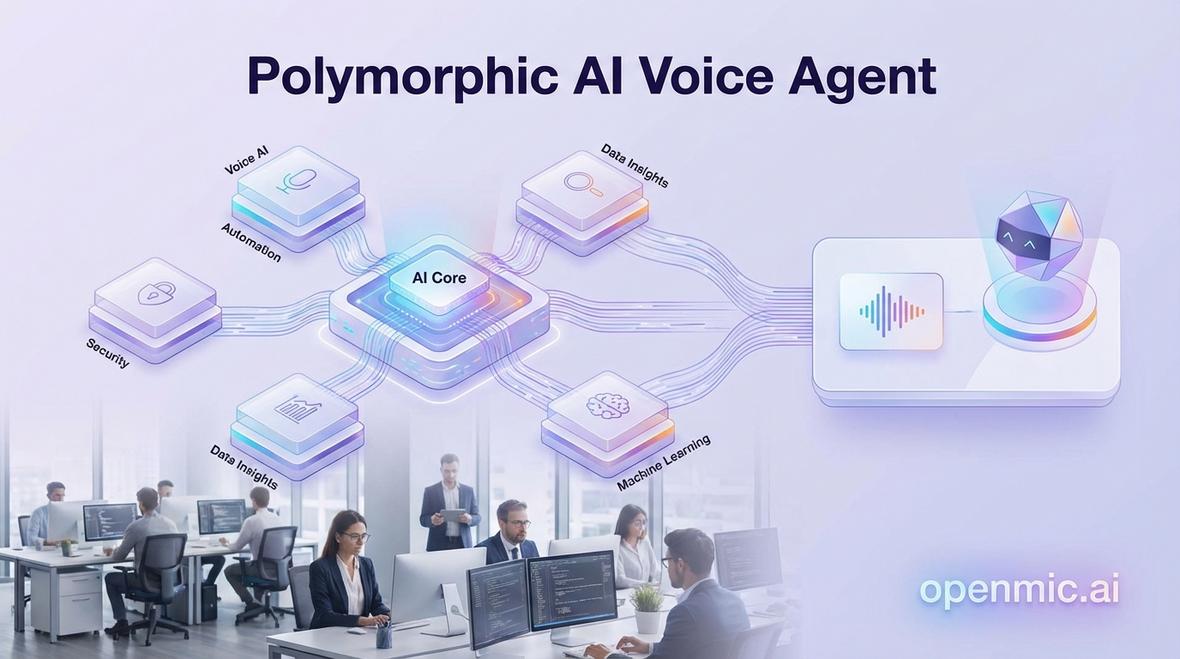
What is AI Poly and Why It Matters for Modern Businesses
In the rapidly evolving landscape of business communication, AI poly represents a revolutionary approach to voice automation that combines polymorphic capabilities with intelligent conversational AI. Unlike traditional monolithic voice systems, AI poly leverages adaptive, multi-faceted AI architectures that can seamlessly switch contexts, handle diverse communication scenarios, and integrate across multiple platforms simultaneously.
For tech-savvy business leaders and developers, understanding AI poly is crucial for scaling operations, reducing costs, and enhancing customer responsiveness. This technology addresses the primary pain points of modern SMEs and enterprises: missed calls, the prohibitive expense of 24/7 human support, and the severe limitations of legacy Interactive Voice Response (IVR) systems. By deploying polymorphic AI voice agents, organizations can create powerful, secure, and highly integrable solutions for both inbound and outbound call automation.
The term 'poly' in AI poly refers to the polymorphic nature of these systems their ability to adapt to multiple roles, handle various communication protocols, and deliver consistent performance across diverse business contexts. Whether you're managing customer support, sales outreach, appointment scheduling, or debt collection, AI poly provides the foundational architecture to automate intelligently without sacrificing quality or security.
Understanding the Core Architecture of AI Poly Systems
AI poly systems are built on a sophisticated foundation that integrates several cutting-edge technologies. At the heart of these systems lies an AI Core—a centralized processing engine that orchestrates multiple AI-driven functions simultaneously. This core architecture enables voice AI, automation, security, data insights, and machine learning to work in harmony.
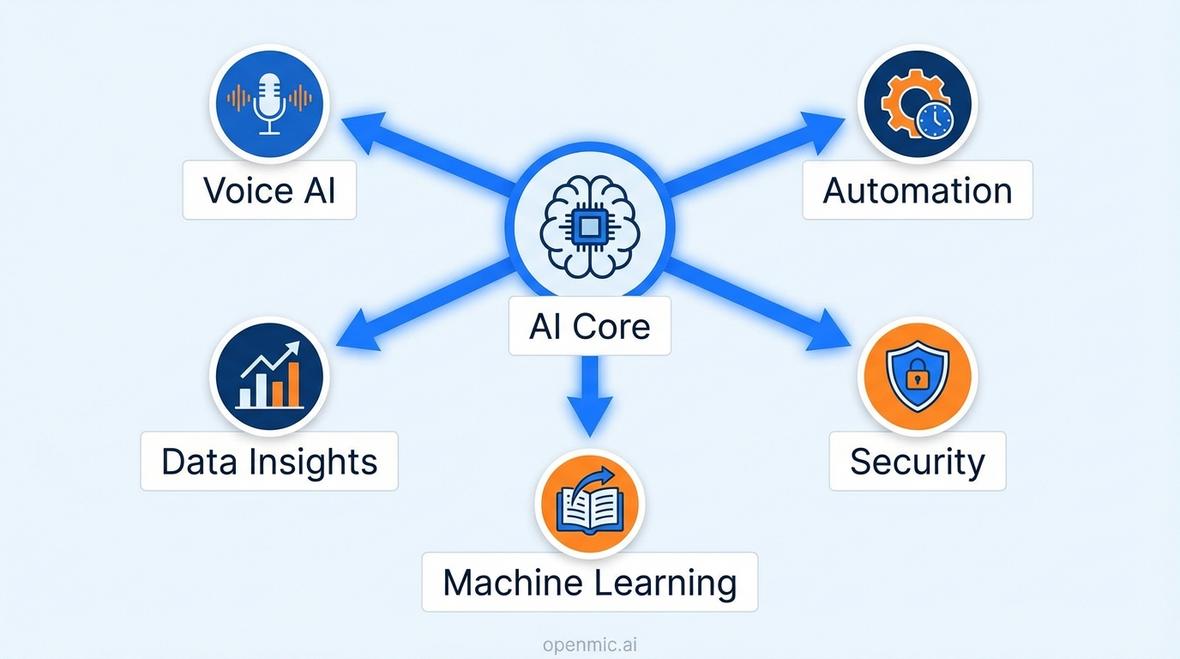
The diagram above illustrates how AI poly platforms centralize intelligence. The AI Core serves as the brain, connecting to specialized modules including Voice AI for natural language processing, Automation for workflow orchestration, Security for data protection, Data Insights for analytics, and Machine Learning for continuous improvement. This polymorphic design allows businesses to deploy AI voice agents that can simultaneously handle customer inquiries, route calls intelligently, authenticate users, and extract actionable insights from every conversation.
Key Components of AI Poly Architecture
- Voice AI Module: Handles speech recognition, natural language understanding (NLU), and text-to-speech synthesis with human-like quality.
- Automation Engine: Orchestrates workflows, triggers actions based on conversation outcomes, and integrates with CRM and business systems.
- Security Layer: Implements encryption, caller authentication, PCI compliance, and HIPAA-grade data protection.
- Data Insights: Captures conversation metadata, sentiment analysis, call outcomes, and performance metrics in real-time.
- Machine Learning Core: Continuously learns from interactions to improve accuracy, reduce latency, and personalize responses.
For developers seeking to implement AI poly solutions, platforms like OpenMic.ai's developer-focused voice AI tools provide API-first access to these core components, enabling rapid integration and customization.
Strategic Use Cases for AI Poly in Enterprise Environments
AI poly systems excel in scenarios where traditional voice automation fails. Their polymorphic nature allows them to adapt to complex, multi-step workflows while maintaining context and delivering personalized experiences. Let's explore the most impactful use cases for business leaders considering AI poly deployment.
Inbound Customer Support and Service Automation
AI poly voice agents can handle the full spectrum of inbound customer service tasks, from answering frequently asked questions to troubleshooting technical issues. Unlike rigid IVR systems that frustrate callers with endless menu options, AI poly agents use conversational AI to understand intent, ask clarifying questions, and resolve issues in natural dialogue.
These systems can authenticate callers using voice biometrics and contextual information, access customer records in real-time, and escalate complex cases to human agents with full conversation history. For businesses managing high call volumes, AI poly reduces wait times, improves first-call resolution rates, and operates 24/7 without the overhead of maintaining large support teams. Organizations can leverage FAQ automation agents to handle common inquiries instantly.
Outbound Sales and Lead Qualification
AI poly excels in outbound scenarios where personalization and persistence drive results. Voice agents can conduct cold calling campaigns, qualify leads based on predefined criteria, schedule appointments with decision-makers, and even handle objections using dynamic conversation flows.
Research shows that AI-powered outbound calling can increase contact rates by up to 300% compared to traditional methods, while simultaneously reducing cost-per-lead by 70%. These agents work continuously, follow up at optimal times, and never suffer from call fatigue. Sales managers can deploy AI poly for intelligent lead qualification that scores prospects in real-time and routes hot leads immediately to sales representatives.
Intelligent Appointment Scheduling and Reminders
For industries like healthcare, legal services, real estate, and home services, missed appointments represent significant lost revenue. AI poly systems can proactively call customers to confirm appointments, reschedule based on availability, and send automated reminders via voice calls.
These systems integrate bidirectionally with scheduling platforms, updating calendars in real-time and handling cancellations or rescheduling requests without human intervention. Healthcare practices using AI poly for appointment booking automation report 40-50% reductions in no-show rates and significant improvements in patient satisfaction scores.
Compliance-Focused Debt Collection
The debt collection industry faces strict regulatory requirements under the Fair Debt Collection Practices Act (FDCPA) and similar legislation. AI poly systems ensure 100% compliance by adhering to scripted protocols, recording all interactions, and respecting contact time restrictions.
These agents can handle high-volume outbound campaigns, negotiate payment arrangements, process payments via secure phone integrations, and escalate cases requiring human judgment. For debt collection agencies, AI-powered debt collection solutions deliver better recovery rates while minimizing compliance risks and operational costs.
Technical Implementation of AI Poly: Developer Considerations
For developers and technical decision-makers, implementing AI poly requires understanding the integration architecture, API design, and performance optimization strategies that ensure low-latency, high-quality voice interactions.
API-First Integration Architecture
Modern AI poly platforms expose comprehensive RESTful APIs that allow developers to programmatically create voice agents, configure conversation flows, trigger outbound calls, and retrieve conversation analytics. The API-first approach enables seamless integration with existing business systems including CRMs, help desks, scheduling platforms, and payment processors.
Key API capabilities include:
- Agent Creation and Configuration: Define voice personalities, conversation scripts, and decision trees programmatically.
- Call Triggering: Initiate outbound calls via API with custom parameters and context data.
- Webhook Integration: Receive real-time notifications about call events, transcripts, and outcomes.
- Data Enrichment: Pass customer context to voice agents and receive structured data about conversation outcomes.
Developers can explore OpenMic.ai's integration capabilities to understand how AI poly platforms connect with thousands of business applications through native integrations and middleware like Zapier.
Latency Optimization and Voice Quality
One of the most critical technical considerations for AI poly implementations is minimizing latency the delay between when a caller speaks and when the AI agent responds. According to industry standards for VoIP communication, acceptable latency thresholds fall below 150 milliseconds for natural conversation flow.
AI poly platforms achieve ultra-low latency through:
- Edge Computing: Deploying AI models closer to users to reduce network round-trip time.
- Optimized Model Inference: Using quantized neural networks and specialized hardware accelerators.
- Predictive Pre-processing: Anticipating likely user responses and pre-generating answers.
- Adaptive Bitrate Audio: Adjusting audio quality based on network conditions without sacrificing intelligibility.
For technical teams focused on voice quality, understanding acceptable latency standards for VoIP is essential for setting performance benchmarks and monitoring system health.
Security and Compliance Considerations
AI poly systems handling sensitive customer data must implement enterprise-grade security measures. This includes end-to-end encryption for voice streams, secure storage of call recordings, role-based access controls, and audit logging for compliance verification.
For regulated industries like healthcare and finance, AI poly platforms must support HIPAA compliance for protected health information and PCI DSS compliance for payment card data. Advanced systems implement robust identity verification mechanisms including voice biometrics, multi-factor authentication, and knowledge-based authentication to prevent fraud and ensure data privacy.
AI Poly vs. Traditional IVR and Call Center Systems
Understanding the fundamental differences between AI poly and legacy systems helps business leaders make informed technology investments. Let's compare these approaches across critical dimensions.
Conversational Flexibility and Natural Language Understanding
Traditional IVR systems rely on rigid menu structures and limited keyword recognition. Callers must navigate through multiple layers of options, often repeating themselves or being forced into predetermined paths that don't match their actual needs. This creates frustration, leading to high abandonment rates and negative customer experiences.
AI poly systems use advanced natural language processing to understand caller intent from free-form speech. They can handle interruptions, correct misunderstandings, and maintain context across multi-turn conversations. This flexibility makes interactions feel natural and efficient, dramatically improving customer satisfaction scores.
Scalability and Cost Efficiency
Scaling traditional call centers requires hiring, training, and managing large teams of agents a process that's both expensive and time-consuming. Human agents have limited concurrent capacity, require breaks, and incur ongoing salary and benefit costs.
AI poly systems scale infinitely without linear cost increases. A single AI poly deployment can handle thousands of simultaneous conversations, operate 24/7/365 without fatigue, and require only incremental compute costs as volume increases. Businesses typically see 60-80% cost reductions compared to maintaining equivalent human support capacity.
Consistency and Compliance
Human agents, regardless of training quality, introduce variability in how they handle calls. This inconsistency can lead to compliance issues in regulated industries, uneven customer experiences, and difficulty in quality assurance.
AI poly agents deliver perfectly consistent responses, adhere strictly to compliance protocols, and record every interaction for audit purposes. This consistency is particularly valuable in industries like debt collection, healthcare, and financial services where regulatory compliance is paramount.
Selecting the Right AI Poly Platform for Your Business
Not all AI poly platforms are created equal. Business leaders and developers should evaluate solutions based on several critical criteria to ensure they're choosing a platform that meets their specific requirements.
Key Evaluation Criteria
1. Integration Capabilities: The platform should offer native integrations with your existing CRM, help desk, scheduling, and business intelligence tools. Look for platforms with robust API documentation and support for webhooks, middleware, and custom integrations.
2. Voice Quality and Natural Sound: Request demo calls to evaluate the naturalness of the AI voice, response latency, and ability to handle complex queries. The best platforms offer multiple voice options and support for regional accents and languages.
3. Conversation Design Tools: Assess the platform's tools for building and managing conversation flows. No-code visual builders are essential for non-technical users, while developers should look for code-level access and version control capabilities. Understanding voice AI conversation design best practices can help teams build more effective agents.
4. Analytics and Insights: The platform should provide comprehensive dashboards showing call volumes, resolution rates, conversation sentiment, common failure points, and ROI metrics. Real-time analytics enable continuous optimization.
5. Security and Compliance: Verify that the platform meets industry-specific compliance requirements (HIPAA, PCI DSS, GDPR, TCPA) and implements enterprise-grade security measures including encryption, access controls, and audit logging.
6. Scalability and Reliability: Investigate the platform's infrastructure, uptime guarantees, and ability to handle traffic spikes. Ask about redundancy, failover mechanisms, and disaster recovery capabilities.
The OpenMic.ai Advantage in AI Poly Deployment
OpenMic.ai stands out as a comprehensive AI poly platform specifically designed for developers and business leaders who demand flexibility, security, and performance. The platform offers an API-first architecture that enables rapid deployment of voice agents across diverse use cases from healthcare reception automation to automotive dealership communication.
OpenMic.ai's polymorphic AI architecture supports simultaneous deployment of multiple specialized agents, each optimized for specific business functions while sharing a common intelligence core. This approach reduces development time, ensures consistency, and enables organizations to scale voice AI adoption incrementally across departments and use cases.
Implementation Roadmap: From Pilot to Production
Successfully implementing AI poly requires a structured approach that balances technical integration, user adoption, and continuous optimization. Here's a proven roadmap for deploying AI poly voice agents in enterprise environments.
Phase 1: Pilot Program and Use Case Validation
Start with a focused pilot targeting a high-impact, well-defined use case such as appointment reminders, basic FAQ handling, or lead qualification. Define clear success metrics including call completion rates, customer satisfaction scores, and cost per interaction.
During the pilot phase:
- Configure a limited-scope AI agent with carefully crafted conversation flows
- Test with a subset of customers or prospects
- Collect feedback from both users and internal stakeholders
- Monitor key performance indicators daily and iterate rapidly
- Document lessons learned and technical integration challenges
Phase 2: Scaling and Multi-Use-Case Expansion
Once the pilot demonstrates measurable value, expand to additional use cases and higher call volumes. This phase focuses on integration depth, adding connections to more business systems and enabling more sophisticated workflows.
Key activities include:
- Deploying additional specialized agents for different business functions
- Implementing advanced features like sentiment analysis and dynamic routing
- Training support teams on how to handle escalations from AI agents
- Establishing quality assurance processes and regular conversation audits
- Building dashboards for business stakeholders to monitor performance
Phase 3: Continuous Optimization and AI Training
AI poly systems improve over time through continuous learning from real conversations. Establish processes for reviewing failed interactions, updating conversation flows, and retraining models with new data.
Optimization strategies include:
- A/B testing different conversation approaches and measuring outcomes
- Analyzing transcripts to identify common confusion points or gaps in knowledge
- Expanding vocabulary and training data to handle edge cases
- Refining routing logic to balance AI automation with human escalation
- Measuring ROI and adjusting deployment priorities based on business impact
Industry-Specific AI Poly Applications
Different industries face unique communication challenges that AI poly systems can address with specialized configurations and integrations.
Healthcare: Patient Engagement and Administrative Automation
Healthcare organizations use AI poly for appointment scheduling, prescription refill requests, insurance verification, and post-care follow-up. These systems integrate with electronic health record (EHR) systems, respect HIPAA privacy requirements, and reduce administrative burden on clinical staff. Medical practices implementing AI voice agents for dental practices report significant improvements in appointment adherence and patient satisfaction.
Real Estate: Lead Screening and Property Inquiries
Real estate professionals deploy AI poly agents to qualify leads, schedule property showings, answer questions about listings, and nurture prospects through long sales cycles. These systems can handle high volumes of inbound inquiries from property portals, providing instant responses while capturing detailed lead information. Agents using AI for real estate lead screening can focus on high-value activities like negotiations and closings.
Automotive: Service Scheduling and Sales Support
Car dealerships face intense competition and high customer expectations for responsiveness. AI poly systems handle service appointment scheduling, answer questions about vehicle inventory, qualify trade-in inquiries, and follow up on test drive requests. The technology helps dealerships capture after-hours leads and maintain consistent communication throughout the customer journey. Understanding how voice AI compares to traditional BDC operations reveals the strategic advantages for automotive retailers.
Legal Services: Client Intake and Case Screening
Law firms use AI poly for initial client intake, case screening, appointment scheduling with attorneys, and status updates on ongoing matters. These systems can gather detailed case information, assess potential claim viability based on predefined criteria, and route urgent matters to appropriate legal staff. For mass tort practices, conversational AI revolutionizes case intake by handling high volumes while maintaining detailed documentation.
Future Trends in AI Poly Technology
As AI poly systems mature, several emerging trends will shape how businesses leverage polymorphic voice agents for competitive advantage.
Multimodal AI Integration
Next-generation AI poly platforms will seamlessly integrate voice, text, email, and visual channels into unified conversational experiences. Customers will be able to start interactions via phone, continue via SMS, and complete transactions through web interfaces all while maintaining context and conversation history.
Emotion AI and Advanced Sentiment Analysis
Future AI poly systems will incorporate sophisticated emotion detection, analyzing voice tone, speech patterns, and word choice to detect customer frustration, satisfaction, or urgency. These insights will enable dynamic conversation adjustments and intelligent routing decisions based on emotional state.
Autonomous Learning and Self-Optimization
AI poly platforms will evolve to automatically identify conversation failures, generate hypotheses for improvement, A/B test solutions, and implement optimizations without human intervention. This autonomous learning will dramatically reduce the ongoing management overhead of voice AI systems.
Industry-Specialized Agent Templates
Rather than building voice agents from scratch, businesses will leverage pre-built, industry-specialized agent templates that come configured with domain knowledge, compliance protocols, and proven conversation flows. This will accelerate deployment timelines from months to days.
Frequently Asked Questions About AI Poly
What is the difference between AI poly and traditional chatbots?
AI poly refers specifically to polymorphic voice AI systems that handle phone conversations using advanced natural language processing and can adapt to multiple business contexts. Traditional chatbots typically operate via text on websites or messaging apps. AI poly systems handle the complexities of real-time voice communication including interruptions, accents, background noise, and emotional nuances that text-based chatbots cannot address.
How much does it cost to implement AI poly voice agents?
Costs vary based on call volume, complexity of use cases, and integration requirements. Most AI poly platforms charge per-minute rates for voice calls ranging from $0.05 to $0.15 per minute, plus platform fees for access to conversation design tools, analytics, and API capabilities. A typical mid-sized business handling 10,000 calls monthly might expect total costs between $2,000 and $5,000 per month significantly less than the $15,000-$30,000 cost of employing equivalent human support staff.
Can AI poly systems handle complex, multi-step conversations?
Yes, modern AI poly platforms excel at managing complex, multi-turn dialogues that require gathering information across multiple questions, validating inputs, accessing external systems for data lookups, and making context-aware decisions. Advanced conversation design tools enable developers to build sophisticated decision trees and state machines that guide interactions through complex workflows while maintaining natural conversation flow.
What happens when an AI poly agent cannot resolve a customer issue?
Well-designed AI poly systems include intelligent escalation logic that detects when conversations exceed the agent's capabilities. When this occurs, the system can transfer the call to a human agent along with complete conversation context, schedule a callback from a specialist, or offer alternative resolution channels. The goal is seamless handoff that doesn't force customers to repeat information.
How long does it take to deploy an AI poly voice agent?
Deployment timelines vary based on use case complexity and integration requirements. Simple implementations like appointment reminders or basic FAQ handling can be deployed in 1-2 weeks. More complex scenarios requiring deep CRM integration, custom conversation flows, and extensive testing may take 4-8 weeks. Organizations using API-first platforms with strong developer tools and pre-built templates can significantly accelerate timelines.
Are AI poly systems secure enough for handling sensitive customer data?
Enterprise-grade AI poly platforms implement comprehensive security measures including end-to-end encryption for voice streams, encrypted storage of call recordings, role-based access controls, and compliance certifications for HIPAA, PCI DSS, and GDPR. Organizations handling highly sensitive data should verify platform security certifications, review data retention policies, and conduct security assessments as part of vendor evaluation.
Conclusion
AI poly represents a fundamental shift in how businesses approach voice communication and customer engagement. By leveraging polymorphic AI architectures that combine voice AI, automation, security, data insights, and machine learning into unified platforms, organizations can deliver exceptional customer experiences while dramatically reducing operational costs. For tech-savvy business leaders and developers, AI poly offers the flexibility, scalability, and integration capabilities needed to build competitive advantages in an increasingly automated business landscape. Whether addressing inbound customer support, outbound sales, appointment scheduling, or compliance-focused communications, AI poly systems provide the foundation for intelligent, efficient, and secure voice automation that scales with your business needs. As the technology continues to evolve with multimodal integration, emotion AI, and autonomous learning capabilities, early adopters will establish significant operational advantages over competitors still relying on legacy systems.