
Understanding AI Front Desk Technology
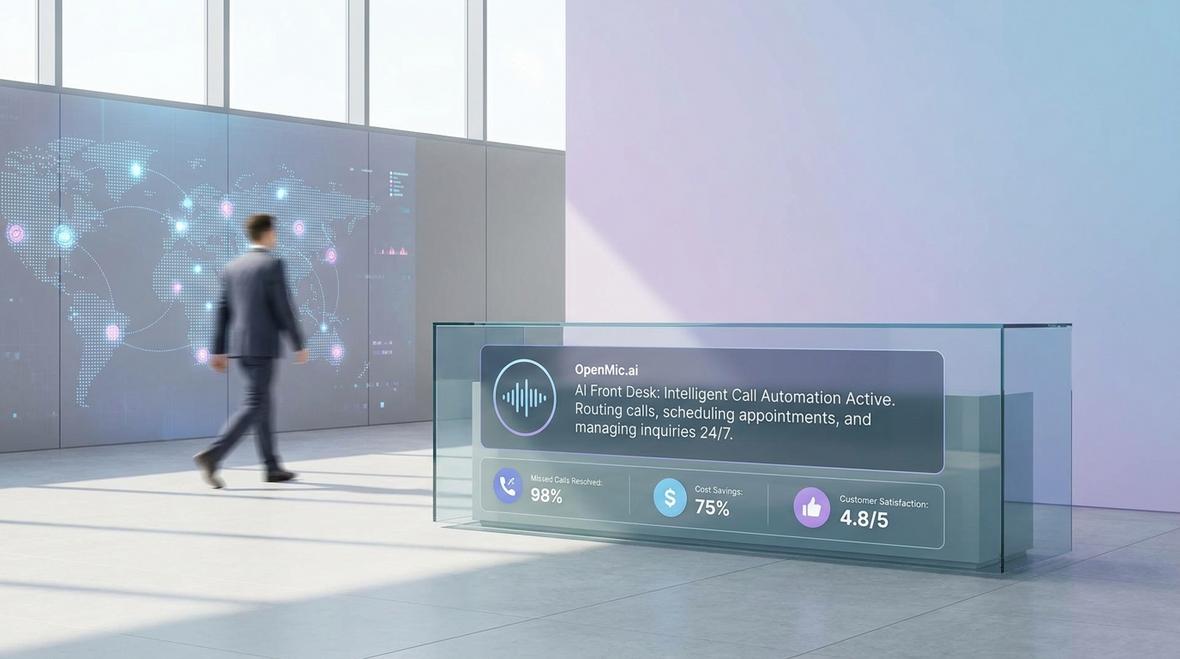
An AI front desk represents a revolutionary leap in business communication, replacing traditional receptionist functions with intelligent voice automation powered by artificial intelligence. This technology handles inbound calls, routes inquiries to appropriate departments, schedules appointments, answers frequently asked questions, and delivers seamless customer experiences all without human intervention. For tech-savvy business leaders and developers working within SMEs and enterprises, deploying an AI front desk solution addresses critical pain points: missed calls during after-hours, escalating labor costs for 24/7 coverage, and the frustrating limitations of outdated IVR systems.
Modern AI front desk systems leverage natural language processing (NLP), machine learning, and advanced speech recognition to understand caller intent, respond contextually, and execute complex workflows. Unlike rigid phone trees that frustrate callers with menu options, these intelligent agents conduct natural conversations, recognize customer sentiment, and adapt responses dynamically. The result is dramatically improved customer satisfaction, reduced operational overhead, and scalable communication infrastructure that grows with your business.
According to the U.S. Bureau of Labor Statistics, the median annual wage for customer service representatives reached $37,780 in recent reports, translating to approximately $18.17 per hour. When factoring in benefits, training costs, turnover expenses, and infrastructure overhead, the true annual cost per full-time receptionist often exceeds $50,000. By contrast, implementing an AI front desk solution can reduce these expenses by 60-80% while simultaneously increasing availability to true 24/7 coverage without fatigue or scheduling conflicts.
Key Features of AI Front Desk Solutions
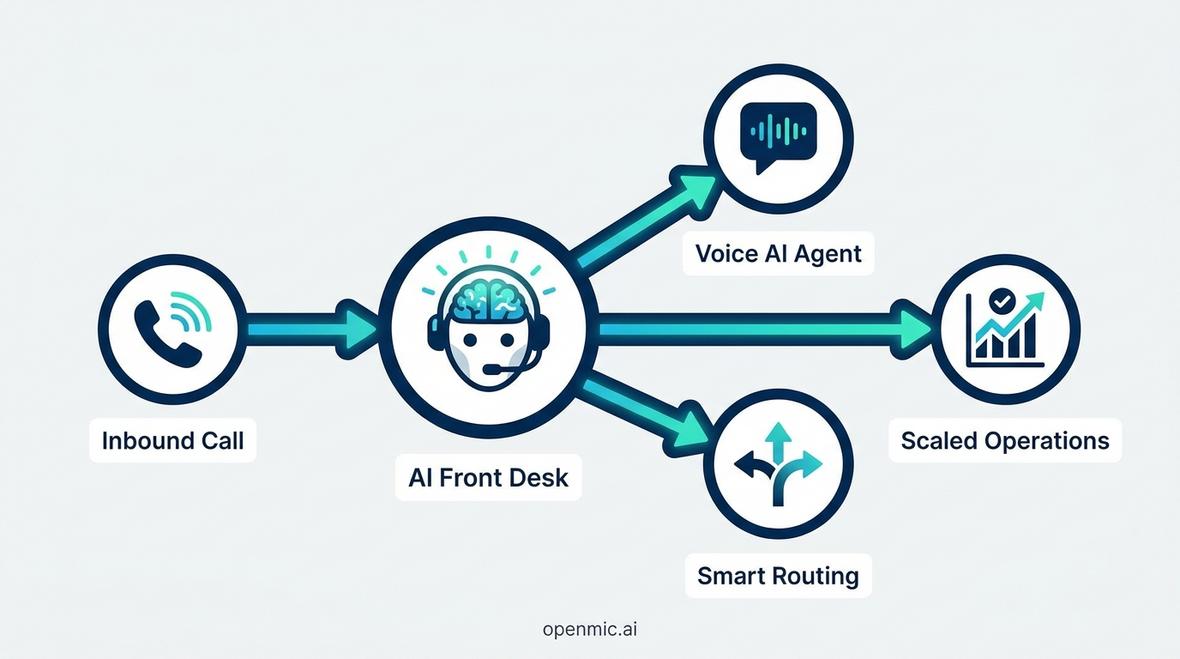
When evaluating AI front desk platforms, business leaders should prioritize several critical capabilities that distinguish enterprise-grade solutions from basic chatbots. The most effective systems offer comprehensive feature sets designed to handle the full spectrum of front desk responsibilities.
Intelligent Call Routing
Smart routing technology analyzes caller information, stated needs, account history, and real-time availability data to direct calls to the most appropriate resource. Advanced AI front desk systems can recognize VIP customers, prioritize urgent matters, and seamlessly escalate complex issues to human agents when necessary. This intelligent triage ensures that every caller receives appropriate attention without overwhelming your team with routine inquiries that automation can resolve efficiently.
Natural Language Understanding
The foundation of any effective AI front desk lies in its ability to comprehend natural human speech. State-of-the-art NLP engines process diverse accents, industry-specific terminology, colloquialisms, and even incomplete sentences to extract caller intent accurately. This capability eliminates the frustration of repeating information or navigating confusing menu options, creating experiences that rival and often exceed human receptionist interactions.
Appointment Scheduling Automation
Integrated calendar management enables AI front desk systems to check availability, book appointments, send confirmations, and manage rescheduling requests autonomously. By connecting with your existing scheduling infrastructure through APIs, these systems maintain real-time synchronization across platforms. For businesses in healthcare, legal services, or any appointment-dependent industry, this functionality alone can justify implementation costs through improved booking rates and reduced no-shows. Explore how appointment booking agents streamline scheduling workflows.
CRM Integration and Data Capture
Enterprise-grade AI front desk platforms offer robust integration capabilities with leading CRM systems, automatically logging call details, updating customer records, and triggering downstream workflows. This seamless data flow eliminates manual entry, reduces errors, and ensures your team has complete interaction history when handling escalated matters. Whether you use HubSpot, Salesforce, Pipedrive, or specialized industry platforms, API-first architectures enable comprehensive connectivity. Learn more about integration capabilities available with modern voice AI platforms.
Multi-Language Support
For businesses serving diverse customer bases, multilingual capabilities represent a significant competitive advantage. Advanced AI front desk solutions automatically detect caller language preferences and conduct entire conversations in the appropriate tongue, expanding market reach without hiring multilingual staff or outsourcing to specialized call centers.
Business Benefits of Implementing AI Front Desk
The strategic advantages of deploying an AI front desk extend far beyond simple cost reduction. Forward-thinking organizations recognize these systems as transformative tools that reshape customer experience, operational efficiency, and competitive positioning.
Dramatic Cost Reduction
Labor costs represent the single largest expense category for most customer-facing operations. Traditional reception teams require competitive wages, benefits packages, physical workspace, training programs, and management oversight. According to wage data from the U.S. Bureau of Labor Statistics, compensating customer service representatives involves substantial annual investment per employee. An AI front desk solution eliminates these recurring expenses while delivering superior consistency and availability. Even accounting for implementation costs, software subscriptions, and ongoing optimization, organizations typically achieve positive ROI within 6-12 months of deployment.
True 24/7 Availability
Customer expectations have evolved dramatically in the digital age. Callers expect immediate attention regardless of time zones, holidays, or business hours. Human reception teams face practical limitations shift scheduling, fatigue, sick days, and turnover create coverage gaps that translate directly into missed opportunities. An AI front desk never sleeps, takes breaks, or calls in sick. This perpetual availability captures leads during after-hours periods when competitors' phones ring unanswered, dramatically improving conversion rates and customer satisfaction scores.
Scalability Without Complexity
Business growth typically necessitates proportional increases in support infrastructure. Hiring, training, and managing additional reception staff introduces operational complexity and time delays that can bottleneck expansion initiatives. AI front desk systems scale instantly whether you receive 100 or 10,000 calls monthly, the technology adapts without additional configuration or cost increases. This elastic scalability proves particularly valuable for seasonal businesses, rapidly growing startups, and organizations launching new products or markets.
Consistent Quality and Compliance
Human performance varies based on experience levels, mood, workload, and countless other factors. An AI front desk delivers identical quality on the first call of the day and the thousandth, ensuring every customer receives accurate information and professional treatment. For regulated industries healthcare, financial services, legal practices this consistency simplifies compliance efforts by guaranteeing that required disclosures are delivered verbatim during every interaction and that sensitive data handling follows established protocols without exception.
Industry-Specific Applications
While AI front desk technology delivers value across virtually all sectors, certain industries experience particularly transformative impacts due to unique operational characteristics and customer interaction patterns.
Healthcare and Medical Practices
Medical offices face distinctive communication challenges: appointment scheduling complexities, insurance verification requirements, HIPAA compliance obligations, and high call volumes during peak periods. An AI front desk purpose-built for healthcare handles patient intake, appointment confirmations, prescription refill requests, and insurance inquiries while maintaining strict regulatory compliance. The technology reduces administrative burden on clinical staff, allowing them to focus on patient care rather than phone management. Discover how voice AI transforms healthcare communication and streamlines patient engagement.
Legal Firms
Law firms require sophisticated client intake processes, confidential information handling, and precise appointment coordination across multiple attorneys and practice areas. An AI front desk qualified for legal applications conducts initial consultations, assesses case types, routes inquiries to appropriate specialists, and manages complex calendaring all while maintaining attorney-client privilege protections. This technology proves especially valuable for capturing after-hours inquiries from prospective clients researching legal representation when traditional offices are closed. Explore specialized AI solutions for legal practices.
Real Estate Agencies
Real estate professionals spend significant time managing property inquiries, scheduling showings, and qualifying leads. An AI front desk captures property information requests, answers common questions about listings, books viewing appointments, and conducts preliminary buyer qualification freeing agents to focus on high-value activities like negotiations and closings. The technology ensures that every inquiry receives immediate attention, dramatically improving lead conversion rates in this highly competitive industry. Learn about voice AI applications in real estate.
Automotive Dealerships
Car dealerships manage diverse communication needs: sales inquiries, service scheduling, parts availability questions, and finance applications. An AI front desk tailored for automotive retail handles this complexity by routing calls appropriately, booking test drives, scheduling maintenance appointments, and capturing lead information for follow-up. The technology proves particularly effective at managing after-hours inquiries when potential buyers research vehicle purchases. Review comprehensive AI solutions for automotive dealerships.
Restaurants and Hospitality
Restaurants face intense communication demands during peak dining periods when staff cannot answer phones without compromising service quality. An AI front desk manages reservation requests, answers menu questions, provides hours and location information, and handles takeout orders all while front-of-house staff focuses on in-person guests. This technology dramatically reduces missed reservation opportunities while improving overall operational efficiency. Explore how voice AI enhances restaurant operations.
Implementation Considerations
Successfully deploying an AI front desk requires thoughtful planning and strategic execution. Organizations that approach implementation systematically achieve faster time-to-value and higher adoption rates.
Defining Use Cases and Workflows
Begin by mapping current reception workflows and identifying the most valuable automation opportunities. Which inquiries consume the most time? What percentage of calls follow predictable patterns? Where do gaps in coverage create the greatest business impact? Prioritizing high-volume, routine interactions for initial automation delivers quick wins that build organizational confidence while allowing human staff to focus on complex, high-touch scenarios that genuinely require human judgment.
Integration Architecture
The most powerful AI front desk deployments leverage existing business systems rather than operating in isolation. Evaluate integration requirements with your CRM, scheduling software, knowledge bases, and other core platforms. API-first architectures enable seamless data flow between systems, ensuring the AI has access to customer history, product information, and operational context necessary for intelligent responses. Platforms like OpenMic.ai offer extensive integration capabilities designed specifically for enterprise deployment scenarios.
Voice and Personality Design
Your AI front desk becomes the first impression many customers form of your organization. Thoughtfully designed voice characteristics, conversational style, and brand personality create experiences that reinforce rather than undermine your positioning. Consider whether formal or casual language better serves your audience, whether regional accents or neutral pronunciation works best, and how the AI should handle frustrated callers or complex requests that exceed its capabilities.
Testing and Optimization
No AI front desk deployment achieves perfection on day one. Implement comprehensive testing protocols that evaluate accuracy, conversational flow, edge case handling, and integration reliability before full production launch. Post-deployment, establish continuous monitoring and optimization processes that analyze call recordings, identify misunderstandings, and refine responses based on real-world performance data. The most successful implementations treat AI deployment as an iterative improvement process rather than a one-time project.
Choosing the Right AI Front Desk Platform
The market offers numerous AI front desk solutions with varying capabilities, pricing models, and target audiences. Selecting the optimal platform requires evaluating several critical dimensions aligned with your specific business requirements and technical environment.
API-First vs. No-Code Platforms
Developer-focused organizations with internal technical resources often prefer API-first platforms that offer maximum flexibility and customization potential. These solutions provide comprehensive documentation, SDKs in multiple languages, and granular control over every aspect of voice agent behavior. Alternatively, no-code platforms prioritize accessibility for non-technical users through visual workflow builders and pre-configured templates. Consider your team's technical capabilities and customization requirements when evaluating this dimension.
Security and Compliance Certifications
Organizations in regulated industries must prioritize platforms with appropriate security certifications and compliance frameworks. Look for SOC 2 Type II certifications, HIPAA compliance for healthcare applications, PCI DSS standards for payment card handling, and GDPR adherence for European operations. Robust AI front desk providers maintain comprehensive security documentation and undergo regular third-party audits to validate their protective measures.
Pricing Transparency and Scalability
Evaluate total cost of ownership rather than focusing exclusively on per-minute or per-call pricing. Consider implementation fees, monthly minimums, overage charges, integration costs, and support expenses when calculating true costs. The most business-friendly vendors offer transparent, predictable pricing structures that scale economically as your usage grows. Review detailed pricing information to understand cost structures before committing to a platform.
Vendor Stability and Support
Your AI front desk becomes mission-critical infrastructure that directly impacts customer experience and revenue generation. Partner with established vendors demonstrating financial stability, active product development, and responsive customer support. Evaluate documentation quality, community resources, onboarding processes, and escalation procedures to ensure you'll receive assistance when challenges arise.
Future Trends in AI Front Desk Technology
The AI front desk market continues evolving rapidly as underlying technologies mature and new capabilities emerge. Forward-thinking organizations should monitor several key trends that will shape the next generation of voice automation platforms.
Emotion Recognition and Adaptive Responses
Next-generation systems will analyze vocal characteristics pitch, pace, volume, and tone to detect caller emotional states and adapt responses accordingly. An AI front desk that recognizes frustration might proactively offer escalation to human agents, while detecting enthusiasm about a product might trigger tailored upsell suggestions. This emotional intelligence bridges the gap between automated efficiency and human empathy.
Predictive Call Handling
By analyzing historical interaction patterns and customer data, advanced AI front desk systems will anticipate caller needs before they're explicitly stated. A customer calling three days before a scheduled appointment might automatically receive confirmation and directions without needing to ask. Someone who recently purchased a product might receive proactive support offers. This predictive approach transforms reactive call handling into proactive customer service.
Multimodal Interaction
Future AI front desk deployments will seamlessly blend voice, text, email, and visual channels within unified conversations. A caller might receive a text message with appointment details during a voice call, or initiate contact via chat and seamlessly transition to voice for complex discussions. This channel flexibility meets customers wherever they prefer to engage while maintaining conversation continuity across touchpoints.
Frequently Asked Questions
How accurate are AI front desk systems?
Modern AI front desk platforms achieve 90-95% accuracy rates for intent recognition in typical business scenarios when properly configured and trained. Accuracy improves continuously as systems process more conversations and machine learning models refine their understanding. Organizations should expect an initial calibration period where accuracy increases as the AI learns industry-specific terminology and common inquiry patterns.
Can AI front desk systems handle angry or frustrated customers?
Advanced AI front desk solutions include escalation protocols that recognize negative sentiment indicators and seamlessly transfer frustrated callers to human agents before situations deteriorate. This hybrid approach leverages automation for routine interactions while preserving human judgment for emotionally charged scenarios that require empathy and creative problem-solving.
How long does implementation typically take?
Implementation timelines vary based on complexity, but most organizations deploy functional AI front desk systems within 2-6 weeks. Basic configurations handling common inquiries can launch within days, while comprehensive deployments with extensive CRM integrations, custom workflows, and specialized industry requirements may require 2-3 months. Phased rollout approaches that start with limited functionality and gradually expand capabilities often deliver the fastest time-to-value.
What happens when the AI encounters questions it cannot answer?
Well-designed AI front desk systems recognize the boundaries of their knowledge and gracefully escalate to human agents when encountering unfamiliar scenarios. The AI typically captures relevant context during the initial interaction, so when transferring to a person, the caller doesn't need to repeat information. This collaborative approach combines automation efficiency with human flexibility.
How do customers react to AI receptionists?
Customer acceptance of AI front desk technology has increased dramatically as voice quality and natural language understanding have improved. Research consistently shows that customers prioritize speed, accuracy, and convenience over whether they're speaking with a human or AI. When deployed effectively, many callers don't immediately recognize they're interacting with automation and those who do typically don't mind if their needs are met efficiently.
Conclusion
Implementing an AI front desk represents a strategic investment that transforms customer communication, reduces operational costs, and scales effortlessly with business growth. For tech-savvy business leaders seeking to eliminate missed calls, reduce expensive 24/7 staffing requirements, and overcome traditional IVR limitations, modern voice AI platforms deliver comprehensive solutions that rival and often exceed human receptionist capabilities. By carefully evaluating platform features, planning thoughtful implementations, and partnering with established vendors offering robust integration ecosystems, organizations across industries can deploy intelligent automation that enhances rather than diminishes customer experience. As the technology continues advancing with emotion recognition, predictive capabilities, and multimodal interaction, early adopters position themselves at the forefront of the customer communication revolution.