

In an era where customer expectations demand instant, personalized responses around the clock, businesses are turning to ai calling software to transform their communication strategies. This technology leverages artificial intelligence to automate inbound and outbound calls, reducing operational costs, eliminating missed opportunities, and delivering seamless customer experiences. For tech-savvy business leaders, developers, and operations managers within SMEs and enterprises, understanding the capabilities and strategic advantages of ai calling software is essential for scaling operations efficiently.
This comprehensive guide explores what ai calling software is, how it works, its key benefits, implementation strategies, and how to choose the right solution for your business needs.
What Is AI Calling Software?
AI calling software refers to platforms that use artificial intelligence, natural language processing (NLP), and machine learning to handle voice-based customer interactions autonomously. Unlike traditional Interactive Voice Response (IVR) systems that rely on rigid menu options, modern ai calling software understands natural language, responds contextually, and learns from each interaction to improve over time.
These platforms can manage a wide range of tasks including appointment scheduling, lead qualification, customer support, payment reminders, and even complex claims processing. By integrating with CRMs, helpdesks, and other business tools, ai calling software creates a unified, intelligent communication layer that operates 24/7 without human intervention.
How AI Calling Software Differs from Traditional IVR
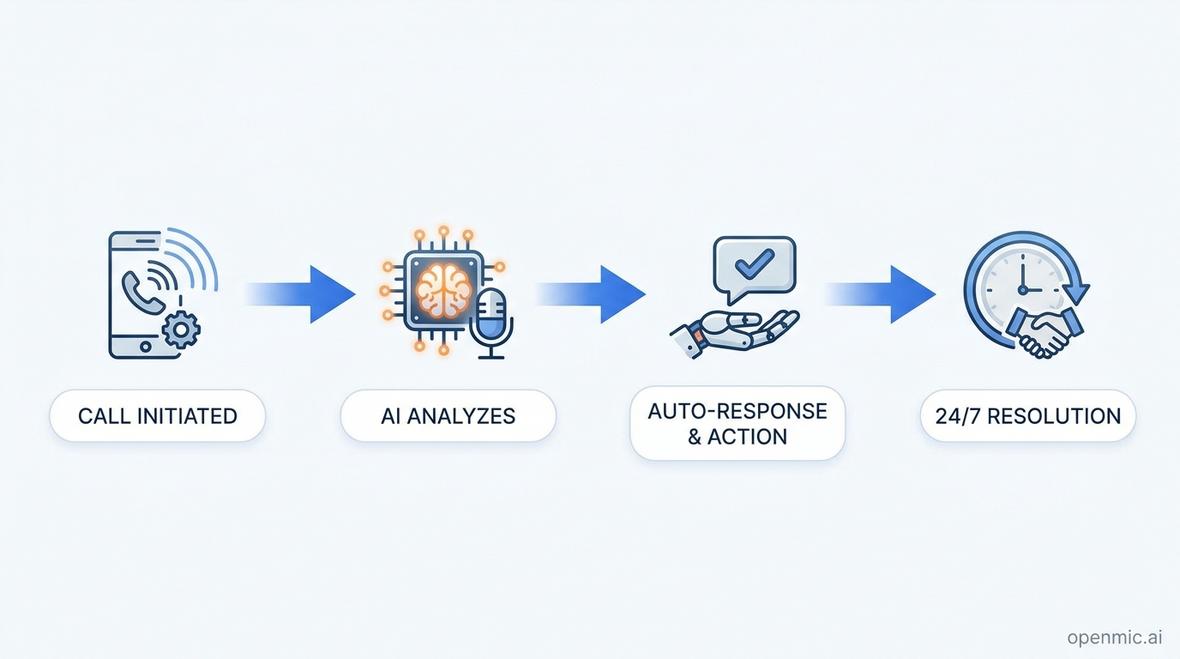
Traditional IVR systems force callers to navigate through numbered menus, often leading to frustration and abandoned calls. In contrast, ai calling software enables conversational interactions where customers can speak naturally. The AI analyzes the caller's intent, retrieves relevant data from integrated systems, and provides accurate, personalized responses in real time.
According to Stanford HAI's study on worker desires for AI in operations, there is a significant gap between worker expectations and AI capabilities in communication tasks, emphasizing the need for scalable, integrable AI agents to enhance responsiveness and reduce operational costs.
Key Benefits of AI Calling Software
Implementing ai calling software delivers measurable advantages across customer service, sales, and operational efficiency. Here are the most impactful benefits:
24/7 Availability Without Staffing Costs
One of the primary pain points for SMEs and enterprises is the cost of maintaining round-the-clock human support. AI calling software eliminates this challenge by providing continuous service without overtime pay, shift management, or staffing constraints. Whether it's after-hours lead capture for car dealerships or emergency appointment scheduling for healthcare providers, AI agents are always available.
Research from Gallup's study on AI phone interviewing scalability highlights how AI-driven voice systems enable rapid, large-scale call volume unconstrained by human interviewers, offering respondent flexibility, real-time language switching, and pausing/resuming capabilities.
Reduced Missed Calls and Improved Lead Conversion
Missed calls translate directly to lost revenue. AI calling software ensures every call is answered promptly, with intelligent routing and lead qualification capabilities that prioritize high-value prospects. This is especially critical in industries like real estate and construction, where timing can determine whether a lead converts.
Scalability for High Call Volumes
Human teams struggle to scale during peak periods or marketing campaigns. AI calling software, however, can handle thousands of simultaneous calls without degradation in quality. This makes it ideal for debt collection agencies, customer support centers, and sales teams running large-scale outreach campaigns.
Cost Efficiency and ROI
By automating routine calls, businesses can reduce their reliance on large call center teams, lowering payroll, training, and infrastructure costs. The ROI of ai calling software is realized through improved first-call resolution rates, higher customer satisfaction, and increased revenue from better lead management.
Enhanced Customer Experience
Modern customers expect fast, personalized service. AI calling software delivers on both fronts by instantly retrieving customer data, understanding context, and providing accurate answers without hold times. This results in higher Net Promoter Scores (NPS) and improved customer loyalty.
Core Features of AI Calling Software
When evaluating ai calling software, it's essential to understand the features that differentiate leading platforms from basic automation tools.
Natural Language Understanding (NLU)
NLU enables the AI to comprehend caller intent, even when questions are phrased in varied or complex ways. This allows for fluid, human-like conversations that feel natural and reduce caller frustration.
CRM and Third-Party Integrations
Seamless integration with CRMs like HubSpot, Pipedrive, Salesforce, and Zoho is critical for maintaining data consistency and enabling the AI to access real-time customer information. Platforms like OpenMic.ai offer robust integration capabilities with thousands of apps via Zapier and native connectors.
Outbound and Inbound Call Handling
The best ai calling software supports both inbound queries and outbound campaigns, allowing businesses to automate appointment reminders, follow-ups, surveys, and sales outreach alongside customer support.
Real-Time Analytics and Reporting
Actionable insights into call volume, resolution rates, sentiment analysis, and agent performance help businesses optimize their communication strategies. Dashboards should provide granular data to identify bottlenecks and opportunities.
Multi-Language and Accent Support
Global businesses require ai calling software that can handle multiple languages and accents accurately. Advanced platforms use voice cloning and accent adaptation to ensure clarity and cultural relevance.
Security and Compliance
For industries like finance, healthcare, and legal services, compliance with regulations such as HIPAA, GDPR, and PCI-DSS is non-negotiable. Ensure your ai calling software provides end-to-end encryption, secure data storage, and audit trails.
Use Cases for AI Calling Software Across Industries
AI calling software is versatile and delivers value across a wide range of sectors. Here are some industry-specific applications:
Healthcare: Appointment Scheduling and Patient Engagement
Healthcare providers use ai calling software to automate appointment scheduling, send reminders, conduct post-visit surveys, and handle routine inquiries. This reduces no-show rates and frees up staff to focus on patient care.
Real Estate: Lead Screening and Follow-Up
Real estate agents leverage AI to screen leads, schedule property viewings, and nurture prospects through automated follow-up calls. This ensures no opportunity is missed, even during off-hours.
Car Dealerships: Service Scheduling and Sales Outreach
Dealerships use ai calling software to automate service appointment booking, conduct satisfaction surveys, and reach out to leads generated from online inquiries. This improves customer retention and accelerates the sales cycle.
Debt Collection: Payment Reminders and Negotiation
AI agents can handle sensitive debt collection calls with empathy and compliance, sending reminders, negotiating payment plans, and logging interactions for audit purposes.
Legal Firms: Client Intake and Case Updates
Law firms use AI to automate initial client intake, schedule consultations, and provide case status updates, improving responsiveness and client satisfaction.
Restaurants: Reservation Management and Order Taking
Restaurants deploy ai calling software to manage reservations, take takeout orders, and handle FAQs, reducing wait times and improving the dining experience.
How to Choose the Right AI Calling Software
Selecting the right platform requires careful evaluation of your business needs, technical requirements, and budget. Here's a framework to guide your decision:
Define Your Use Cases
Start by identifying the specific tasks you want to automate. Are you focused on inbound support, outbound sales, or both? Do you need multi-language support or advanced integrations?
Evaluate Integration Capabilities
Ensure the ai calling software integrates seamlessly with your existing tech stack, including CRM, helpdesk, marketing automation, and analytics tools. Platforms like OpenMic.ai support integration with thousands of apps, making them highly adaptable.
Assess Scalability and Performance
Choose a platform that can scale with your business. Consider factors like concurrent call capacity, latency, and uptime guarantees.
Prioritize Security and Compliance
For regulated industries, verify that the platform meets industry-specific compliance standards and offers robust data protection features.
Review Pricing and ROI
Compare pricing models whether per-minute, per-call, or subscription-based and calculate the expected ROI based on cost savings and revenue gains.
Test with a Pilot Program
Before full deployment, run a pilot program to evaluate the AI's accuracy, user experience, and integration performance. Gather feedback from both customers and internal teams.
Implementation Best Practices for AI Calling Software
Successful deployment of ai calling software requires strategic planning and ongoing optimization. Follow these best practices:
Start with High-Value, Repetitive Tasks
Focus initial deployment on tasks that are high-volume and routine, such as appointment reminders or FAQ handling. This allows you to achieve quick wins and build confidence in the technology.
Train Your AI with Real Data
Feed your AI with historical call transcripts, customer data, and common queries to improve accuracy and contextual understanding. Continuous training ensures the AI adapts to evolving customer needs.
Design Conversational Flows Carefully
Work with conversation designers to create natural, intuitive dialogue flows. Avoid overly robotic scripts and ensure the AI can handle unexpected questions gracefully.
Monitor Performance and Iterate
Use real-time analytics to track key metrics like call resolution rate, customer satisfaction, and average handle time. Regularly review performance and make adjustments to improve outcomes.
Maintain Human Oversight
While AI can handle most interactions, maintain a human escalation path for complex or sensitive issues. Research from Harvard Business School on AI vs. human judgment underscores the need for hybrid models where API-first AI handles routine calls, while humans manage complex interactions.
The Future of AI Calling Software
The evolution of ai calling software is being shaped by advancements in generative AI, voice synthesis, and real-time language processing. Here are key trends to watch:
Emotion Detection and Sentiment Analysis
Next-generation AI calling software will incorporate emotion detection to adjust tone and responses based on caller sentiment, creating more empathetic interactions.
Voice Cloning and Personalization
AI will use voice cloning to mimic brand-specific voices or adapt accents for better regional relevance, enhancing personalization and trust.
Proactive Outreach and Predictive Dialing
AI calling software will increasingly leverage predictive analytics to identify optimal call times, personalize messaging, and prioritize high-intent leads for outbound campaigns.
Regulatory Evolution and Ethical AI
As AI calling technology becomes mainstream, regulatory scrutiny will increase. According to FTC data on robocall complaint trends, advanced call-blocking technology has led to a steady decline in robocall complaints, highlighting the importance of ethical deployment and compliance.
OpenMic.ai: A Leading AI Calling Software Platform
For businesses seeking a powerful, secure, and highly integrable ai calling software solution, OpenMic.ai stands out as an API-first platform designed for both inbound and outbound call automation. With robust CRM integrations, natural language understanding, and industry-specific use cases, OpenMic.ai empowers businesses to deploy intelligent voice agents that enhance customer engagement, reduce costs, and scale effortlessly.
Explore the comprehensive guides and case studies to see how OpenMic.ai is transforming communication across healthcare, real estate, automotive, legal, and more.
FAQs About AI Calling Software
What is the cost of AI calling software?
Pricing varies based on features, call volume, and integrations. Some platforms charge per minute, while others offer subscription models. It's essential to evaluate the total cost of ownership, including setup, training, and ongoing support.
Can AI calling software replace human agents?
AI calling software excels at handling routine, repetitive tasks, but human agents remain essential for complex, sensitive, or emotionally charged interactions. The optimal approach is a hybrid model that leverages AI for efficiency and humans for empathy and judgment.
Is AI calling software secure?
Reputable platforms implement end-to-end encryption, secure data storage, and compliance with industry regulations such as HIPAA, GDPR, and PCI-DSS. Always verify security certifications before deployment.
How long does it take to implement AI calling software?
Implementation timelines range from a few days to several weeks, depending on complexity, integrations, and customization requirements. Starting with a pilot program can accelerate deployment and mitigate risks.
What industries benefit most from AI calling software?
Industries with high call volumes and repetitive tasks benefit most, including healthcare, real estate, automotive, legal, debt collection, and customer support. However, virtually any business that relies on voice communication can achieve value from AI calling software.
Conclusion
AI calling software represents a transformative shift in how businesses manage customer communication. By automating routine interactions, providing 24/7 availability, and integrating seamlessly with existing systems, these platforms deliver measurable improvements in efficiency, cost savings, and customer satisfaction. For tech-savvy leaders and developers seeking to scale operations and enhance responsiveness, investing in the right ai calling software is no longer optional it's a strategic imperative. Platforms like OpenMic.ai offer the power, security, and flexibility needed to deploy intelligent voice agents that meet the demands of modern business communication.