
Introduction
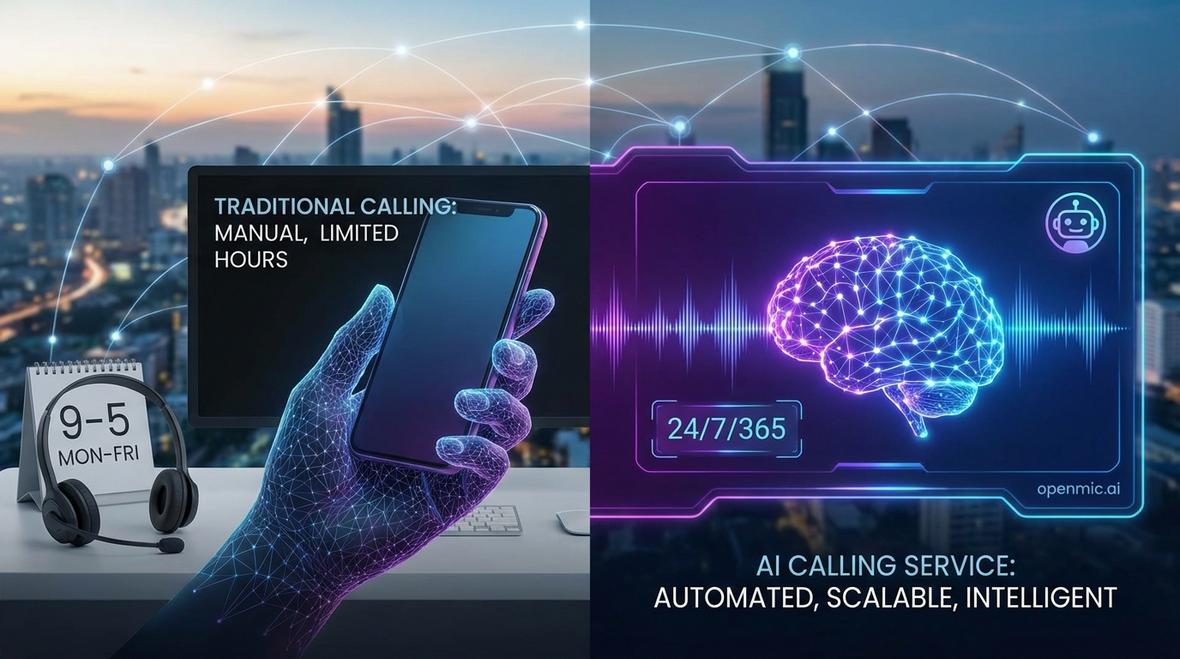
The business landscape is undergoing a seismic shift as companies seek to deliver exceptional customer experiences while managing operational costs. At the forefront of this transformation is the ai calling service, a technology that combines artificial intelligence with voice communication to automate interactions, qualify leads, and enhance customer engagement. Unlike traditional call centers that rely heavily on human agents working limited hours, AI calling services operate 24/7, delivering consistent, natural-sounding conversations that drive business outcomes.
According to Grand View Research, the AI customer service market is projected to reach $47.82 billion by 2030, growing at a compound annual growth rate of 25.8%. This explosive growth reflects the increasing adoption of voice AI solutions across industries ranging from healthcare and real estate to automotive and financial services. As businesses recognize the limitations of manual calling processes and outdated IVR systems, they're turning to intelligent ai calling service platforms that can handle complex conversations, integrate with CRM systems, and deliver measurable ROI.
What Is an AI Calling Service?
An ai calling service is a technology platform that uses artificial intelligence, natural language processing, and machine learning to conduct phone conversations autonomously. These systems can make outbound calls to prospects, answer inbound customer inquiries, schedule appointments, qualify leads, and even process transactions all without human intervention. Modern ai calling service platforms like Openmic AI leverage advanced voice synthesis and speech recognition to create interactions that feel remarkably human.
The core components of an effective ai calling service include:
- Natural Language Understanding (NLU): The ability to comprehend caller intent, context, and sentiment
- Speech Synthesis: High-quality text-to-speech engines that produce natural-sounding voices
- Conversation Design: Pre-built and customizable dialogue flows tailored to specific use cases
- CRM Integration: Seamless connectivity with platforms like HubSpot, Salesforce, and Zoho
- Analytics Dashboard: Real-time reporting on call outcomes, conversion rates, and performance metrics
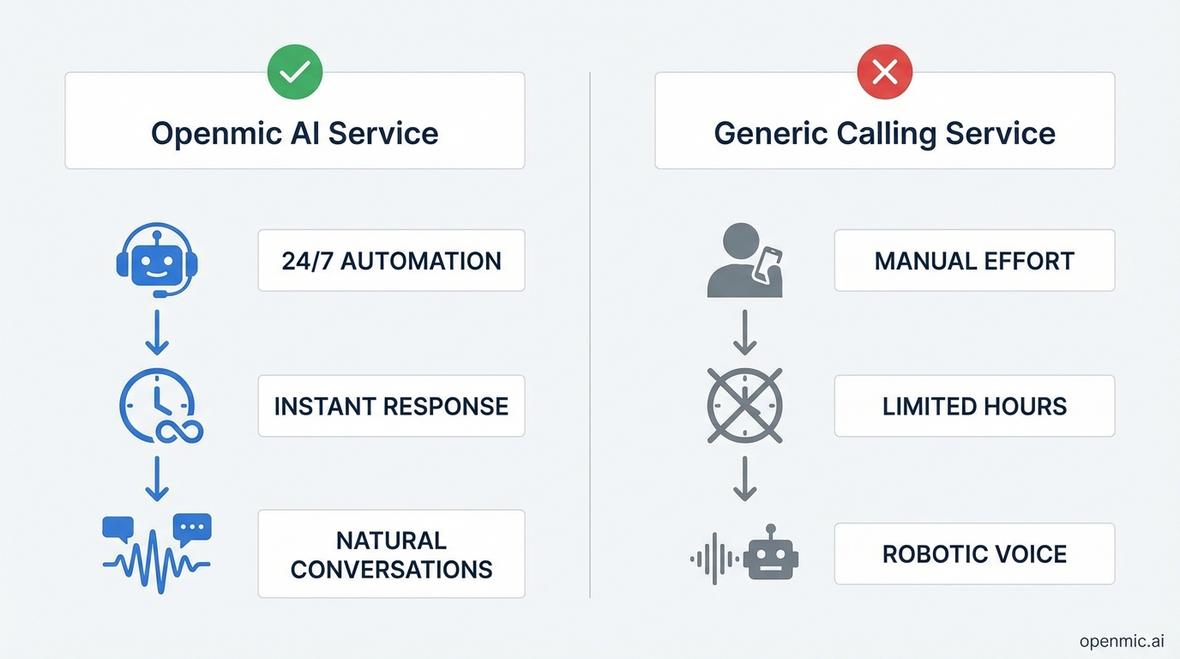
This comparison chart illustrates why businesses are rapidly transitioning from generic calling services to AI-powered solutions. The benefits of 24/7 automation, instant response times, and natural conversations far outweigh the limitations of manual effort, restricted hours, and robotic voices that characterize traditional systems.
Key Benefits of Implementing an AI Calling Service
Round-the-Clock Availability
One of the most compelling advantages of an ai calling service is its ability to operate continuously without breaks, holidays, or shift changes. This ensures that no lead goes unattended and no customer inquiry remains unanswered, regardless of time zones or business hours. For industries like healthcare and real estate, where timing is critical, this constant availability can be the difference between closing a deal and losing an opportunity.
Significant Cost Reduction
Traditional call centers require substantial investments in hiring, training, infrastructure, and ongoing management. An ai calling service eliminates many of these expenses by automating routine interactions. Research from Forrester shows that AI adoption in call centers leads to measurable improvements in routing efficiency and agent productivity, allowing human agents to focus on complex, high-value interactions while AI handles repetitive tasks.
Unlimited Scalability
During peak periods or marketing campaigns, traditional call centers struggle to scale without incurring significant additional costs. An ai calling service can handle thousands of simultaneous calls without degradation in quality or performance. Whether you're launching a new product, running seasonal promotions, or managing sudden spikes in customer inquiries, AI scales effortlessly to meet demand.
Consistent Quality and Compliance
Human agents, no matter how well-trained, can have off days, forget scripts, or inadvertently violate compliance protocols. An ai calling service delivers the same high-quality experience on every call, following approved scripts precisely and maintaining detailed records for compliance and quality assurance purposes. This consistency is particularly valuable in regulated industries like debt collection and legal services.
Rich Data and Analytics
Every interaction with an ai calling service generates valuable data call duration, conversion rates, common objections, sentiment analysis, and more. These insights enable continuous optimization of conversation flows, messaging strategies, and overall customer experience. Platforms like Openmic AI provide comprehensive dashboards that transform raw call data into actionable business intelligence.
Top Use Cases for AI Calling Services Across Industries
Lead Qualification and Follow-Up
Sales teams are often overwhelmed by the volume of leads requiring qualification. An ai calling service can automatically reach out to new leads, ask qualifying questions, assess interest levels, and route hot prospects to human sales representatives. This ensures that sales teams focus their time on high-potential opportunities rather than cold outreach. Learn more about AI-powered lead qualification strategies.
Appointment Scheduling and Reminders
From dental practices to car dealerships, appointment no-shows represent lost revenue and wasted resources. AI calling services can automatically schedule appointments based on availability, send reminder calls before appointments, and even handle rescheduling requests. According to Forrester, AI-powered appointment systems can achieve resolution rates of up to 65%, compared to under 40% for traditional IVR systems.
Customer Support and FAQ Handling
Many customer inquiries involve routine questions about business hours, product availability, order status, or basic troubleshooting. An ai calling service can handle these frequently asked questions instantly, freeing human agents to address complex issues that require empathy, judgment, or specialized knowledge. This dramatically improves first-call resolution rates and customer satisfaction scores.
Payment and Invoice Reminders
For businesses in subscription services, utilities, or B2B sectors, late payments impact cash flow and require costly collection efforts. AI calling services can proactively reach out to customers with upcoming or overdue payments, provide payment options, and even process transactions over the phone. Explore how automated invoice reminders can improve collection rates.
Voice Surveys and Feedback Collection
Understanding customer sentiment is crucial for continuous improvement, but traditional survey methods suffer from low response rates. An ai calling service can conduct conversational voice surveys that feel more engaging than email forms or SMS questionnaires, resulting in higher completion rates and richer qualitative data.
How Does an AI Calling Service Actually Work?
Understanding the technical mechanics behind an ai calling service helps businesses appreciate its capabilities and limitations. The process typically follows these steps:
- Initiation: The system receives a trigger either a scheduled campaign, a new lead in the CRM, or an inbound call to a dedicated number.
- Voice Recognition: Advanced speech-to-text engines convert spoken words into text that the AI can process.
- Natural Language Processing: The AI analyzes the text to understand intent, extract key information, and determine the appropriate response.
- Response Generation: Based on the conversation design and current context, the AI selects or generates an appropriate response.
- Speech Synthesis: Text-to-speech technology converts the response into natural-sounding audio.
- Delivery: The audio response is played to the caller, continuing the conversation loop.
- Integration: Throughout the interaction, the system logs data, updates CRM records, and triggers workflows in connected systems.
Modern platforms offer no-code interfaces that allow businesses to design conversation flows, customize voice personas, and integrate with existing technology stacks without requiring programming expertise. Check out this guide on scheduling dial AI voice agents with Openmic to see how simple implementation can be.
Choosing the Right AI Calling Service Platform
The market for ai calling service solutions has become increasingly crowded, with options ranging from enterprise-grade platforms to niche providers focused on specific industries. When evaluating vendors, consider these critical factors:
Voice Quality and Naturalness
The quality of voice synthesis directly impacts customer perception and engagement. Poor-quality robotic voices create negative impressions and reduce conversation completion rates. Leading platforms like Openmic AI use state-of-the-art neural text-to-speech models that produce voices virtually indistinguishable from human speakers.
Integration Capabilities
Your ai calling service must connect seamlessly with your existing business systems CRM platforms, marketing automation tools, scheduling software, and payment processors. Platforms with extensive integration capabilities and API access provide the flexibility to build custom workflows that match your specific business processes.
Customization and Flexibility
Every business has unique requirements for conversation flows, branding, and use cases. Look for platforms that offer customizable scripts, multiple voice options, configurable call logic, and the ability to handle complex branching scenarios. The best ai calling service providers balance ease of use with deep customization options.
Compliance and Security
Automated calling systems must comply with regulations like TCPA (Telephone Consumer Protection Act), GDPR, and industry-specific requirements. Ensure your chosen platform includes features like do-not-call list management, consent tracking, call recording disclosure, and data encryption. Review the provider's privacy policy and terms of service carefully.
Transparent Pricing
AI calling service pricing models vary widely, from per-minute charges to monthly subscriptions with included call volumes. Hidden fees for features like CRM integration, advanced analytics, or custom voice creation can significantly impact total cost of ownership. Examine detailed pricing information before committing to a platform.
Industry-Specific Applications of AI Calling Services
Healthcare and Medical Practices
Healthcare providers face unique challenges with appointment scheduling, patient follow-ups, and administrative overhead. An ai calling service can handle appointment confirmations, medication reminders, pre-visit questionnaires, and basic triage questions, allowing medical staff to focus on patient care. Discover how AI voice agents are transforming dental practices and other healthcare settings.
Real Estate
Real estate agents juggle multiple leads, property showings, and client communications simultaneously. AI calling services can qualify buyer leads, schedule property tours, follow up with open house attendees, and even conduct initial property evaluations. Learn about the best AI voice agents for real estate lead screening in today's competitive market.
Automotive Dealerships
Car dealerships face intense competition for customer attention, with leads often going cold due to delayed follow-up. An ai calling service can immediately engage website visitors, schedule test drives, confirm service appointments, and conduct post-purchase satisfaction surveys. Read about how AI automates service appointment scheduling for car dealerships to improve retention and revenue.
Financial Services and Debt Collection
Banks, lenders, and collection agencies require compliant, consistent communication for payment reminders, account updates, and customer service. AI calling services excel at these repetitive yet important interactions, maintaining detailed records and adhering strictly to regulatory requirements. Explore the top AI debt collection software solutions available today.
Best Practices for Implementing an AI Calling Service
Successfully deploying an ai calling service requires more than simply signing up for a platform. Follow these proven practices to maximize results:
Start with a Specific Use Case
Rather than attempting to automate all calling functions simultaneously, identify a single high-impact use case lead qualification, appointment reminders, or customer satisfaction surveys and perfect that workflow before expanding. This focused approach allows you to demonstrate ROI quickly and build organizational confidence in the technology.
Design Conversations for Success
Effective AI conversations are shorter and more focused than human conversations. Script your dialogue to quickly establish purpose, gather essential information, and guide callers toward clear next steps. Test different conversation flows with real users and continuously refine based on completion rates and customer feedback.
Set Proper Expectations
While modern ai calling service platforms sound remarkably human, transparency builds trust. Consider brief disclosures that the caller is interacting with an AI assistant, particularly in regulated industries or sensitive contexts. Most customers appreciate AI assistance when it delivers value efficiently.
Monitor and Optimize Continuously
The beauty of AI systems is their ability to improve over time. Regularly review call recordings, analyze performance metrics, identify common failure points, and adjust scripts accordingly. Platforms with robust analytics capabilities make this continuous improvement process straightforward and data-driven.
Maintain Human Escalation Paths
Even the most sophisticated ai calling service will encounter situations requiring human judgment, empathy, or authority. Design clear escalation paths that seamlessly transfer complex cases to appropriate human agents, preserving context and maintaining customer satisfaction.
The Future of AI Calling Services in 2026 and Beyond
The ai calling service landscape continues to evolve rapidly, with several emerging trends shaping the future:
Enhanced Emotional Intelligence
Next-generation platforms are incorporating sentiment analysis and emotional recognition, allowing AI to detect frustration, confusion, or satisfaction and adjust conversation style accordingly. This emotional intelligence makes interactions feel more empathetic and responsive.
Multilingual and Accent Adaptation
As businesses expand globally, ai calling services are adding sophisticated multilingual capabilities and accent recognition that adapts to diverse speaker patterns, ensuring effective communication across cultural and linguistic boundaries.
Predictive Calling and Proactive Engagement
Rather than simply reacting to inbound inquiries or following static outbound schedules, AI systems are becoming more predictive identifying the optimal time to call specific contacts, anticipating customer needs based on behavioral patterns, and proactively addressing issues before customers even reach out.
Voice Biometrics and Security
Security-conscious industries are implementing voice biometric authentication within ai calling service platforms, enabling secure identity verification without cumbersome passwords or security questions, streamlining customer authentication while enhancing security.
Frequently Asked Questions About AI Calling Services
Will AI calling services replace human agents completely?
No, AI calling services are designed to augment human capabilities, not replace them entirely. While AI excels at handling routine, repetitive interactions at scale, human agents remain essential for complex problem-solving, emotionally sensitive situations, and relationship-building activities that require genuine empathy and creative thinking.
How much does an AI calling service typically cost?
Pricing varies significantly based on call volume, feature requirements, and integration complexity. Entry-level solutions may start around $200-$500 per month for small businesses with limited calling needs, while enterprise implementations can range into thousands of dollars monthly. Most platforms offer tiered pricing that scales with usage.
How long does it take to implement an AI calling service?
Implementation timelines depend on complexity and customization requirements. Simple use cases with pre-built templates can be operational within days, while custom implementations involving complex integrations and extensive conversation design might require several weeks. Modern no-code platforms have dramatically reduced implementation time compared to earlier generations of technology.
How accurate are AI calling services at understanding different accents and speech patterns?
Leading ai calling service platforms use advanced speech recognition models trained on diverse datasets representing various accents, dialects, and speaking styles. While accuracy has improved dramatically often exceeding 95% for clear audio performance can still vary with heavy accents, background noise, or unclear articulation. Most platforms continue improving through machine learning as they process more conversations.
Are AI calling services compliant with telemarketing regulations?
Reputable ai calling service providers build compliance features directly into their platforms, including automatic do-not-call list checking, proper consent management, call time restrictions, and disclosure requirements. However, businesses remain ultimately responsible for ensuring their use of the technology complies with applicable regulations like TCPA, GDPR, and industry-specific rules.
Conclusion
The ai calling service represents a fundamental shift in how businesses communicate with customers, prospects, and stakeholders. By combining 24/7 availability, unlimited scalability, consistent quality, and rich analytics, these platforms deliver transformative benefits across industries from healthcare and real estate to automotive and financial services. As the technology continues advancing with enhanced emotional intelligence, multilingual capabilities, and predictive engagement, early adopters are positioning themselves for significant competitive advantages. Whether you're looking to qualify leads more efficiently, reduce appointment no-shows, improve customer satisfaction, or simply free your team to focus on high-value activities, an ai calling service offers a proven path to measurable results. Platforms like Openmic AI make implementation accessible even for businesses without technical expertise, democratizing access to technology that was once available only to large enterprises with substantial budgets.