

Understanding AI Call Center Platforms in 2026
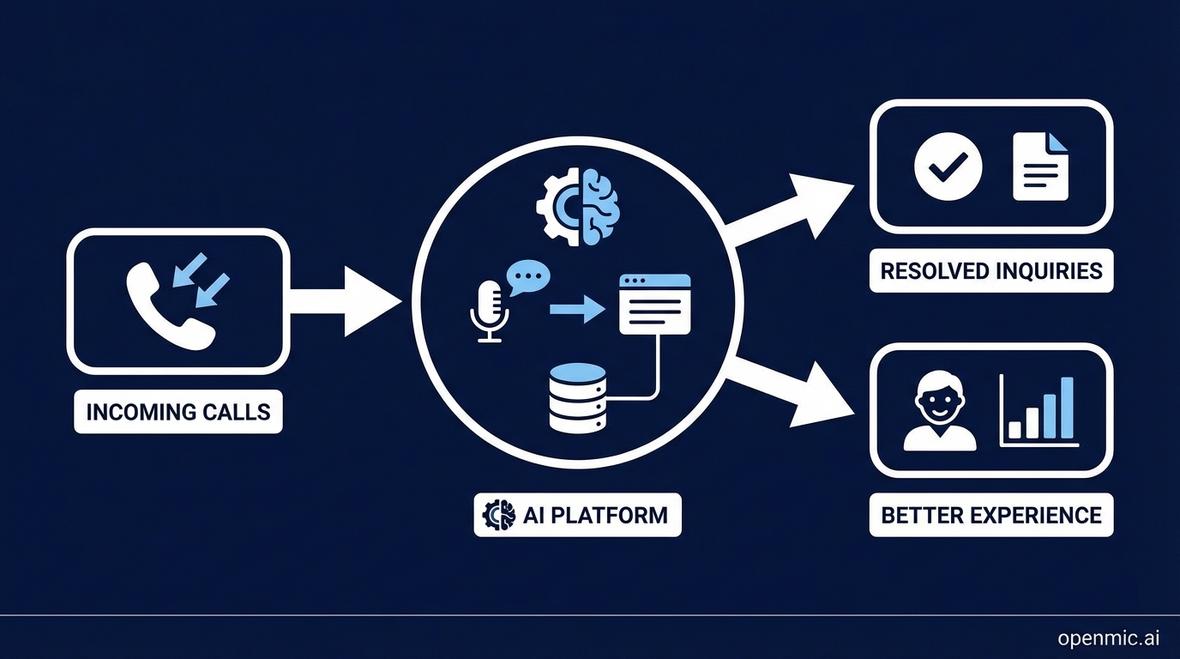
The landscape of customer service has fundamentally transformed. Traditional call centers, once reliant on human agents working in shifts to handle customer inquiries, are rapidly evolving into intelligent, AI-powered ecosystems. An ai call center platform represents the convergence of artificial intelligence, natural language processing, and cloud communication technologies to automate, enhance, and scale customer interactions across voice channels.
These platforms leverage conversational AI to understand customer intent, provide instant responses, route calls intelligently, and even resolve complex queries without human intervention. For tech-savvy business leaders managing SMEs or enterprises, the adoption of an ai call center platform is no longer a futuristic concept it's a competitive necessity. With Agentic AI to resolve 80% of issues by 2029, according to Gartner predictions, the momentum toward autonomous customer service is accelerating rapidly.
Beyond cost savings, these platforms address critical pain points: missed calls during off-hours, inconsistent customer experiences, and the operational burden of maintaining 24/7 human support teams. Modern ai call center platforms integrate seamlessly with CRM systems, knowledge bases, and business workflows, enabling businesses to deliver personalized, context-aware support at scale.
Core Capabilities of Modern AI Call Center Platforms
An effective ai call center platform must offer a comprehensive suite of capabilities that go beyond basic call answering. These systems are designed to handle both inbound and outbound communications, adapt to various industries, and integrate with existing technology stacks.
Intelligent Call Routing and Triage
One of the foundational features of any ai call center platform is intelligent call routing. Using natural language understanding (NLU), the system can instantly assess the caller's intent, urgency, and context. Instead of forcing customers through rigid IVR menus, AI agents engage in natural conversations, ask clarifying questions, and route calls to the appropriate department or human agent when necessary.
Research from CMS Wire indicates that 76% adopt human-in-the-loop AI models, combining AI routing with human handling of complex interactions. This hybrid approach ensures that while AI handles routine queries, human expertise remains accessible for nuanced situations.
Conversational AI and Voice Recognition
At the heart of every ai call center platform lies sophisticated conversational AI. These systems utilize advanced speech-to-text engines, sentiment analysis, and context-aware dialogue management to conduct fluid, human-like conversations. They can handle interruptions, understand accents, and adapt their responses based on customer emotion and tone.
Modern platforms also support multilingual interactions, enabling businesses to serve global customers without hiring multilingual staff. The ability to detect frustration or confusion in real-time allows the AI to escalate calls proactively or adjust its communication style to provide better support.
Seamless CRM and Integration Capabilities
An isolated call center solution offers limited value. The best ai call center platforms provide robust API-first architectures that integrate with popular CRM systems like HubSpot, Pipedrive, and Odoo. This integration ensures that customer data flows seamlessly between systems, enabling personalized interactions and automated follow-ups.
For example, when a customer calls about an order, the AI can instantly retrieve their purchase history, recent support tickets, and preferences from the CRM, delivering a contextual and informed response. Post-call, the platform can automatically update records, schedule appointments, or trigger workflows without manual intervention.
Outbound Calling and Proactive Engagement
Beyond answering inbound calls, leading ai call center platforms excel at outbound automation. Whether it's AI cold calling, appointment reminders, payment follow-ups, or customer surveys, AI voice agents can initiate conversations at scale with personalized messaging.
This capability is particularly valuable for industries like debt collection, healthcare, and real estate, where timely, consistent outreach drives business outcomes. Automated outbound agents eliminate the tedious manual dialing process and ensure compliance with regulations through built-in call scripts and recording features.
Benefits of Adopting an AI Call Center Platform
The shift toward AI-powered call centers is driven by measurable business benefits that directly impact the bottom line. Here's why forward-thinking organizations are making the transition.
Significant Cost Reduction
Labor represents the largest expense in traditional call centers. According to Gartner's research shared on CX Today, agentic AI will drive 30% operational cost reduction by 2029. By automating routine inquiries, businesses can reduce headcount requirements, eliminate overtime costs, and minimize training expenses.
An ai call center platform operates around the clock without breaks, vacations, or sick days. This continuous availability translates to better customer service and lower per-interaction costs, making it especially attractive for SMEs with limited budgets.
Enhanced Customer Experience
Customer expectations have evolved. Today's consumers demand instant responses, personalized interactions, and 24/7 availability. AI call center platforms deliver on all fronts. With near-zero wait times, consistent service quality, and the ability to resolve issues on the first call, businesses can significantly improve customer satisfaction scores.
IBM research highlights that 70% of customers to use conversational AI by 2028 to begin their customer journey. This shift indicates growing consumer comfort with AI-driven interactions, provided they are seamless and effective.
Scalability Without Infrastructure Overhead
Scaling a traditional call center requires recruiting, training, physical space, and technology infrastructure all of which demand time and capital. An ai call center platform scales instantly. Whether you're handling 100 calls a day or 10,000, the system adapts without additional hiring or infrastructure investment.
Cloud-based architectures further enhance this scalability. According to Alpha Run, the cloud contact center market is expected to hit $87.10 billion by 2029, up from $27.22 billion in 2024, reflecting the industry's rapid migration to flexible, scalable cloud solutions.
Data-Driven Insights and Continuous Improvement
Every call handled by an AI platform generates valuable data: conversation transcripts, sentiment scores, resolution times, and call outcomes. This data provides actionable insights into customer behavior, common pain points, and agent performance.
Business leaders can use these insights to refine scripts, optimize workflows, and identify training opportunities for human agents. Over time, the AI itself learns from interactions, continuously improving its accuracy and effectiveness through machine learning algorithms.
Industry Applications of AI Call Center Platforms
The versatility of an ai call center platform makes it applicable across diverse industries, each with unique communication challenges and opportunities.
Healthcare and Medical Practices
Healthcare providers face constant pressure to manage appointment scheduling, patient inquiries, prescription refills, and insurance verification all while maintaining HIPAA compliance. AI voice agents in healthcare can handle these tasks efficiently, reducing administrative burden on staff and improving patient access to care.
From automated appointment reminders to post-visit follow-ups and symptom triage, AI platforms enable healthcare organizations to deliver consistent, compliant communication at scale. This is especially critical as 42% of organizations are expected to hire AI-focused CX roles by 2026, including conversational AI designers specialized in healthcare workflows.
Automotive and Car Dealerships
The automotive industry has embraced AI to transform customer engagement. AI voice agents for car dealerships handle test drive scheduling, service appointment booking, lead qualification, and post-purchase follow-ups. This automation allows sales teams to focus on high-value interactions while ensuring no lead falls through the cracks.
With the ability to integrate with dealership management systems (DMS), AI platforms can provide real-time inventory updates, service availability, and personalized vehicle recommendations based on customer preferences.
Legal and Professional Services
Law firms and professional service providers require sophisticated intake processes, client screening, and appointment management. AI voice agents for legal firms can conduct initial consultations, gather case details, and qualify leads before routing them to attorneys.
This not only improves efficiency but also ensures that legal professionals spend their billable hours on substantive work rather than administrative tasks. AI platforms also maintain detailed records of all client interactions, supporting compliance and case management requirements.
Real Estate and Property Management
Real estate agents and property managers juggle multiple client interactions daily property inquiries, showing requests, lease renewals, and maintenance calls. AI voice agents in real estate automate these conversations, qualify leads based on budget and preferences, and schedule property viewings automatically.
For agents managing large portfolios, this automation is invaluable. AI can also conduct follow-ups with prospects, send listing updates, and even facilitate initial negotiations, freeing agents to focus on closing deals.
Key Features to Evaluate When Choosing an AI Call Center Platform
Not all ai call center platforms are created equal. When evaluating solutions, business leaders should prioritize the following features to ensure long-term success.
Low Latency and Natural Conversation Flow
The quality of voice AI is heavily dependent on latency the delay between when a customer speaks and when the AI responds. High latency creates awkward pauses and disrupts conversation flow, leading to poor user experiences. Look for platforms with sub-second response times and optimized speech processing pipelines.
Customization and No-Code Configuration
Business needs vary widely, and rigid, one-size-fits-all solutions rarely deliver optimal results. The best platforms offer no-code AI agent builders that allow non-technical users to design call flows, configure responses, and integrate business logic without requiring developer support.
Robust Security and Compliance
Handling customer data especially in regulated industries like healthcare, finance, and legal requires stringent security measures. Ensure your platform complies with relevant standards (HIPAA, GDPR, PCI-DSS) and offers features like call encryption, data anonymization, and role-based access controls.
Analytics and Reporting Dashboards
Real-time dashboards and comprehensive reporting are essential for monitoring performance, identifying bottlenecks, and optimizing operations. Look for platforms that provide granular metrics on call volume, resolution rates, customer sentiment, and agent performance.
OpenMic AI: Transforming Customer Engagement with Voice Intelligence
When evaluating ai call center platforms, OpenMic.ai stands out as a powerful, API-first solution designed for modern businesses. Built with scalability, security, and seamless integration at its core, OpenMic enables organizations to deploy intelligent voice agents for both inbound and outbound automation.
OpenMic's platform supports a wide range of use cases, from appointment booking and FAQ handling to voice surveys and invoice reminders. With native integrations to popular CRMs and support for over 8,000 apps via Zapier, OpenMic ensures that voice AI fits seamlessly into your existing workflows.
Whether you're a startup looking to automate customer support or an enterprise seeking to reduce call center costs, OpenMic provides the flexibility, performance, and reliability needed to succeed in 2026 and beyond. Explore transparent pricing and discover how OpenMic can transform your customer engagement strategy.
Future Trends Shaping AI Call Center Platforms
The evolution of ai call center platforms is far from over. Several emerging trends are poised to reshape the industry in the coming years.
Agentic AI and Autonomous Problem-Solving
The next generation of AI agents will move beyond scripted responses to autonomous decision-making. Agentic AI systems can independently plan actions, execute multi-step workflows, and adapt strategies based on real-time feedback all without human intervention. This capability will enable AI to handle increasingly complex customer scenarios.
Emotion AI and Sentiment-Aware Interactions
Future platforms will incorporate advanced emotion recognition, enabling AI agents to detect subtle cues like frustration, confusion, or satisfaction in a caller's voice. By adjusting tone, pacing, and response strategies based on emotional state, AI can deliver more empathetic, human-like interactions.
Multimodal Communication Channels
While voice remains central, the future of customer communication is multimodal. AI platforms will seamlessly transition between voice, chat, email, and video, maintaining context across channels and providing a unified customer experience.
FAQs About AI Call Center Platforms
What is an AI call center platform?
An ai call center platform is a cloud-based software solution that uses artificial intelligence, natural language processing, and voice recognition to automate and enhance customer interactions over the phone. It handles inbound and outbound calls, routes inquiries intelligently, and resolves customer issues without human intervention.
How much does an AI call center platform cost?
Pricing varies based on features, call volume, and integration requirements. Most platforms offer usage-based pricing models, charging per minute of conversation or per call. Some providers also offer flat monthly fees or enterprise licensing. It's essential to evaluate total cost of ownership, including integration and customization expenses.
Can AI call centers replace human agents entirely?
While AI can handle a significant majority of routine interactions, human agents remain essential for complex, nuanced, or emotionally sensitive situations. The most effective approach combines AI automation with human oversight, ensuring customers receive the right level of support for their needs.
Is AI call center technology secure?
Reputable ai call center platforms implement robust security measures, including encryption, secure data storage, and compliance with industry standards like GDPR and HIPAA. Always verify that your chosen platform meets your specific regulatory and security requirements.
How long does it take to deploy an AI call center platform?
Deployment timelines vary based on complexity. Simple implementations can be live within days, while enterprise-grade deployments with extensive customization and integration may take several weeks. No-code platforms significantly reduce deployment time by eliminating the need for custom development.
Conclusion
The adoption of an ai call center platform is no longer optional for businesses aiming to stay competitive in 2026. With proven cost savings, enhanced customer experiences, and unprecedented scalability, AI-powered voice solutions are transforming how organizations communicate with customers. From healthcare and automotive to legal and real estate, every industry stands to benefit from intelligent call automation. As technology continues to evolve with agentic AI, emotion recognition, and multimodal communication on the horizon the capabilities of these platforms will only expand. For business leaders ready to embrace the future, platforms like OpenMic.ai offer the tools, integrations, and expertise needed to deploy world-class voice AI solutions today.