
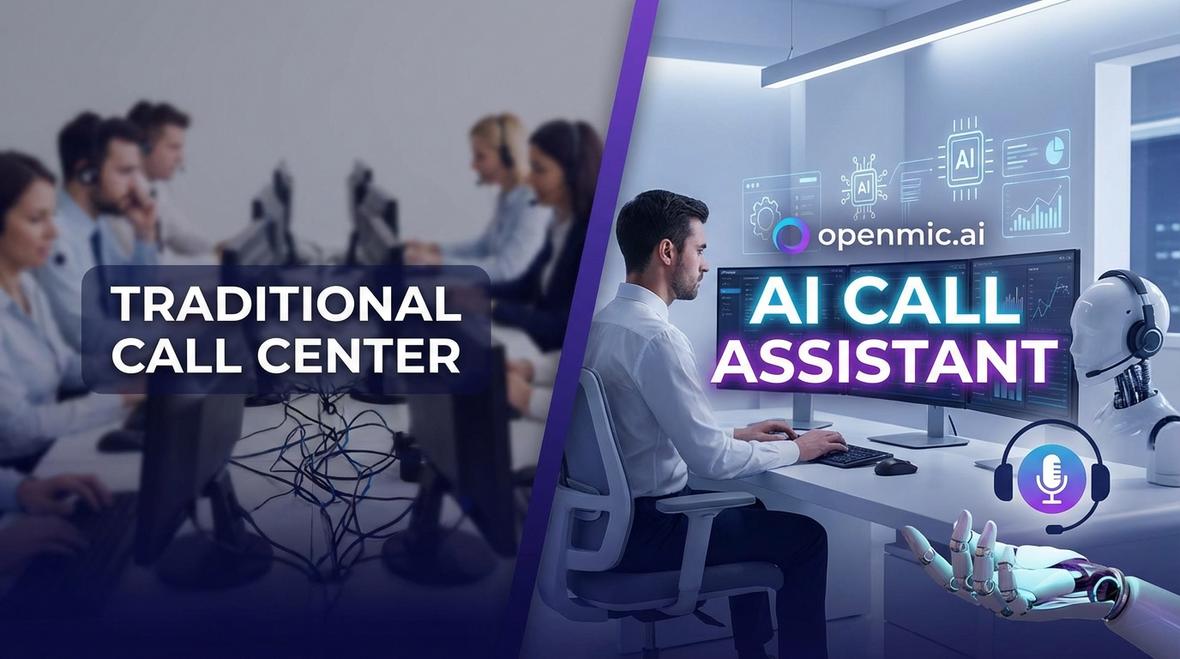
What Is an AI Call Assistant and Why Does Your Business Need One?
In today's fast-paced business environment, customer expectations have evolved dramatically. Consumers demand instant responses, 24/7 availability, and personalized interactions all while businesses struggle to manage operational costs and maintain service quality. Enter the AI call assistant, a revolutionary technology transforming how organizations handle customer communications, lead qualification, appointment scheduling, and support operations.
An AI call assistant is an intelligent virtual agent powered by conversational AI and natural language processing that can handle inbound and outbound phone calls autonomously. Unlike traditional interactive voice response (IVR) systems that rely on rigid menu options, modern AI call assistants understand context, intent, and nuance in human speech, delivering experiences that feel remarkably human.
According to research from Google Cloud, generative AI support agents achieve 92% accuracy in understanding customer intent versus 65-70% for traditional keyword-based bots, dramatically boosting resolution rates and customer satisfaction. This quantum leap in capability is why businesses across healthcare, real estate, automotive, legal, and home services are rapidly adopting AI call assistant solutions.
How AI Call Assistants Work: The Technology Behind Smart Voice Automation
Understanding the underlying technology helps businesses appreciate the capabilities and limitations of AI call assistants. These systems integrate several advanced components working in concert to deliver seamless conversational experiences.
Advanced Speech Recognition and Natural Language Understanding
Modern AI call assistants utilize deep learning models trained on millions of voice conversations to accurately transcribe speech in real-time. These systems handle various accents, dialects, background noise, and speaking styles with remarkable accuracy. The speech recognition layer converts audio into text, which then feeds into natural language understanding (NLU) models that extract intent, entities, and sentiment from the conversation.
Platforms like OpenMic.ai leverage state-of-the-art speech processing to ensure clarity even in challenging acoustic environments, making them ideal for industries like restaurants or construction where ambient noise is common.
Conversational AI Engine and Dialogue Management
The conversational engine serves as the 'brain' of an AI call assistant, determining appropriate responses based on conversation history, business rules, and learned patterns. Advanced systems employ large language models (LLMs) fine-tuned for specific industries and use cases, enabling them to handle complex, multi-turn conversations that deviate from scripted paths.
This flexibility is critical for applications like lead qualification, where prospects may ask unexpected questions or provide information in non-linear ways. The dialogue management system maintains context throughout the conversation, remembering previous statements and using that information to inform subsequent responses.
CRM Integration and Workflow Automation
The true power of an AI call assistant emerges when it connects seamlessly with your existing business systems. Modern solutions integrate with customer relationship management (CRM) platforms, scheduling software, payment processors, and communication tools to automate end-to-end workflows.
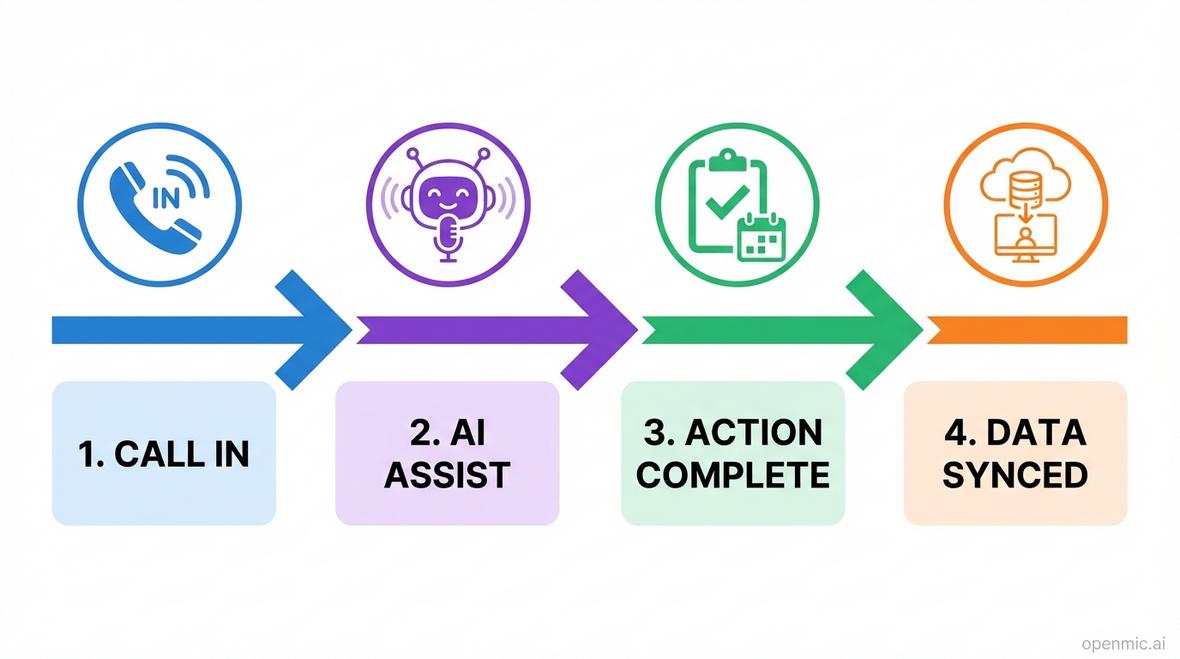
For instance, OpenMic.ai's integration capabilities enable AI assistants to pull customer data from your CRM before a call, update records based on conversation outcomes, schedule appointments in your calendar system, and trigger follow-up sequences all without human intervention. This level of automation delivers efficiency gains that traditional call center operations simply cannot match.
Key Benefits of Implementing AI Call Assistants for Your Business
Organizations across industries are discovering that AI call assistants deliver measurable improvements in operational efficiency, cost structure, and customer satisfaction. Here are the most compelling advantages driving adoption in 2026.
Round-the-Clock Availability Without Overtime Costs
Unlike human agents who work shifts and require breaks, an AI call assistant operates continuously without fatigue. This means your business can capture leads, schedule appointments, and resolve customer inquiries at 3 AM on Sunday with the same quality as 3 PM on Tuesday. For industries like healthcare and legal services, where urgent inquiries occur at all hours, this capability is transformative.
Dramatic Cost Reduction Compared to Traditional Call Centers
Labor represents the largest expense for most contact centers, with average agent salaries, benefits, training costs, and management overhead creating significant financial burden. Forrester reports on AI in customer service showing improved first call resolution and satisfaction scores versus traditional systems for contact centers, while simultaneously reducing operational costs by 40-60%.
An AI call assistant handles the high-volume, repetitive inquiries that consume the majority of call center resources, allowing human agents to focus on complex cases requiring empathy, judgment, and creativity. This hybrid approach optimizes both cost efficiency and service quality.
Instant Scalability During Peak Demand Periods
Traditional call centers struggle with demand fluctuations. Holiday seasons, product launches, or marketing campaigns can overwhelm phone lines, leading to long hold times and abandoned calls. Scaling human operations requires lengthy hiring, training, and onboarding processes.
AI call assistants scale instantly. Whether you receive 10 calls or 10,000 simultaneously, each caller receives immediate attention without waiting in queue. This elasticity is particularly valuable for businesses with seasonal demand patterns or those experiencing rapid growth.
Consistent Quality and Compliance Across Every Interaction
Human performance varies based on factors like fatigue, mood, experience level, and individual capabilities. An AI call assistant delivers identical quality on the first call of the day and the thousandth. For regulated industries like debt collection or healthcare, this consistency ensures compliance with complex regulatory requirements on every interaction.
AI systems can be programmed to never deviate from approved scripts for critical compliance statements while maintaining natural conversational flow for other dialogue elements. This combination of flexibility and control is difficult to achieve with human agents.
Top Use Cases: Where AI Call Assistants Deliver Maximum Impact
While AI call assistants offer value across nearly every industry, certain applications demonstrate particularly strong return on investment and operational transformation.
Appointment Scheduling and Reminders
Scheduling appointments via phone remains tedious and time-consuming, yet many customers prefer this channel over web forms. An AI call assistant can check availability, book appointments, send confirmations, and deliver automated appointment reminders reducing no-show rates by 30-50% according to industry benchmarks.
For salons, dental practices, and other appointment-driven businesses, this automation liberates staff from phone duty while ensuring the schedule stays full.
Lead Qualification and Screening
Not all leads deserve equal attention from your sales team. An AI call assistant can engage every inbound lead immediately, ask qualifying questions, assess intent and fit, and route only qualified prospects to human sales representatives. This ensures your expensive sales talent focuses on opportunities most likely to convert.
Real estate professionals using AI voice agents for lead screening report 3-5x improvement in sales team productivity by eliminating time wasted on unqualified inquiries.
First-Line Customer Support and FAQ Handling
Research consistently shows that 60-80% of customer service calls involve routine questions with straightforward answers. An AI call assistant configured as an FAQ agent can resolve these inquiries instantly, without transferring to human agents. This reduces support costs while delivering faster resolution for customers.
For complex issues requiring human expertise, the AI assistant gathers context and relevant information before transferring, enabling the human agent to resolve the issue more efficiently.
Payment Reminders and Collections
Reaching customers about overdue payments typically requires multiple contact attempts, making it labor-intensive and expensive. AI call assistants can make persistent outbound calls for invoice reminders and early-stage collections, using appropriate tone and messaging while maintaining detailed records of every interaction.
This application proves particularly valuable for healthcare providers, utilities, and subscription businesses with high-volume accounts receivable operations.
Industry-Specific Applications of AI Call Assistants
Different industries face unique communication challenges that AI call assistants address in specialized ways.
Healthcare: Medical Reception and Patient Engagement
Medical practices face constant phone interruptions for appointment scheduling, prescription refills, insurance verification, and general inquiries. These calls disrupt clinical workflows and create administrative burden. An AI receptionist handles these routine interactions, allowing medical staff to focus on patient care.
Advanced implementations can verify insurance eligibility in real-time, collect patient intake information before appointments, and send automated follow-up instructions after visits, improving both operational efficiency and patient outcomes.
Automotive: Dealership BDC Automation
Car dealerships traditionally employ large business development centers (BDCs) to handle sales inquiries, service scheduling, and customer follow-up. Voice AI is transforming automotive retail by automating these functions while delivering superior response times and consistency.
An AI call assistant can qualify leads from online inquiries, schedule test drives, coordinate service appointments, and conduct post-purchase satisfaction surveys all while maintaining integration with dealer management systems for seamless data flow.
Real Estate: 24/7 Lead Response and Property Information
Real estate success depends on rapid lead response, yet agents cannot answer phones while showing properties or during evening hours when many inquiries occur. AI call assistants bridge this gap by engaging every lead immediately, answering property questions, scheduling showings, and qualifying buyer intent.
Agents using AI voice solutions for real estate report significant improvements in lead conversion rates simply by ensuring no opportunity goes unanswered.
Home Services: Dispatch and Emergency Response
HVAC, plumbing, electrical, and other home service businesses receive high call volumes, especially during emergencies. An AI call assistant can triage calls based on urgency, collect necessary information about the issue, check technician availability, and dispatch appropriately all within minutes of the initial call.
For home services providers, this automation improves response times while reducing administrative overhead in dispatch operations.
How to Successfully Implement an AI Call Assistant in Your Organization
Deploying an AI call assistant requires thoughtful planning and execution to maximize value and user acceptance.
Define Clear Objectives and Success Metrics
Start by identifying specific pain points you want the AI assistant to address. Are you trying to reduce call abandonment rates, decrease labor costs, improve lead response times, or extend service hours? Establish baseline metrics and targets so you can measure impact objectively.
Design Conversation Flows Based on Real Call Data
Review recordings and transcripts of actual customer calls to understand common patterns, questions, and objections. Use these insights to design conversation flows that feel natural and address real customer needs rather than theoretical scenarios. The best AI assistants reflect how your customers actually communicate, not how you wish they would.
Integrate With Existing Business Systems
An isolated AI assistant delivers limited value. Maximum impact comes from deep integration with your CRM, scheduling system, payment processor, and other operational tools. Platforms like OpenMic.ai support integration with thousands of applications through native connections and tools like Zapier integration, enabling comprehensive workflow automation.
Start With a Pilot and Iterate Based on Results
Rather than attempting full-scale deployment immediately, begin with a focused use case or customer segment. Monitor performance closely, gather feedback from customers and staff, and refine the system based on real-world results. This iterative approach reduces risk while building organizational confidence in the technology.
Choosing the Right AI Call Assistant Platform for Your Business
The market offers numerous AI call assistant solutions with varying capabilities, pricing models, and industry focus. Selecting the right platform requires evaluating several critical factors.
Natural Conversation Quality and Voice Realism
The quality of the conversational experience directly impacts customer acceptance and satisfaction. Evaluate platforms based on voice naturalness, ability to handle interruptions, contextual understanding, and appropriate response generation. Request demos with scenarios relevant to your specific use cases.
Customization and Configuration Flexibility
Every business has unique processes, terminology, and requirements. The best platforms offer extensive customization options for conversation design, voice selection, integration points, and business logic without requiring extensive development resources. Look for solutions that balance power with usability.
Analytics and Continuous Improvement Capabilities
An AI call assistant should provide detailed analytics on conversation outcomes, common failure points, customer sentiment, and operational metrics. These insights enable continuous refinement and optimization. Advanced platforms offer AI-powered suggestions for improving conversation designs based on actual performance data.
Security, Privacy, and Compliance Considerations
Voice conversations often involve sensitive personal information, particularly in healthcare, legal, and financial services. Ensure your chosen platform meets relevant regulatory requirements like HIPAA, PCI-DSS, or GDPR. Understand data handling practices, encryption standards, and compliance certifications before deployment.
The Future of AI Call Assistants: Emerging Trends for 2026 and Beyond
AI call assistant technology continues advancing rapidly, with several important trends shaping the future landscape.
Enhanced Emotional Intelligence and Empathy
Next-generation AI assistants will detect emotional states through voice analysis and adapt communication style accordingly. A frustrated customer will receive different handling than a satisfied one, with the system recognizing when to escalate to human agents based on emotional cues rather than just keywords.
Seamless Multilingual and Cross-Cultural Communication
Advanced AI assistants will switch languages mid-conversation and understand cultural nuances that affect communication preferences. This capability will be particularly valuable for businesses serving diverse populations or operating across multiple geographic markets.
Proactive Outreach and Predictive Engagement
Rather than only responding to inbound calls, AI assistants will increasingly initiate outbound communications based on predictive analytics. They might reach out to customers likely to churn with retention offers, contact prospects when they show buying signals, or proactively notify customers about relevant updates.
Unified Omnichannel Experiences
The distinction between phone, chat, email, and other channels will blur as AI assistants maintain context across all touchpoints. A conversation started via web chat can seamlessly continue over the phone, with the AI assistant remembering previous interactions and maintaining continuity.
Frequently Asked Questions About AI Call Assistants
Will AI call assistants completely replace human agents?
No, the most effective approach combines AI and human capabilities. AI call assistants excel at handling high-volume, routine interactions with speed and consistency, while humans remain essential for complex problem-solving, emotional situations, and relationship building. The future involves collaboration, not replacement.
How much does an AI call assistant cost?
Pricing varies significantly based on call volume, features, and customization requirements. Entry-level solutions start around $50-200 per month for basic functionality, while enterprise implementations can cost thousands monthly. Most platforms charge based on minutes used or number of calls, making costs scalable with usage. Check OpenMic.ai pricing for transparent, volume-based options.
How long does it take to set up an AI call assistant?
Implementation timelines range from a few days for simple use cases to several weeks for complex, multi-integration deployments. Modern platforms with intuitive interfaces and pre-built templates can have basic functionality running within hours, though refinement and optimization continue over time based on real-world performance.
How accurate are AI call assistants at understanding speech?
Modern AI call assistants achieve 90-95% accuracy in ideal conditions, though performance varies based on factors like accent, background noise, and audio quality. This accuracy continues improving as systems learn from more conversations and speech recognition models advance.
Can AI call assistants handle industry-specific terminology?
Yes, most platforms allow customization of vocabulary, entities, and conversation flows to accommodate specialized terminology. Whether you operate in healthcare, legal, real estate, or any other field, the AI assistant can be trained on your specific language and processes.
Conclusion
The AI call assistant represents a fundamental shift in how businesses handle customer communication, moving from reactive, labor-intensive operations to proactive, automated engagement that scales effortlessly. By delivering 24/7 availability, consistent quality, dramatic cost savings, and seamless integration with existing business systems, these intelligent agents are rapidly becoming essential infrastructure across industries.
Whether you operate in healthcare, automotive, real estate, home services, or any customer-facing business, AI call assistants offer tangible benefits that directly impact your bottom line. The technology has matured beyond experimental status into production-ready solutions delivering measurable ROI for organizations of all sizes. As capabilities continue advancing with enhanced emotional intelligence, multilingual support, and predictive engagement, early adopters will establish competitive advantages that become increasingly difficult for laggards to overcome. Explore how OpenMic.ai can transform your customer communication strategy today.