
What is an AI Call Agent?
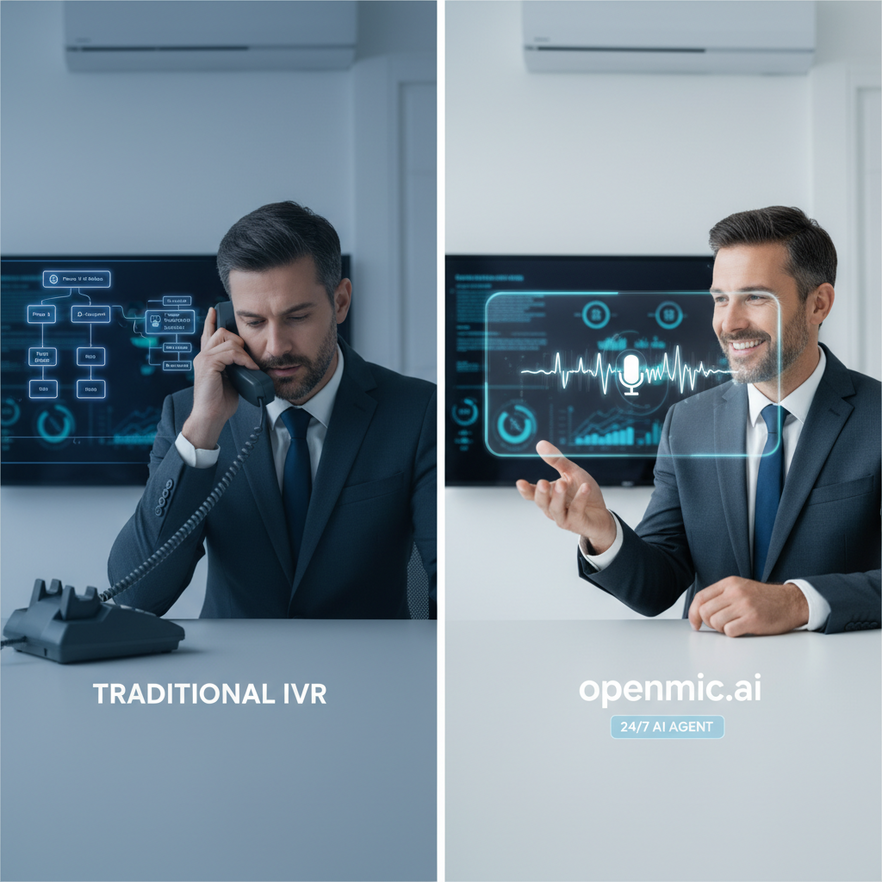
An AI call agent is an intelligent software system powered by artificial intelligence that can handle inbound and outbound phone calls autonomously. Unlike traditional interactive voice response (IVR) systems that rely on rigid menu trees, modern AI call agents leverage natural language processing (NLP), machine learning, and advanced speech recognition to understand context, respond naturally, and complete complex tasks such as appointment scheduling, lead qualification, customer support, and follow-ups.
According to research from Forrester, businesses that adopt conversational AI for customer service report up to a 30% reduction in operational costs while maintaining or improving customer satisfaction scores. This transformative technology is rapidly becoming essential for industries ranging from healthcare and real estate to automotive and retail.
In 2025, the landscape of AI-powered communication has evolved significantly. OpenMic.ai and similar platforms are enabling businesses of all sizes to deploy AI call agents that operate 24/7, handle multiple languages, integrate seamlessly with CRM systems, and deliver personalized experiences at scale.
How AI Call Agents Work: The Technology Behind the Voice
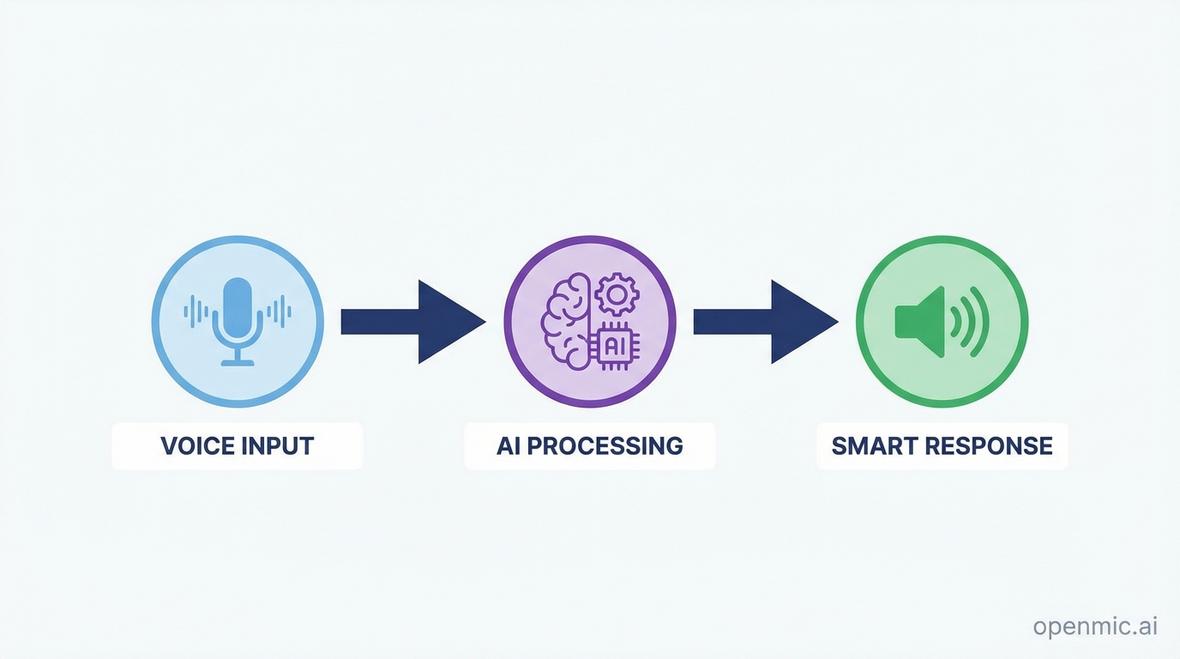
Understanding how an AI call agent functions requires breaking down the core technologies that power these systems. The process typically involves three fundamental stages: voice input, AI processing, and smart response generation.
Voice Input and Speech Recognition
The journey begins when a caller speaks into their phone. The AI call agent captures this audio input and converts it into text using automatic speech recognition (ASR) technology. Modern ASR engines can accurately transcribe speech in real-time, even accounting for accents, background noise, and industry-specific terminology.
AI Processing and Natural Language Understanding
Once the speech is converted to text, the system employs natural language understanding (NLU) to interpret the caller's intent. This involves analyzing keywords, context, sentiment, and conversational flow. Machine learning models trained on thousands of conversations enable the AI call agent to distinguish between similar requests and identify the appropriate action.
For example, if a patient calls a dental office saying 'I need to reschedule my appointment for next week,' the AI agent recognizes the intent (appointment rescheduling), extracts the relevant entities (time frame), and accesses the practice management system to offer available slots.
Smart Response and Speech Synthesis
After processing the input, the AI call agent generates an appropriate response using natural language generation (NLG). This response is then converted back into speech using text-to-speech (TTS) synthesis. Advanced TTS engines produce human-like voices with natural intonation, pauses, and emotion, making interactions feel conversational rather than robotic.
Key Features of Modern AI Call Agents
The capabilities of an AI call agent extend far beyond basic call routing. Here are the essential features that define best-in-class solutions in 2025:
24/7 Availability and Instant Response
Unlike human agents who require breaks, shifts, and time off, AI call agents operate around the clock without interruption. This ensures that every caller receives immediate attention, regardless of the time of day or day of the week. For businesses with global customer bases or those in time-sensitive industries like healthcare, this feature is invaluable.
Multi-Language and Accent Recognition
Modern AI call agents support dozens of languages and dialects, enabling businesses to serve diverse customer populations without hiring multilingual staff. Spanish voice AI, Mandarin voice AI, and French voice AI capabilities are now standard, with continuous improvements in accent recognition accuracy.
Seamless CRM Integration
Top-tier AI call agents integrate directly with popular customer relationship management (CRM) platforms such as HubSpot, Salesforce, Pipedrive, and Zoho. This integration enables the AI to access customer history, update records in real-time, and trigger automated workflows based on call outcomes. Voice AI agents for HubSpot exemplify this seamless connectivity.
Intelligent Appointment Scheduling
One of the most valuable use cases for AI call agents is automated appointment booking. The system can check calendar availability, offer time slots, confirm bookings, send reminders, and handle rescheduling requests all without human intervention. Appointment booking agents have become essential for medical practices, salons, legal offices, and service businesses.
Advanced Lead Qualification and Scoring
For sales teams, AI call agents can conduct initial conversations with prospects, ask qualifying questions, assess interest levels, and score leads based on predefined criteria. This allows human sales representatives to focus their energy on high-value opportunities. Learn more about lead qualification strategies using AI.
Real-Time Sentiment Analysis
Sophisticated AI call agents monitor the emotional tone of conversations in real-time. If a caller becomes frustrated or angry, the system can adjust its responses, offer escalation to a human agent, or provide additional support resources. This emotional intelligence significantly improves customer satisfaction.
Industry-Specific Applications of AI Call Agents
The versatility of AI call agents makes them applicable across virtually every sector. Here's how different industries are leveraging this technology:
Healthcare and Medical Practices
Medical offices face constant phone traffic for appointment scheduling, prescription refills, insurance verification, and general inquiries. AI call agents handle routine tasks, reducing administrative burden on staff and improving patient access. Healthcare AI solutions are transforming patient engagement, with some practices reporting a 40% reduction in missed appointments after implementing automated reminder systems.
Real Estate
Real estate agents spend significant time fielding inquiries about property listings, scheduling showings, and qualifying potential buyers. AI call agents can engage with leads immediately, provide property information, book viewing appointments, and even conduct preliminary qualification conversations. Real estate AI agents enable agents to focus on high-value activities like negotiations and closings.
Automotive Dealerships
Car dealerships leverage AI call agents for test drive scheduling, service appointment booking, inventory inquiries, and follow-up calls. According to industry reports, dealerships using AI voice technology see an average increase of 25% in service department revenue due to improved appointment fill rates. Explore more about AI for car dealerships.
Legal Services
Law firms use AI call agents for client intake, appointment scheduling, case status updates, and general information provision. This technology ensures no potential client call goes unanswered, even outside business hours. Legal industry AI solutions are particularly valuable for practices handling high volumes of initial consultations.
Restaurants and Hospitality
Restaurants deploy AI call agents to handle reservation bookings, answer menu questions, process takeout orders, and manage waitlist inquiries. This frees up staff to focus on in-person customer service and kitchen operations. Read about AI solutions for restaurants.
Home Services and HVAC
HVAC companies, plumbers, electricians, and other home service providers use AI call agents to schedule service calls, provide price estimates, dispatch technicians, and handle emergency inquiries. Home services AI agents help these businesses capture more jobs and improve response times.
Business Benefits of Implementing AI Call Agents
Organizations that deploy AI call agents realize multiple strategic advantages:
Significant Cost Reduction
Hiring, training, and retaining call center staff represents a major expense. AI call agents reduce these costs dramatically while maintaining consistent quality. Studies from industry analysts suggest that AI-powered customer service can reduce operational costs by 20-40% compared to traditional call centers.
Unlimited Scalability
During peak periods, product launches, or marketing campaigns, call volumes can spike dramatically. AI call agents scale instantly to handle any volume of simultaneous calls without additional infrastructure or staffing costs.
Consistent Customer Experience
Human agents have good days and bad days; AI call agents deliver the same high-quality experience on every interaction. This consistency builds trust and strengthens brand reputation.
Rich Data and Analytics
Every conversation with an AI call agent generates valuable data. Businesses gain insights into common customer questions, pain points, conversion bottlenecks, and emerging trends. This intelligence informs product development, marketing strategies, and operational improvements.
Competitive Advantage
In markets where competitors still rely on voicemail, limited business hours, or long wait times, businesses with AI call agents provide superior accessibility and responsiveness. This differentiation drives customer acquisition and retention.
How to Implement an AI Call Agent for Your Business
Deploying an AI call agent involves several key steps:
Step 1: Define Use Cases and Objectives
Identify which call types and business processes are best suited for AI automation. Common starting points include appointment scheduling, FAQ handling, lead capture, and basic customer support.
Step 2: Choose the Right Platform
Select an AI call agent platform that aligns with your technical requirements, budget, and integration needs. Platforms like OpenMic.ai offer comprehensive solutions with pre-built templates for common use cases, making deployment faster and more cost-effective than custom development.
Step 3: Design Conversation Flows
Map out the conversation paths your AI agent will handle. Consider various scenarios, edge cases, and escalation triggers. Well-designed flows anticipate customer needs and guide conversations toward successful outcomes.
Step 4: Integrate with Existing Systems
Connect your AI call agent to your CRM, scheduling software, inventory management system, and other business tools. These integrations enable the AI to access relevant data and take action based on conversation outcomes.
Step 5: Train and Test
Provide the AI with sample conversations, industry-specific terminology, and common customer queries. Conduct thorough testing with team members playing various customer roles to identify and address any issues before going live.
Step 6: Launch and Monitor
Deploy your AI call agent, initially alongside human agents if desired. Monitor performance metrics, listen to call recordings, and gather feedback. Continuously refine conversation flows and training data based on real-world interactions.
Comparing Top AI Call Agent Platforms
The market for AI call agent solutions has expanded rapidly. Here's how leading platforms compare:
| Platform | Key Strengths | Ideal For |
|---|---|---|
| OpenMic.ai | Deep CRM integrations, industry-specific templates, white-label options | Businesses seeking turnkey solutions with strong customization |
| Vapi.ai | Developer-focused, flexible API | Tech companies building custom applications |
| Bland.ai | Simple setup, budget-friendly | Small businesses with basic needs |
| Retell.ai | Enterprise features, analytics dashboard | Large organizations with complex requirements |
| SynthFlow | Marketing automation focus | Agencies and marketing teams |
For detailed comparisons, explore Bland AI alternatives and Vapi AI alternatives.
Future Trends in AI Call Agent Technology
As we progress through 2025 and beyond, several emerging trends will shape the evolution of AI call agents:
Emotion AI and Empathy Modeling
Next-generation systems will demonstrate even greater emotional intelligence, recognizing subtle vocal cues and adjusting responses to match the caller's emotional state. This will make AI interactions virtually indistinguishable from human conversations in terms of empathy and understanding.
Predictive and Proactive Calling
Rather than waiting for customers to call, AI agents will proactively reach out based on triggers such as appointment reminders, renewal notices, service opportunities, and personalized offers. This shift from reactive to proactive engagement will drive significant business value.
Voice Biometrics and Security
Voice recognition technology will enable secure authentication, allowing customers to verify their identity simply by speaking. This will streamline processes while enhancing security for sensitive transactions.
Multimodal AI Agents
Future AI call agents will seamlessly blend voice, text, and visual elements. During a phone conversation, the AI might send a text message with a link, share a document, or guide the customer through a mobile app all while maintaining the voice connection.
Industry-Specific Verticalization
We'll see increased specialization, with AI call agents pre-trained in medical terminology for healthcare, legal concepts for law firms, technical specifications for automotive, and so on. This domain expertise will improve accuracy and reduce implementation time.
Addressing Common Concerns About AI Call Agents
Despite their benefits, some organizations hesitate to adopt AI call agents due to common concerns:
Will AI Replace Human Jobs?
Rather than wholesale replacement, AI call agents typically augment human teams. They handle routine, repetitive tasks, freeing human agents to focus on complex issues, relationship building, and high-value interactions. Many organizations report that AI implementation allows them to redeploy staff to more fulfilling roles rather than reducing headcount.
Will Customers Accept AI Agents?
Research indicates that customer acceptance of AI agents is high when the technology works well. According to surveys, over 70% of customers are comfortable interacting with AI for simple tasks, and this acceptance increases when the AI clearly saves them time. The key is ensuring smooth experiences and providing easy escalation to humans when needed.
What About Data Privacy and Security?
Reputable AI call agent platforms implement robust security measures including encryption, compliance with regulations like HIPAA and GDPR, and strict data handling protocols. Businesses should thoroughly vet providers to ensure they meet industry security standards.
Are AI Agents Accurate Enough?
Modern AI call agents achieve accuracy rates exceeding 95% for well-defined tasks in controlled environments. Continuous learning and refinement further improve performance over time. For critical or sensitive matters, hybrid models that combine AI efficiency with human oversight provide an optimal balance.
Calculating ROI for AI Call Agent Implementation
Understanding the return on investment for an AI call agent helps justify the implementation decision:
Direct Cost Savings
Calculate the fully loaded cost of human agents (salary, benefits, training, management, infrastructure) and compare it to the subscription cost of an AI solution. For many businesses, AI call agents pay for themselves within 3-6 months through reduced staffing needs.
Revenue Impact
Measure the incremental revenue generated through improved lead capture, reduced missed opportunities, increased appointment fill rates, and enhanced customer retention. Businesses often see 15-30% improvement in conversion rates after implementing AI call agents.
Operational Efficiency
Quantify time savings for staff who no longer handle routine calls, allowing them to focus on revenue-generating activities. Also consider reductions in errors, missed appointments, and customer service escalations.
Customer Lifetime Value
Improved customer experience through instant response times and 24/7 availability increases satisfaction, loyalty, and lifetime value. Even modest improvements in retention can generate substantial long-term financial benefits.
Getting Started with Your First AI Call Agent
For organizations ready to explore AI call agent technology, here's a practical roadmap:
Start with a Pilot Program
Rather than attempting to automate all call types immediately, begin with a focused pilot addressing a specific use case such as appointment scheduling or FAQ handling. This allows you to learn, refine, and demonstrate value before expanding.
Set Clear Success Metrics
Define how you'll measure success call containment rate, customer satisfaction scores, cost per interaction, conversion rates, or other relevant KPIs. Establish baseline measurements before implementation to accurately assess impact.
Prepare Your Team
Communicate transparently with staff about how AI will change workflows. Emphasize that the technology will handle repetitive tasks, allowing them to focus on more engaging work. Provide training on monitoring AI interactions and handling escalations.
Iterate Based on Data
Use analytics from your AI call agent platform to identify improvement opportunities. Which conversation paths cause confusion? Where do customers most often request human agents? Continuously refine your AI based on these insights.
Partner with Experts
Consider working with an experienced provider that offers implementation support, best practices guidance, and ongoing optimization services. This partnership accelerates time-to-value and helps avoid common pitfalls.
Frequently Asked Questions About AI Call Agents
What industries benefit most from AI call agents?
Healthcare, real estate, automotive, legal services, home services, restaurants, retail, and education all see significant benefits. Any industry with high call volumes and routine inquiries is an ideal candidate.
How much does an AI call agent cost?
Pricing varies widely based on features, call volume, and customization needs. Entry-level solutions start around $100-300 per month, while enterprise platforms can cost several thousand dollars monthly. Most providers offer tiered pricing based on usage.
Can AI call agents handle complex conversations?
Modern AI call agents excel at structured conversations with clear objectives. For highly complex, nuanced, or emotionally sensitive situations, a hybrid approach with human oversight is typically recommended.
How long does implementation take?
With platforms offering pre-built templates and integrations, basic implementations can be completed in 1-2 weeks. More complex, customized deployments may require 4-8 weeks including design, integration, testing, and refinement.
Do customers know they're talking to AI?
Best practices recommend transparency. Many businesses introduce the AI agent by name and explain its purpose, which customers generally appreciate. Some platforms offer voices so natural that distinction becomes minimal.
What happens if the AI doesn't understand?
Quality AI call agent systems include fallback mechanisms. If the AI cannot understand or resolve an issue after a few attempts, it smoothly transfers the caller to a human agent along with context from the conversation.
Can AI call agents make outbound calls?
Yes, many platforms support outbound calling for appointment reminders, follow-ups, lead nurturing, surveys, and notifications. Outbound AI calling is particularly valuable for reducing no-shows and re-engaging prospects.
Are AI call agents compliant with regulations?
Reputable providers ensure compliance with regulations such as TCPA (Telephone Consumer Protection Act), HIPAA (for healthcare), GDPR (for EU data), and industry-specific requirements. Always verify compliance certifications before selecting a provider.
Conclusion
The AI call agent represents a fundamental shift in how businesses handle phone communications. By combining advanced artificial intelligence with natural language processing and seamless integrations, these systems deliver 24/7 availability, consistent quality, significant cost savings, and enhanced customer experiences. From healthcare and real estate to automotive and legal services, organizations across industries are discovering that AI call agents aren't just a competitive advantage they're becoming a necessity in 2025. As the technology continues to evolve with improved emotional intelligence, proactive capabilities, and industry specialization, early adopters will be best positioned to maximize the transformative benefits of conversational AI. Whether you're looking to reduce operational costs, improve lead conversion, or simply ensure no customer call goes unanswered, implementing an AI call agent offers a clear path forward.