
What is an AI Auto Dialer and Why It Matters in 2026
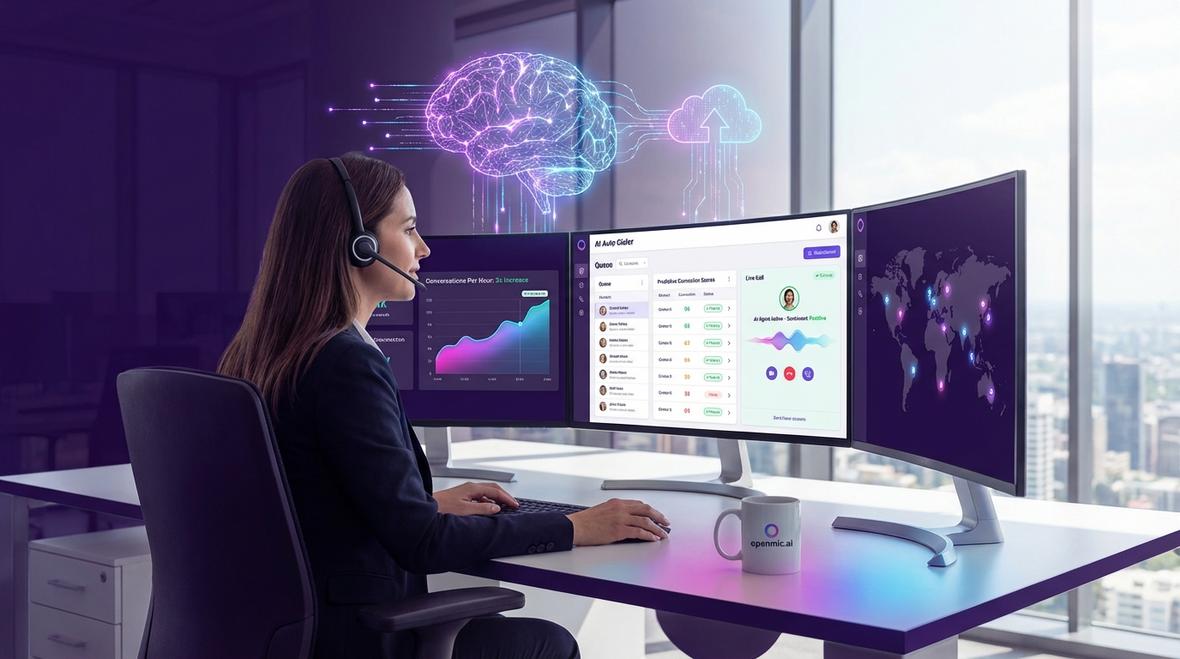
An AI auto dialer represents the convergence of artificial intelligence and automated calling technology, transforming how businesses approach outbound communication. Unlike traditional auto dialers that simply automate the dialing process, AI-powered systems integrate natural language processing, sentiment analysis, and intelligent routing to create personalized, efficient customer interactions at scale.
In 2026, businesses are experiencing unprecedented pressure to maximize contact rates while maintaining conversation quality. An AI auto dialer addresses this challenge by eliminating manual dialing, predicting optimal call times, and connecting agents only when a human answers dramatically reducing wasted time on busy signals, voicemails, and disconnected numbers.
According to research from iPscape, AI diallers enable 2-3x more conversations per day per agent compared to manual dialing methods, while increasing quality talk time from 25-30% to 60-70% of the workday. This efficiency gain translates directly to better sales outcomes and improved customer engagement across industries.
How AI Auto Dialers Work: The Technology Behind Smart Calling
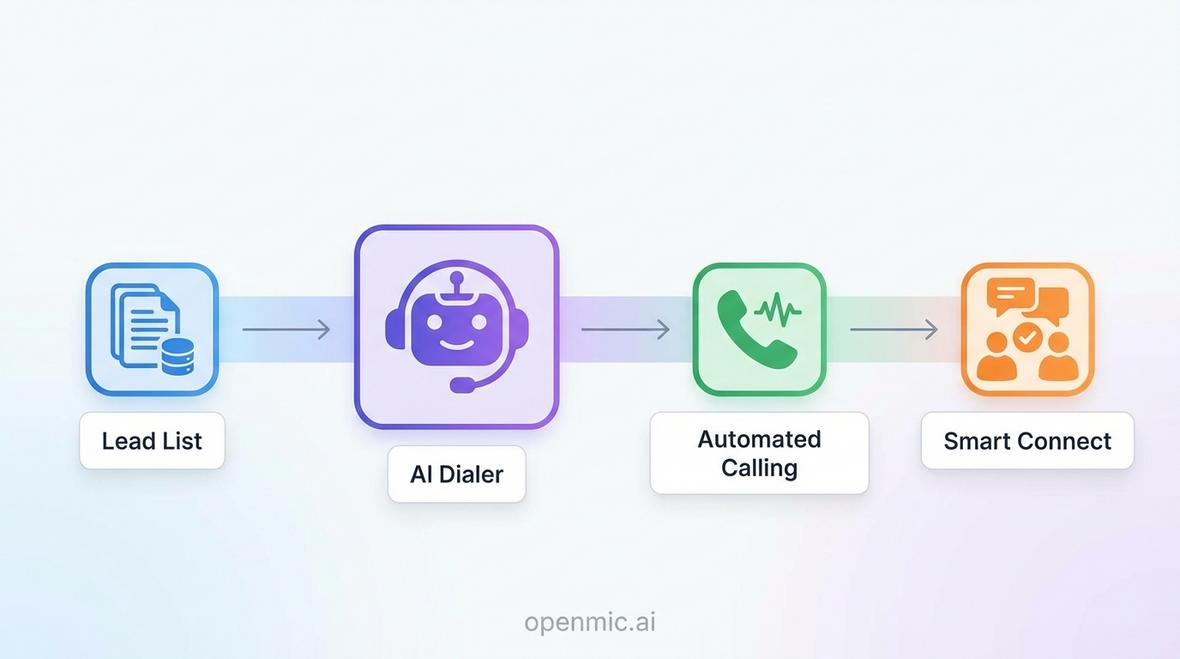
Understanding the mechanics of an AI auto dialer reveals why this technology has become essential for modern contact centers. The system operates through several integrated components that work together seamlessly.
Intelligent List Management
AI auto dialers begin with sophisticated lead list management. The system analyzes historical data, customer behavior patterns, and demographic information to prioritize contacts. Machine learning algorithms continuously refine these prioritization rules based on successful connection rates and conversion outcomes.
Predictive Dialing Algorithms
The core of an AI auto dialer lies in its predictive capabilities. These systems analyze agent availability, average call duration, and connection probability to determine the optimal number of calls to initiate simultaneously. By dialing multiple numbers before agents complete current calls, the system ensures zero idle time while minimizing abandoned calls.
Natural Language Processing Integration
Modern AI auto dialers incorporate conversational AI to handle initial interactions. Natural language processing enables the system to understand caller responses, qualify leads through automated conversations, and seamlessly transfer qualified prospects to human agents. This capability is particularly valuable for lead qualification processes where initial screening can be automated.
Real-Time Sentiment Analysis
Advanced AI auto dialers analyze voice tone, speech patterns, and word choice to gauge customer sentiment during conversations. This insight helps agents adjust their approach in real-time and allows supervisors to identify calls requiring immediate intervention or additional support.
Types of AI Auto Dialers: Choosing the Right Solution
Not all AI auto dialers function identically. Understanding the different types helps businesses select the solution best aligned with their operational needs.
Preview Dialers
Preview dialers display contact information to agents before initiating calls, allowing review of customer history and preparation. While less aggressive than predictive systems, preview dialers work well for complex sales requiring personalized approaches or when dealing with high-value accounts.
Progressive Dialers
Progressive dialers automatically dial the next number once an agent becomes available, ensuring continuous workflow without idle time. This approach balances efficiency with compliance, as calls are only placed when agents are ready to engage.
Predictive Dialers
Predictive dialers represent the most aggressive approach, using algorithms to dial multiple numbers per available agent based on statistical models. These systems maximize contact rates but require careful configuration to maintain regulatory compliance regarding abandoned call rates.
Power Dialers
Power dialers automatically call through contact lists at predetermined rates, typically one call per agent. This straightforward approach provides consistency and is easier to manage for smaller teams or specialized campaigns.
Key Benefits of Implementing an AI Auto Dialer
Organizations implementing AI auto dialers experience transformative benefits across multiple operational dimensions.
Dramatically Increased Agent Productivity
The most immediate benefit is the multiplication of productive conversations. By eliminating manual dialing and connecting agents only to live contacts, AI auto dialers enable representatives to focus entirely on meaningful conversations rather than administrative tasks. Teams using these systems consistently report doubling or tripling their daily conversation volumes.
Improved Contact Rates and Lead Conversion
Intelligent timing algorithms determine optimal calling windows based on historical connection data, significantly improving answer rates. When combined with AI-powered lead scoring, businesses connect with prospects at precisely the right moment, dramatically improving conversion rates.
Enhanced Cost Efficiency
Automating the dialing process reduces the number of agents needed to maintain target contact volumes. According to market research, cloud-based AI auto dialers dominate the market due to their scalability, flexibility, and cost-effectiveness compared to traditional on-premises solutions. Organizations realize substantial savings on infrastructure, maintenance, and staffing.
Automated Compliance Management
Regulatory compliance represents a significant challenge in outbound calling. AI auto dialers incorporate built-in compliance features including do-not-call list scrubbing, time-zone awareness, call recording with consent, and abandoned call rate monitoring. These automated safeguards reduce legal risk while ensuring consistent adherence to regulations like TCPA, GDPR, and industry-specific requirements.
Actionable Data and Performance Insights
Every interaction generates valuable data. AI auto dialers provide comprehensive analytics including contact rates, conversion metrics, optimal calling times, agent performance statistics, and campaign effectiveness. These insights enable continuous optimization and data-driven decision-making.
Critical Implementation Considerations for AI Auto Dialers
Successful AI auto dialer deployment requires careful planning across several dimensions.
Integration with Existing Systems
Your AI auto dialer must seamlessly integrate with existing CRM platforms, helpdesk software, and business intelligence tools. Solutions like OpenMic AI offer extensive integration capabilities ensuring your calling platform works harmoniously within your technology ecosystem. Consider API availability, pre-built connectors for popular platforms, and data synchronization capabilities.
Compliance Framework Development
Before launching campaigns, establish clear compliance protocols aligned with applicable regulations. This includes obtaining proper consent, maintaining updated suppression lists, implementing call time restrictions, setting appropriate abandoned call thresholds, and establishing recording and data retention policies. Regular compliance audits should be scheduled to ensure ongoing adherence.
Comprehensive Agent Training
Technology only succeeds when properly utilized. Invest in thorough agent training covering system operation, conversation scripts optimized for AI-assisted calling, handling transfers from AI to human agents, and interpreting real-time analytics. Ongoing coaching ensures teams maximize the technology's potential.
Strategic Campaign Planning
Define clear objectives, segment audiences appropriately, develop compelling scripts, establish success metrics, and plan testing protocols before launching campaigns. The most successful implementations begin with pilot programs that allow refinement before full-scale deployment.
Industry-Specific Applications of AI Auto Dialers
AI auto dialers deliver value across diverse sectors, each with unique use cases and benefits.
Real Estate
Real estate professionals leverage AI auto dialers for lead follow-up, finding off-market property opportunities, appointment scheduling, and market research campaigns. The technology enables agents to maintain contact with larger prospect databases while providing timely responses that close more deals.
Automotive Dealerships
Car dealerships use AI auto dialers for service appointment reminders, sales follow-up after showroom visits, financing approval notifications, and trade-in value updates. The technology helps dealerships maintain engagement throughout the customer journey while managing high-volume outreach efficiently.
Healthcare
Healthcare organizations implement AI auto dialers for appointment confirmations, prescription refill reminders, test result notifications, patient satisfaction surveys, and preventive care outreach. These systems improve appointment attendance rates while reducing administrative burden on clinical staff.
Debt Collection
The debt collection industry benefits from AI auto dialers through increased contact rates with debtors, compliant communication tracking, payment arrangement automation, and skip tracing integration. The technology enables collectors to reach more accounts while maintaining strict regulatory compliance.
Home Services and HVAC
HVAC and home service businesses utilize AI auto dialers for seasonal maintenance reminders, emergency service dispatching, quote follow-ups, and customer satisfaction surveys. This automation ensures consistent customer communication without requiring dedicated administrative staff.
Selecting the Right AI Auto Dialer Provider
Choosing an AI auto dialer provider requires evaluating multiple factors to ensure long-term success.
Essential Feature Evaluation
Assess providers based on dialing modes offered, AI and NLP capabilities, CRM integration options, compliance features, analytics and reporting depth, scalability to accommodate growth, call recording and quality monitoring, and omnichannel capabilities beyond voice.
Understanding Pricing Models
AI auto dialer pricing varies significantly across providers. Common models include per-seat monthly subscriptions, per-minute usage-based pricing, tiered plans based on features and volume, and enterprise custom pricing. Evaluate total cost of ownership including implementation, training, support, and potential overage charges. Review transparent pricing structures to understand the true financial commitment.
Support and Reliability Considerations
Downtime directly impacts revenue in outbound calling operations. Evaluate provider uptime guarantees, support availability and response times, onboarding and training resources, and user community strength. Strong vendor support proves invaluable during implementation and when troubleshooting issues.
Security and Data Privacy
Given the sensitive nature of customer data, prioritize providers offering robust security including data encryption in transit and at rest, SOC 2 or ISO certifications, HIPAA compliance for healthcare applications, and clear data ownership and portability terms. Review privacy policies carefully before committing.
AI Voice Agents vs Traditional Auto Dialers
Understanding the evolution from traditional auto dialers to AI voice agents highlights why modern solutions deliver superior results.
Traditional auto dialers simply automate the dialing process, connecting human agents to answered calls. AI voice agents represent a quantum leap forward, combining automated dialing with conversational AI capable of conducting entire interactions autonomously. These advanced systems handle initial qualification, answer common questions, schedule appointments, and escalate complex issues to human agents only when necessary.
The conversational AI market is experiencing explosive growth, with businesses across industries recognizing the efficiency gains and customer experience improvements these technologies enable. AI voice agents operate 24/7 without fatigue, maintain perfect consistency in messaging, scale instantly to handle volume spikes, and continuously learn from interactions to improve performance.
Future Trends in AI Auto Dialer Technology
The AI auto dialer landscape continues evolving rapidly, with several trends shaping the future of outbound communication.
Hyper-Personalization Through AI
Next-generation systems will leverage deeper data integration to personalize every interaction based on comprehensive customer profiles, behavioral patterns, and predictive analytics. Conversations will feel individually crafted rather than scripted, dramatically improving engagement.
Voice Biometrics and Authentication
Security-conscious industries will increasingly adopt voice biometrics for caller authentication, reducing fraud while streamlining verification processes. This technology enables secure conversations without cumbersome knowledge-based authentication questions.
Emotion AI and Empathy Detection
Advanced sentiment analysis will evolve into sophisticated emotion detection, enabling AI systems to recognize frustration, confusion, satisfaction, and other emotional states. Systems will adapt conversation flow and tone in real-time based on detected emotions, creating more empathetic interactions.
Multilingual and Accent-Adaptive Systems
Global businesses require systems that seamlessly handle multiple languages and regional dialects. Future AI auto dialers will automatically detect language preferences and adapt accordingly, eliminating language barriers in customer communication.
Predictive Outcome Modeling
Machine learning models will increasingly predict conversation outcomes before calls occur, enabling hyper-targeted campaigns focused on contacts with highest conversion probability. This predictive capability maximizes ROI while minimizing wasted outreach.
Best Practices for Maximizing AI Auto Dialer ROI
Implementing an AI auto dialer is only the first step; maximizing return requires ongoing optimization and strategic management.
Continuous Script and Strategy Optimization
Regularly analyze call recordings and outcome data to refine conversation scripts. A/B test different approaches, messaging variations, and call-to-action strategies. What works today may not work tomorrow as market conditions and customer preferences evolve.
Data-Driven Agent Coaching
Leverage system analytics to identify top performers and struggling agents. Analyze what differentiates successful conversations and incorporate those insights into coaching programs. Regular feedback sessions grounded in objective data drive consistent improvement.
Maintain Impeccable List Hygiene
Database quality directly impacts campaign success. Regularly clean contact lists, removing disconnected numbers, updating contact information, suppressing unresponsive contacts, and enriching records with new data. Quality always trumps quantity in outbound calling.
Proactive Compliance Monitoring
Don't wait for complaints or violations. Implement proactive monitoring including regular compliance audits, abandoned call rate tracking, agent adherence reviews, and consent documentation verification. Prevention costs far less than remediation.
Leverage Full Integration Capabilities
Maximize value by deeply integrating your AI auto dialer with CRM systems, marketing automation platforms, analytics tools, and other business systems. Seamless data flow enables sophisticated workflows and comprehensive customer insights. Explore integration possibilities that connect thousands of applications.
Real-World Success: AI Auto Dialer Implementation Case Studies
Examining actual implementation results demonstrates the tangible impact of AI auto dialer technology.
Insurance Agency Triples Qualified Appointments
A mid-sized insurance agency struggling with low contact rates implemented an AI auto dialer with intelligent lead scoring. Within three months, the team increased daily conversations from 45 to 142 per agent while improving qualification accuracy. Appointment setting rates improved 280%, and the sales pipeline grew accordingly. The agency attributed success to optimized calling times identified by AI analytics and automated pre-qualification that ensured agents spoke only with genuinely interested prospects.
Solar Installation Company Reduces Cost Per Lead
A residential solar installation company faced high customer acquisition costs due to manual outreach inefficiency. After deploying an AI auto dialer with conversational AI for initial qualification, the company reduced cost per qualified lead by 63% while maintaining lead quality. The system handled initial interest confirmation and basic eligibility screening, transferring only qualified prospects to sales consultants. This efficiency enabled the company to expand into new markets without proportionally increasing headcount.
Collection Agency Improves Right-Party Contact Rates
A debt collection agency implemented an AI auto dialer to improve contact rates while maintaining strict compliance. The predictive dialing algorithms increased right-party contact rates from 18% to 47% by optimizing calling times based on debtor behavior patterns. Automated compliance features eliminated violations, and detailed call analytics enabled the agency to refine strategies continuously. Collections improved 34% within the first quarter of deployment.
Getting Started with Your AI Auto Dialer Implementation
Beginning your AI auto dialer journey requires systematic planning and execution.
Phase 1: Assessment and Planning
Start by documenting current outbound calling processes, identifying pain points and inefficiencies, defining clear objectives and success metrics, and assessing technical requirements and integration needs. This foundation ensures alignment between technology capabilities and business requirements.
Phase 2: Vendor Selection and Contracting
Research providers thoroughly, request demonstrations focused on your specific use cases, evaluate pricing against expected ROI, and negotiate terms including service level agreements and support commitments. Don't rush this phase; the right provider partnership proves invaluable long-term.
Phase 3: Implementation and Integration
Work closely with your provider to configure the system according to your requirements, integrate with existing business systems, import and organize contact data, develop initial scripts and workflows, and establish compliance parameters. Thorough implementation prevents issues during production operation.
Phase 4: Training and Pilot Launch
Conduct comprehensive agent training on system operation and best practices. Launch with a limited pilot campaign to test configurations and workflows. Gather feedback from agents and monitor performance metrics closely. Refine approaches based on initial results before full-scale deployment.
Phase 5: Continuous Optimization
After launch, establish regular review cycles to analyze performance data, identify optimization opportunities, implement improvements, and measure impact. AI auto dialer success is not a one-time achievement but an ongoing process of refinement and enhancement.
Common AI Auto Dialer Implementation Mistakes to Avoid
Learning from others' mistakes saves time, money, and frustration.
Inadequate Agent Training
Rushing through training to begin calling quickly often backfires. Agents uncertain about system operation or best practices deliver suboptimal results. Invest adequate time in comprehensive training that builds confidence and competence.
Poor Data Quality
Even the most sophisticated AI auto dialer cannot overcome bad data. Attempting to launch campaigns with outdated, inaccurate contact information wastes resources and damages reputation. Prioritize data quality from the outset.
Neglecting Compliance Requirements
Compliance violations carry severe consequences including substantial fines, legal action, and reputation damage. Never treat compliance as an afterthought. Build robust compliance protocols into every aspect of your operation.
Using Generic Scripts
AI auto dialers enable high-volume outreach, but quality still matters. Generic, impersonal scripts produce poor results. Develop compelling, value-focused scripts tailored to your audience segments and continuously refine based on performance data.
Failing to Monitor and Optimize
Set-it-and-forget-it approaches waste the technology's potential. Markets change, audiences evolve, and competitors adapt. Continuous monitoring and optimization separate successful implementations from mediocre ones.
How OpenMic AI Transforms Outbound Calling
When evaluating AI auto dialer solutions, OpenMic AI stands out for its comprehensive approach to intelligent outbound communication.
OpenMic AI combines advanced predictive dialing with sophisticated conversational AI, enabling businesses to automate entire customer interaction workflows while maintaining natural, engaging conversations. The platform's AI voice agents handle initial contact, qualification, appointment scheduling, and information gathering autonomously, escalating only complex situations requiring human expertise.
Key differentiators include natural-sounding voice synthesis that creates pleasant customer experiences, deep CRM integration ensuring seamless data flow across systems, industry-specific solutions optimized for sectors like real estate, healthcare, and legal services, comprehensive analytics providing actionable insights for continuous improvement, and built-in compliance management that adapts to regulatory requirements automatically.
Organizations implementing OpenMic AI consistently report dramatic improvements in contact rates, conversion metrics, and operational efficiency while reducing costs compared to traditional calling approaches. The platform's flexibility enables customization for unique business requirements while maintaining ease of use that accelerates time-to-value.
Frequently Asked Questions About AI Auto Dialers
What is the difference between an auto dialer and an AI auto dialer?
Traditional auto dialers simply automate the dialing process, connecting human agents when calls are answered. AI auto dialers incorporate artificial intelligence for predictive dialing algorithms, conversational AI capabilities, sentiment analysis, intelligent lead scoring, and automated decision-making that optimizes every aspect of outbound calling.
Are AI auto dialers legal and compliant with regulations?
Yes, when properly configured and used responsibly. AI auto dialers include compliance features designed to adhere to regulations like TCPA, GDPR, and industry-specific requirements. However, organizations remain responsible for ensuring proper consent, maintaining do-not-call lists, setting appropriate abandoned call rates, and following all applicable regulations.
How much does an AI auto dialer cost?
Pricing varies significantly based on features, volume, and provider. Expect monthly costs ranging from $50-$150 per user for basic solutions, $150-$300 per user for mid-tier platforms with advanced features, and custom enterprise pricing for large-scale deployments. Usage-based models may charge per minute, typically ranging from $0.01-$0.05 per minute depending on features and volume.
Can AI auto dialers integrate with my existing CRM?
Most modern AI auto dialers offer extensive integration capabilities with popular CRM platforms including Salesforce, HubSpot, Zoho, Pipedrive, and others. Evaluate integration options carefully during vendor selection to ensure seamless data flow between systems.
How quickly can I implement an AI auto dialer?
Implementation timelines vary based on complexity, integration requirements, and team size. Simple deployments with minimal customization may be operational within 1-2 weeks. More complex implementations involving extensive integrations, custom workflows, and large teams may require 4-8 weeks. Proper planning and vendor support significantly impact implementation speed.
Will an AI auto dialer replace my sales agents?
No. AI auto dialers augment human agents rather than replace them. The technology handles repetitive tasks like dialing, initial qualification, and basic information gathering, allowing human agents to focus on high-value activities requiring emotional intelligence, complex problem-solving, and relationship building. Successful implementations increase agent productivity and job satisfaction.
Conclusion
AI auto dialers have fundamentally transformed outbound calling from a labor-intensive, inefficient process into a strategic, data-driven operation delivering measurable results. By combining intelligent automation with conversational AI, these systems enable businesses to dramatically increase contact rates, improve conversion metrics, and reduce operational costs while maintaining regulatory compliance.
Success requires selecting the right technology partner, implementing thoughtfully with attention to integration and compliance, training teams comprehensively, and committing to continuous optimization. Organizations that embrace AI auto dialer technology position themselves competitively in markets where customer engagement speed and efficiency increasingly determine success. As the technology continues evolving with enhanced personalization, emotion detection, and predictive capabilities, early adopters will maintain significant advantages over competitors relying on outdated manual approaches.