
Introduction
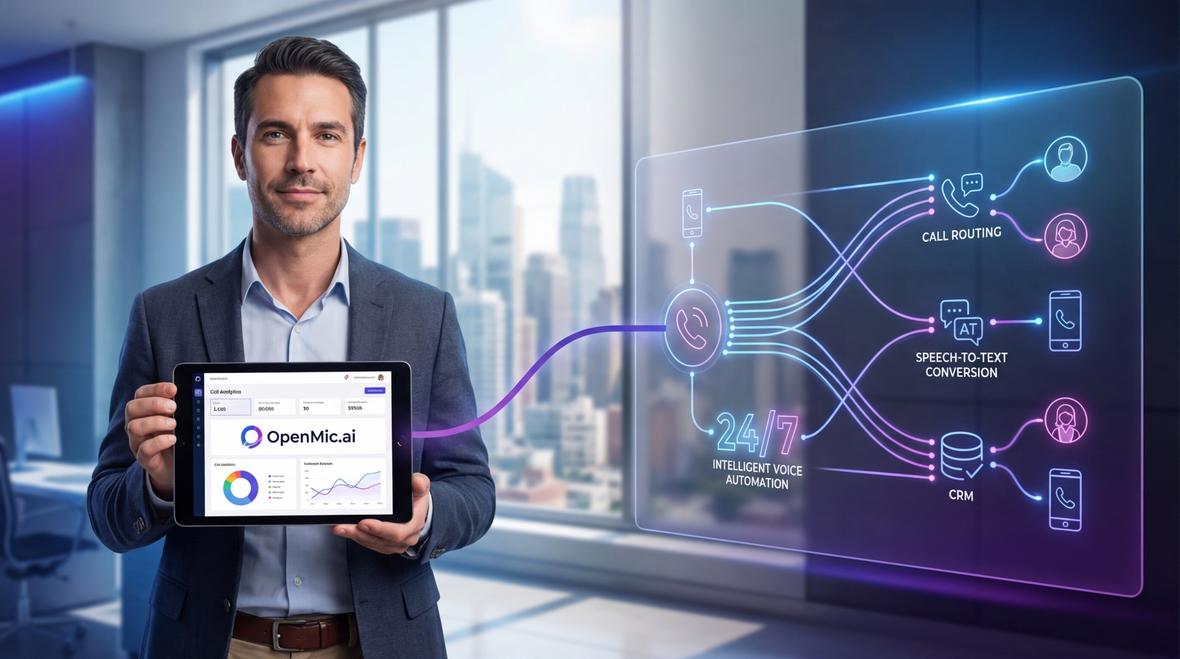
In 2026, AI answering phone calls has evolved from a futuristic concept to a mission-critical tool for businesses seeking to scale operations, reduce costs, and enhance customer responsiveness. Tech-savvy business leaders, developers, and customer support managers are increasingly turning to intelligent voice AI agents to handle both inbound and outbound calls seamlessly. According to Forrester, 88% of contact centers are deploying AI at scale, yet only 27% have successfully operationalized it into workflows, highlighting the significant integration challenges and untapped ROI potential for API-first voice AI platforms.
The traditional approach of relying solely on human agents or outdated IVR systems is no longer sustainable. Missed calls translate to lost revenue, 24/7 human support is prohibitively expensive, and legacy systems lack the flexibility modern businesses demand. This comprehensive guide explores how AI answering phone calls works, its transformative benefits, implementation strategies, and why platforms like OpenMic.ai are leading the charge in intelligent voice automation.
What Is AI Answering Phone Calls?
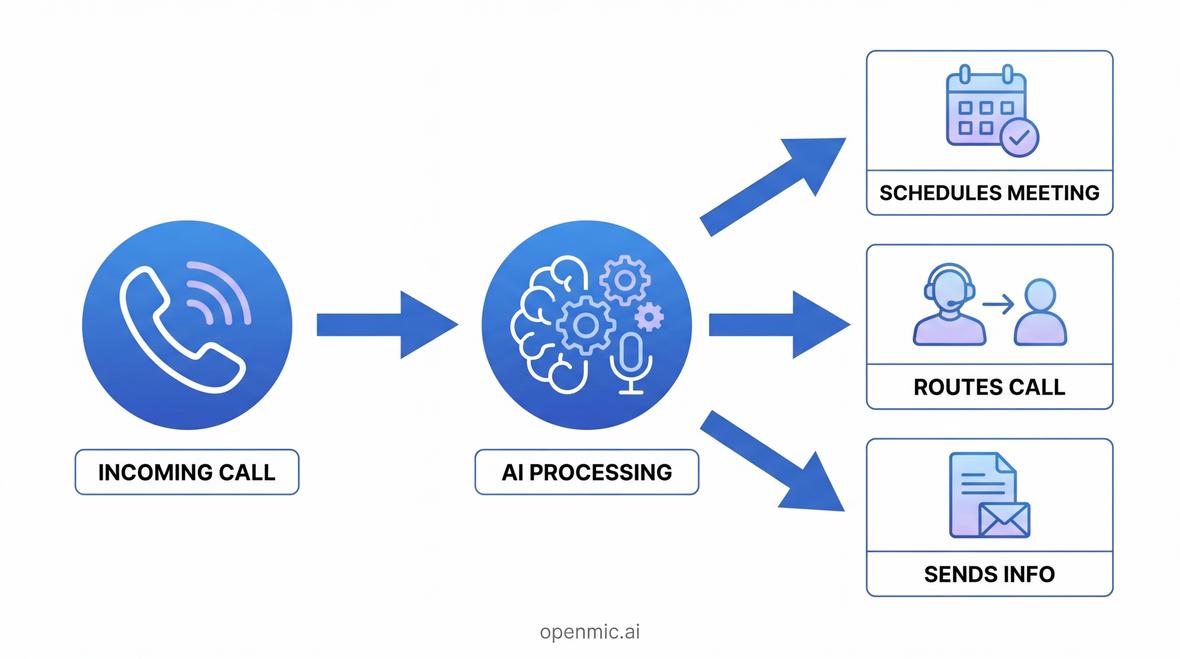
AI answering phone calls refers to the deployment of artificial intelligence-powered voice agents that can autonomously handle customer interactions over the phone. These intelligent systems leverage natural language processing (NLP), machine learning, and advanced speech recognition to understand caller intent, provide accurate responses, route calls, schedule appointments, and even conduct outbound campaigns all without human intervention.
Unlike traditional interactive voice response (IVR) systems that rely on rigid menu trees and push-button navigation, modern AI voice agents engage in dynamic, conversational exchanges. They can interpret context, handle complex queries, and adapt responses in real-time, delivering a customer experience that rivals or exceeds human agents in many scenarios.
Core Components of AI Phone Systems
- Speech Recognition: Converts caller speech into text with high accuracy across accents and languages
- Natural Language Understanding (NLU): Interprets meaning, intent, and sentiment from spoken language
- Dialogue Management: Maintains conversation context and determines appropriate responses
- Text-to-Speech (TTS): Generates natural-sounding voice responses that mimic human speech patterns
- Integration Layer: Connects to CRMs, calendars, databases, and business systems via APIs
- Analytics Engine: Tracks performance metrics, call outcomes, and optimization opportunities
Why Businesses Need AI Answering Phone Calls in 2026
The business case for implementing AI answering phone calls has never been stronger. Organizations across industries are facing mounting pressure to deliver exceptional customer experiences while controlling operational costs. Here's why intelligent voice automation has become essential:
Addressing Critical Pain Points
Missed Calls Equal Missed Revenue: Every unanswered call represents a potential customer who may never call back. Studies show that 67% of customers hang up if they cannot reach a live person quickly, and nearly 90% won't leave a voicemail. AI voice agents ensure zero missed calls by answering instantly, 24/7/365.
Cost of 24/7 Human Support: Maintaining round-the-clock human staffing is financially unsustainable for most SMEs and even challenging for large enterprises. Salary, benefits, training, and infrastructure costs compound quickly. AI agents operate continuously without overtime, sick days, or turnover, reducing operational expenses by up to 70%.
Limitations of Traditional IVR: Legacy IVR systems frustrate customers with confusing menus, limited flexibility, and inability to handle nuanced requests. Modern AI voice agents understand natural speech, provide personalized responses, and resolve issues efficiently dramatically improving customer satisfaction scores.
Competitive Advantages
Organizations deploying AI answering phone calls gain significant competitive edges:
- Instant Response Times: Eliminate wait queues and hold music entirely
- Consistent Quality: Every interaction follows best practices without variation due to agent fatigue or mood
- Scalability: Handle call volume spikes during peak periods without additional hiring
- Multilingual Support: Serve global customers in their preferred languages seamlessly
- Data-Driven Insights: Capture and analyze 100% of conversations for continuous improvement
For businesses seeking cutting-edge solutions, exploring the top voice AI agents can provide valuable insights into platform capabilities and selection criteria.
Key Use Cases for AI Answering Phone Calls
The versatility of AI answering phone calls technology enables application across numerous business functions and industries. Understanding these use cases helps organizations identify high-impact deployment opportunities.
Inbound Call Automation
Customer Service and Support: AI agents handle common inquiries, troubleshooting, account questions, and service requests autonomously. They escalate complex issues to human specialists only when necessary, dramatically reducing support costs while maintaining quality. Learn more about how customer service AI cuts call center costs without losing quality.
Appointment Scheduling: Voice agents check calendar availability, book appointments, send confirmations, and manage rescheduling requests eliminating phone tag and administrative burden. Businesses can implement specialized appointment booking agents tailored to their workflows.
Lead Qualification: AI systematically qualifies incoming leads by asking qualifying questions, capturing contact information, and routing hot prospects to sales representatives immediately. This ensures sales teams focus exclusively on high-value opportunities. Discover how lead qualification agents streamline the sales pipeline.
FAQ Handling: Automate responses to frequently asked questions about business hours, locations, services, pricing, and policies freeing human staff for value-added activities.
Outbound Call Automation
Sales and Prospecting: AI voice agents conduct high-volume cold calling campaigns, deliver personalized pitches, qualify interest levels, and schedule demos with qualified prospects. They operate tirelessly without the psychological fatigue that impacts human callers.
Payment Reminders and Collections: Automate courteous payment reminders, invoice notifications, and collections calls while maintaining compliance with regulatory requirements. AI agents handle these sensitive conversations professionally and consistently.
Customer Surveys and Feedback: Deploy voice survey agents to gather customer feedback, conduct satisfaction assessments, and collect market research data at scale with higher response rates than email surveys.
Appointment Confirmations and Reminders: Reduce no-show rates by automatically confirming upcoming appointments and sending timely reminders, allowing customers to reschedule if needed.
Industry-Specific Applications of AI Answering Phone Calls
Different industries leverage AI answering phone calls technology in unique ways tailored to their specific operational requirements and customer expectations.
Healthcare
Medical practices, hospitals, and dental offices use AI voice agents for appointment scheduling, prescription refill requests, insurance verification, and after-hours triage. This improves patient access while reducing administrative overhead. Explore specialized AI voice agents for dental practices and learn about how AI is transforming healthcare more broadly.
Real Estate
Real estate agencies deploy AI for lead screening, property information requests, showing scheduling, and follow-up campaigns. Voice agents qualify prospects by budget, timeline, and preferences before routing qualified leads to agents, maximizing productivity.
Automotive Dealerships
Car dealerships leverage AI answering phone calls for service appointment scheduling, parts inquiries, sales lead qualification, and test drive bookings. AI handles after-hours inquiries that would otherwise be lost, significantly increasing conversion rates. Discover more about AI solutions for car dealerships.
Restaurants and Hospitality
Restaurants use AI voice agents to handle reservation requests, answer menu questions, take delivery orders, and manage waitlist management all while kitchen and front-of-house staff focus on food quality and in-person service.
Legal Services
Law firms implement AI for initial client intake, appointment scheduling, case information gathering, and qualifying potential clients before attorney consultation, improving efficiency while maintaining professional service standards.
How AI Answering Phone Calls Technology Works
Understanding the technical architecture behind AI answering phone calls helps organizations evaluate platforms and implementation approaches effectively.
Technical Architecture
Step 1: Call Initiation
When a call comes in (or is placed outbound), the telephony system routes it to the AI voice platform via SIP trunking, cloud telephony APIs, or direct integration with existing phone systems.
Step 2: Speech Recognition
The AI converts the caller's speech into text using advanced automatic speech recognition (ASR) engines optimized for conversational accuracy, accent recognition, and background noise filtering.
Step 3: Intent Recognition
Natural language understanding algorithms analyze the transcribed text to determine the caller's intent, extract key information, and identify the appropriate response pathway.
Step 4: Dialogue Management
The system maintains conversation context, tracks information gathered, and determines the optimal next question or action based on the dialogue flow and business rules.
Step 5: Response Generation
Based on intent and context, the AI generates an appropriate response, which is converted to natural-sounding speech using text-to-speech synthesis engines with human-like intonation and pacing.
Step 6: Action Execution
The AI executes required actions such as database lookups, calendar updates, CRM record creation, call routing, or triggering workflows in integrated systems via API connections.
Step 7: Analytics and Learning
Every interaction is logged, analyzed, and used to continuously improve model performance, refine dialogue flows, and identify optimization opportunities.
Integration Capabilities
Modern AI answering phone calls platforms must integrate seamlessly with existing business systems to deliver maximum value:
- CRM Systems: Salesforce, HubSpot, Pipedrive, Zoho, and custom CRMs for contact management and lead tracking
- Calendar Systems: Google Calendar, Outlook, Calendly for appointment scheduling
- Helpdesk Platforms: Zendesk, Freshdesk, Intercom for support ticket creation
- Payment Systems: Stripe, PayPal for payment processing and invoice management
- Communication Tools: Slack, Microsoft Teams for internal notifications and escalations
Platforms like OpenMic.ai offer extensive integration capabilities, enabling businesses to connect AI voice agents with their existing technology stack through native connectors and flexible APIs.
Choosing the Right AI Answering Phone Calls Platform
Selecting the optimal AI answering phone calls solution requires careful evaluation of platform capabilities, pricing models, and vendor reliability.
Essential Platform Features
API-First Architecture: Look for platforms built on robust APIs that enable deep customization, integration flexibility, and programmatic control essential for developers and technical teams.
Natural Conversation Quality: Evaluate voice quality, response accuracy, and conversational flow during realistic test scenarios. The AI should handle interruptions, clarifications, and complex queries gracefully.
Customization and Control: Platforms should offer customizable dialogue flows, brand voice configuration, business rules definition, and escalation pathways tailored to specific use cases.
Security and Compliance: Enterprise-grade security, data encryption, HIPAA compliance (for healthcare), PCI compliance (for payments), and adherence to industry regulations are non-negotiable.
Analytics and Reporting: Comprehensive dashboards tracking call volumes, resolution rates, customer satisfaction, conversion metrics, and AI performance indicators enable data-driven optimization.
Scalability: The platform must handle growing call volumes without degradation in performance or significant cost increases.
Pricing Considerations
Understanding pricing models helps organizations budget effectively and calculate ROI:
- Per-Minute Pricing: Common for usage-based models, typically ranging from $0.05 to $0.15 per minute
- Per-Call Pricing: Flat fee per call handled, regardless of duration
- Subscription Models: Monthly or annual subscriptions with included call volumes
- Custom Enterprise Pricing: Tailored pricing for high-volume deployments with specific requirements
Organizations should compare pricing models across vendors while considering total cost of ownership, including integration, customization, and ongoing optimization efforts.
Implementation Best Practices for AI Answering Phone Calls
Successful deployment of AI answering phone calls technology requires strategic planning and methodical execution.
Define Clear Objectives
Begin by identifying specific business problems to solve: reducing wait times, cutting support costs, increasing lead conversion, or extending service hours. Establish measurable KPIs such as call resolution rate, customer satisfaction scores, cost per interaction, and revenue impact.
Start with High-Impact Use Cases
Rather than attempting comprehensive automation immediately, identify one or two high-volume, standardized use cases for initial deployment. Appointment scheduling, FAQ handling, and lead qualification typically deliver quick wins with minimal complexity.
Design Conversation Flows Carefully
Invest time in mapping out realistic conversation scenarios, including happy paths, edge cases, and error handling. Consider how the AI should respond to confusion, frustration, or requests outside its scope. Plan appropriate escalation pathways to human agents for complex situations.
Test Extensively Before Launch
Conduct thorough testing with diverse user groups, accents, speaking styles, and query types. Identify gaps in understanding, awkward phrasing, or logical errors in dialogue flows. Iterative refinement during testing dramatically improves launch success.
Monitor and Optimize Continuously
Post-deployment, actively monitor call recordings, transcripts, and analytics to identify improvement opportunities. Regularly update dialogue flows, expand knowledge bases, and refine AI models based on real-world performance data.
Future Trends in AI Answering Phone Calls
The evolution of AI answering phone calls technology continues to accelerate, with several emerging trends shaping the future landscape.
Emotion Recognition and Empathy
Next-generation AI voice agents will increasingly incorporate emotion detection capabilities, identifying caller frustration, satisfaction, or urgency through vocal cues and adjusting responses accordingly to deliver more empathetic interactions.
Multilingual and Dialect Support
Expanding global markets demand AI systems that seamlessly switch between languages mid-conversation and accurately understand regional dialects, accents, and colloquialisms across diverse customer populations.
Predictive and Proactive Calling
AI systems will leverage predictive analytics to identify optimal calling times, anticipate customer needs, and initiate proactive outreach before problems arise transforming reactive support into preventative engagement.
Deeper System Integration
Future platforms will offer even more seamless integration with business systems, enabling AI agents to execute complex multi-system workflows, update records across platforms, and orchestrate comprehensive business processes autonomously.
Frequently Asked Questions
How accurate are AI phone agents compared to human agents?
Modern AI answering phone calls systems achieve 90-95% accuracy rates for common inquiries and structured conversations. For straightforward tasks like appointment scheduling, information lookup, and FAQ responses, AI often matches or exceeds human performance while maintaining perfect consistency. However, complex problem-solving, nuanced negotiations, and situations requiring deep empathy still benefit from human expertise.
Can AI voice agents handle angry or frustrated customers?
Advanced AI systems can detect frustration through vocal tone analysis and employ de-escalation strategies such as apologizing, offering solutions, or immediately routing to human specialists. While AI handles routine complaints effectively, highly emotional or complex disputes typically warrant human intervention. Properly configured systems recognize these situations and escalate appropriately.
What happens when the AI cannot answer a question?
Well-designed AI answering phone calls systems acknowledge limitations transparently, offering to connect callers with human specialists, schedule callbacks, or collect information for follow-up. This graceful degradation maintains customer trust while ensuring issues receive appropriate resolution.
How long does it take to implement an AI phone system?
Implementation timelines vary based on complexity, integration requirements, and customization needs. Simple deployments for standard use cases can launch within 1-2 weeks, while comprehensive enterprise implementations with extensive integrations may require 4-8 weeks. API-first platforms significantly reduce deployment time through flexible integration capabilities.
Is my customer data secure with AI phone systems?
Reputable platforms employ enterprise-grade security including end-to-end encryption, secure data storage, access controls, and compliance with regulations like GDPR, HIPAA, and PCI-DSS. Always verify a vendor's security certifications, data handling policies, and compliance documentation before deployment.
Can AI integrate with my existing phone system?
Most modern AI answering phone calls platforms integrate with existing telephony infrastructure through SIP trunking, cloud telephony APIs (Twilio, Vonage), or direct PBX integration. This allows organizations to add AI capabilities without replacing existing phone systems.
Conclusion
The adoption of AI answering phone calls technology represents a fundamental shift in how businesses manage customer communication in 2026. By automating routine interactions, eliminating missed calls, reducing operational costs, and delivering consistent, high-quality experiences, intelligent voice agents have become indispensable for competitive organizations across industries. The integration challenges highlighted by research underscore the importance of selecting API-first platforms like OpenMic.ai that prioritize seamless connectivity, customization, and scalability. As AI capabilities continue advancing with emotion recognition, multilingual support, and predictive engagement, early adopters position themselves for sustained competitive advantage in an increasingly automated business landscape.