
Introduction
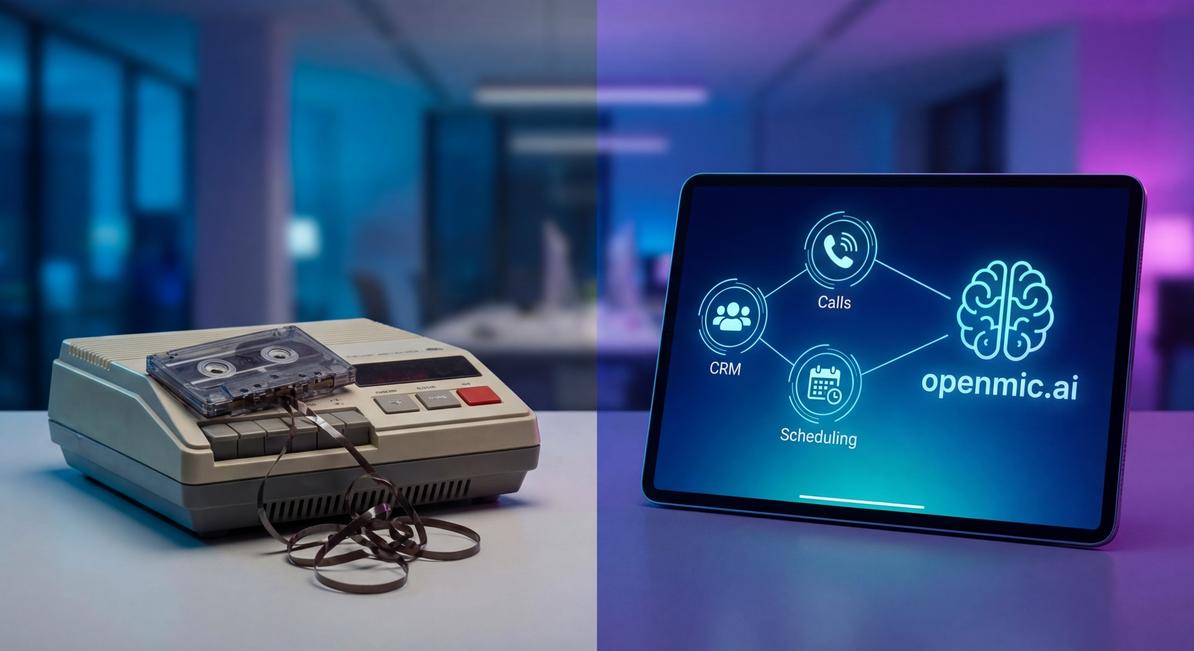
The traditional answering machine is rapidly becoming obsolete. In 2026, businesses are turning to AI answering machines to handle inbound and outbound calls with unprecedented intelligence and efficiency. These systems go far beyond simple voicemail they engage callers in natural conversations, qualify leads, schedule appointments, and integrate seamlessly with business workflows.
For tech-savvy business leaders, sales managers, and developers at SMEs and enterprises, the shift to AI-powered voice automation represents a strategic advantage. With AI achieving 55-70% first contact resolution rates and handle times under 3 minutes, these systems outperform traditional IVR solutions while reducing operational costs and improving customer responsiveness. This comprehensive guide explores how AI answering machines work, their benefits, implementation strategies, and how platforms like OpenMic.ai are leading the transformation.
What Is an AI Answering Machine?
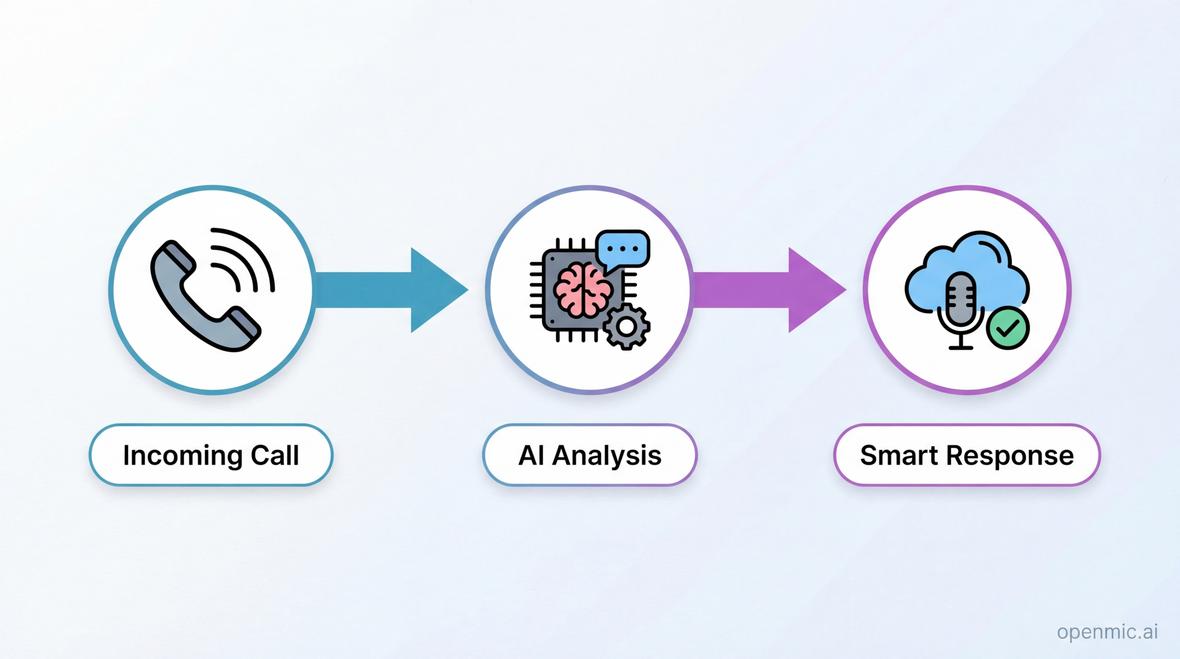
An AI answering machine is an intelligent voice automation system that uses natural language processing (NLP), machine learning, and conversational AI to answer phone calls, understand caller intent, and execute appropriate actions. Unlike legacy answering machines that simply record messages, modern AI answering machines can:
- Engage in dynamic conversations: Understand context, handle interruptions, and respond naturally to customer queries
- Qualify and route calls: Identify high-priority leads and transfer them to the right department or agent
- Schedule appointments: Access calendar systems and book meetings in real-time
- Process transactions: Handle payments, update orders, and manage account information
- Integrate with business systems: Connect to CRMs, helpdesk software, and other enterprise tools
These systems operate 24/7, ensuring no call goes unanswered a critical advantage for businesses competing in global markets or serving customers across multiple time zones. The technology leverages advanced signal processing and voice recognition to deliver exceptional audio quality and accurate intent detection.
How AI Answering Machines Work: The Technology Behind the Intelligence
Understanding the technical architecture of an AI answering machine helps business leaders make informed decisions about deployment and integration. The core components include:
Speech Recognition and Synthesis
Modern AI answering machines use automatic speech recognition (ASR) to convert spoken words into text with high accuracy. This text is then processed by NLP engines to understand intent and context. Conversely, text-to-speech (TTS) synthesis generates natural-sounding responses that maintain conversational flow. Advanced systems employ neural TTS models that mimic human intonation, emotion, and pacing.
Natural Language Understanding (NLU)
NLU engines analyze caller utterances to extract meaning, identify entities (such as names, dates, and product references), and determine the appropriate response or action. Machine learning models trained on industry-specific data improve accuracy over time, adapting to regional accents, industry jargon, and unique business contexts.
Dialogue Management
The dialogue manager orchestrates the conversation flow, deciding when to ask clarifying questions, when to transfer to a human agent, and when to execute backend actions. State-of-the-art systems use reinforcement learning to optimize conversation paths based on successful outcomes.
Integration Layer
API-first platforms provide robust integration capabilities, connecting the AI answering machine to CRM systems, scheduling tools, payment gateways, and custom databases. This enables real-time data access and action execution during calls. OpenMic.ai's integration framework supports thousands of popular business applications, ensuring seamless workflow automation.
Key Benefits of AI Answering Machines for Modern Businesses
The adoption of AI answering machines delivers measurable advantages across multiple operational dimensions:
24/7 Availability Without Human Overhead
Traditional call centers require substantial staffing to maintain round-the-clock coverage, driving up labor costs significantly. AI answering machines operate continuously without breaks, holidays, or shift changes. This ensures customers receive immediate responses regardless of when they call, improving satisfaction and capture rates for after-hours inquiries.
Dramatic Cost Reduction
By automating routine inquiries, appointment scheduling, and lead qualification, businesses can reduce call center staffing requirements by 40-60%. The cost per interaction drops from several dollars for human-handled calls to cents for AI-managed conversations. For enterprises handling tens of thousands of calls monthly, this translates to six-figure annual savings.
Infinite Scalability
Unlike human agents, AI answering machines can handle unlimited concurrent calls without degradation in service quality. During peak demand periods product launches, promotional campaigns, or seasonal spikes the system scales instantly without additional hiring or training costs.
Consistency and Compliance
Every interaction follows predefined protocols, ensuring consistent brand messaging and adherence to regulatory requirements. This is particularly valuable in regulated industries such as healthcare, finance, and legal services, where compliance violations carry severe penalties. AI voice agents for legal firms ensure HIPAA and attorney-client privilege standards are maintained.
Rich Data and Analytics
Every call generates structured data: caller intent, conversation duration, sentiment analysis, and outcome metrics. This data feeds business intelligence systems, revealing customer pain points, product feedback, and operational bottlenecks that inform strategic decisions.
Top Use Cases for AI Answering Machines Across Industries
AI answering machines are transforming operations across diverse sectors. Here are the most impactful applications:
Real Estate Lead Qualification and Showing Scheduling
Real estate professionals struggle with high call volumes from diverse sources website inquiries, Zillow leads, and referrals. AI voice agents for real estate qualify prospects by asking about budget, timeline, and property preferences, then schedule showings directly into agent calendars. This ensures only serious buyers receive agent attention, improving conversion rates.
Automotive Dealership Service Appointment Booking
Car dealerships face constant service appointment requests. AI answering machines automate service scheduling, checking availability, confirming customer details, and sending confirmation messages. The system can also handle test drive bookings and follow-up calls for routine maintenance.
Healthcare Appointment Management and Patient Intake
Medical practices lose revenue when patients can't reach the front desk to schedule appointments. AI receptionists for healthcare manage appointment scheduling, insurance verification, and initial symptom collection all while maintaining HIPAA compliance. Patients receive immediate assistance, reducing no-show rates and improving patient satisfaction scores.
Restaurant Reservation and Order Management
The restaurant industry benefits from AI voice solutions that handle table reservations, takeout orders, and frequently asked questions about hours and menu items. During busy dinner rushes, the AI answering machine ensures no call goes to voicemail, capturing revenue that would otherwise be lost.
Debt Collection and Payment Reminders
Collections agencies and financial institutions use AI answering machines to conduct compliant outbound campaigns, reminding debtors of payment obligations and offering settlement options. AI-driven debt collection reduces operational costs while maintaining regulatory compliance and improving recovery rates.
Home Services and HVAC Emergency Dispatch
Plumbers, electricians, and HVAC contractors rely on rapid response to emergency calls. AI answering machines triage calls based on urgency, dispatch technicians, and provide customers with estimated arrival times all without human intervention. This responsiveness builds trust and increases job conversion rates.
Choosing the Right AI Answering Machine: Key Evaluation Criteria
Selecting the optimal AI answering machine platform requires careful evaluation across several dimensions:
Integration Capabilities
The platform must integrate seamlessly with your existing tech stack. Look for native integrations with popular CRMs (Salesforce, HubSpot, Zoho), scheduling tools (Calendly, Acuity), and communication platforms (Twilio, Slack). API-first architectures like OpenMic.ai offer maximum flexibility for custom integrations.
Customization and Control
Your AI answering machine should reflect your brand voice and handle industry-specific scenarios. Platforms offering no-code builders, customizable conversation flows, and industry templates accelerate deployment without sacrificing uniqueness.
Voice Quality and Latency
Natural-sounding voices and low latency are critical for customer acceptance. Platforms using neural TTS and optimized signal processing deliver human-like interactions. Poor voice quality or delays frustrate callers and damage brand perception.
Security and Compliance
For regulated industries, ensure the platform meets SOC 2, GDPR, HIPAA, or other relevant compliance standards. End-to-end encryption, secure data storage, and audit trails are non-negotiable for protecting customer information.
Pricing and Scalability
Understand the pricing model per-minute, per-call, or subscription and how costs scale with volume. Transparent pricing structures prevent budget surprises as usage grows.
Analytics and Reporting
Robust dashboards showing call volume, resolution rates, sentiment trends, and conversion metrics enable data-driven optimization. Real-time reporting helps identify issues quickly and measure ROI.
Implementation Roadmap: Deploying Your AI Answering Machine Successfully
Deploying an AI answering machine is a multi-phase process requiring careful planning:
Phase 1: Discovery and Requirements Gathering
Identify the primary use cases, call volumes, and integration requirements. Map existing call flows and pain points. Engage stakeholders from customer service, sales, IT, and compliance to ensure alignment.
Phase 2: Platform Selection and Pilot
Evaluate platforms using the criteria above. Conduct a pilot with a subset of calls to test voice quality, accuracy, and integration performance. Monitor metrics closely and gather feedback from both customers and internal users.
Phase 3: Conversation Design and Training
Work with platform providers or internal teams to design conversation flows that reflect brand voice and handle edge cases gracefully. Train the AI with historical call transcripts and industry-specific terminology.
Phase 4: Integration and Testing
Connect the AI answering machine to CRMs, databases, and other systems. Conduct end-to-end testing to verify data flows correctly and actions execute as expected. Test for security vulnerabilities and compliance adherence.
Phase 5: Rollout and Continuous Optimization
Deploy the system to production, initially handling a percentage of calls while monitoring performance. Use analytics to identify failure points and refine conversation logic. Continuously retrain models with new data to improve accuracy.
AI Answering Machine vs. Traditional IVR and Human Agents
Understanding how AI answering machines compare to legacy solutions clarifies their value proposition:
| Feature | Traditional IVR | Human Agents | AI Answering Machine |
|---|---|---|---|
| Availability | 24/7 | Limited to shifts | 24/7 |
| Scalability | Limited by infrastructure | Requires hiring | Unlimited concurrent calls |
| Cost per Call | Low | High ($5-15) | Very low ($0.10-0.50) |
| Personalization | None | High | Moderate to High |
| Natural Conversation | Poor (menu-driven) | Excellent | Good to Excellent |
| Data Capture | Limited | Manual entry required | Automatic and structured |
| Compliance Risk | Low | Moderate (human error) | Low (consistent protocols) |
The hybrid model AI answering machines handling routine inquiries with seamless escalation to human agents for complex issues delivers optimal outcomes.
The OpenMic.ai Advantage: Why Leading Businesses Choose Our Platform
OpenMic.ai stands out as the premier AI answering machine platform for enterprises and SMEs seeking powerful, secure, and flexible voice automation:
API-First Architecture
Our platform is built for developers and integrators. Comprehensive API documentation, SDKs, and webhook support enable rapid integration with any business system. Whether you need to connect to legacy databases or modern SaaS tools, OpenMic.ai adapts to your infrastructure.
Industry-Specific Templates
Accelerate deployment with pre-built conversation flows for car dealerships, real estate, healthcare, and more. These templates incorporate industry best practices and regulatory requirements, reducing time-to-value.
Enterprise-Grade Security
SOC 2 compliance, end-to-end encryption, and secure data centers protect sensitive customer information. Our privacy policy and terms of service provide transparency and accountability.
White-Label Options
Agencies and SaaS providers can resell OpenMic.ai under their own brand. Our white-label voice AI platform enables partners to deliver cutting-edge solutions without building infrastructure from scratch.
Continuous Innovation
Our engineering team releases regular updates incorporating the latest advances in NLP, voice synthesis, and machine learning. Customers benefit from ongoing performance improvements without migration or downtime.
Future Trends: Where AI Answering Machines Are Headed in 2026 and Beyond
The AI answering machine landscape continues to evolve rapidly. Key trends shaping the future include:
Multimodal Interactions
Integration of voice, SMS, email, and chat enables customers to switch channels mid-conversation. An AI answering machine might start a call, send a follow-up text with appointment details, and later send an email confirmation all within a unified workflow.
Emotion Detection and Empathy
Advanced sentiment analysis detects caller frustration, urgency, or satisfaction, adjusting tone and responses accordingly. Empathetic AI improves customer experience and reduces escalations.
Predictive Analytics
AI answering machines will proactively initiate calls based on predictive models reminding customers of upcoming appointments, offering timely product recommendations, or addressing issues before they escalate.
Deeper CRM Integration
Bi-directional sync with CRMs will enable AI answering machines to update records in real-time, trigger workflows, and access comprehensive customer histories for hyper-personalized interactions.
Frequently Asked Questions
How accurate are AI answering machines in understanding callers?
Modern AI answering machines achieve 90-95% accuracy in intent recognition when properly trained on industry-specific data. Accuracy improves continuously as the system processes more calls and receives feedback.
Can AI answering machines handle multiple languages?
Yes, leading platforms support dozens of languages and regional dialects. Multilingual capabilities enable global businesses to serve diverse customer bases without language barriers.
What happens when the AI cannot handle a call?
Well-designed systems include escalation protocols. When the AI detects complexity beyond its capabilities or caller frustration, it seamlessly transfers to a human agent, providing full conversation context to ensure continuity.
How long does it take to implement an AI answering machine?
Pilot deployments can be live within days using pre-built templates. Full production rollouts with custom integrations typically require 4-8 weeks depending on complexity and stakeholder alignment.
Are AI answering machines compliant with regulations like TCPA and GDPR?
Reputable platforms are designed with compliance in mind, offering features like consent management, do-not-call list integration, and data residency options. Always verify compliance features during platform evaluation.
How much does an AI answering machine cost?
Pricing varies by platform and usage volume. Typical models include per-minute charges ($0.02-0.10), per-call fees, or monthly subscriptions starting around $99. Enterprise plans with advanced features and volume discounts are negotiated individually.
Conclusion
The AI answering machine represents a paradigm shift in business communication, delivering 24/7 availability, dramatic cost savings, and superior customer experiences. For tech-savvy business leaders seeking to scale operations without proportional increases in headcount, these intelligent systems are no longer optional they're essential.
Platforms like OpenMic.ai make deployment accessible through API-first architecture, industry-specific templates, and enterprise-grade security. Whether you operate in real estate, healthcare, automotive, or any customer-facing industry, AI answering machines unlock efficiency and revenue growth.
As we move deeper into 2026, businesses that embrace this technology will outpace competitors still relying on legacy IVR systems and expensive human-only call centers. The question is no longer whether to adopt AI answering machines, but how quickly you can integrate them into your operations.