

The rise of agentic AI providers marks a transformative shift in how businesses automate customer interactions, streamline operations, and scale their communication infrastructure. Unlike traditional chatbots or static automation tools, agentic AI platforms leverage autonomous agents capable of reasoning, decision-making, and executing complex workflows without constant human intervention. For tech-savvy business leaders, developers, and operations managers seeking to reduce costs, improve responsiveness, and eliminate the limitations of legacy systems, understanding the landscape of agentic AI providers is essential.
This comprehensive guide explores what agentic AI providers offer, the key features that differentiate top platforms, and how to select the right solution for your business needs. Whether you're managing a customer support team, deploying outbound sales campaigns, or automating appointment scheduling, the right agentic AI provider can fundamentally change your operational efficiency.
What Is Agentic AI and Why Does It Matter?
Agentic AI refers to autonomous intelligent systems that can perceive their environment, make decisions, and take actions to achieve specific goals. Unlike conventional AI that simply responds to predefined prompts, agentic AI can adapt, learn from interactions, and execute multi-step processes independently. This capability is particularly valuable in voice automation, where real-time decision-making and contextual understanding are critical.
According to research from Gartner, agentic AI systems are expected to handle over 70% of customer service interactions by 2028, dramatically reducing the need for human intervention in routine tasks. For businesses facing high call volumes, expensive 24/7 staffing requirements, or inefficient IVR systems, agentic AI providers offer a scalable, cost-effective alternative.
The key distinction between agentic AI and other automation technologies lies in autonomy. While traditional IVR systems require callers to navigate rigid menus, and basic chatbots follow scripted flows, agentic AI agents can understand intent, retrieve information from multiple sources, and execute actions like booking appointments, qualifying leads, or processing payments all within a single conversation.
Key Features to Look for in Agentic AI Providers
When evaluating agentic AI providers, certain capabilities separate industry-leading platforms from basic automation tools. Understanding these features ensures you select a provider that aligns with your technical requirements, security standards, and business objectives.
Advanced Natural Language Understanding (NLU)
The foundation of any agentic AI platform is its ability to comprehend human language with nuance and context. Top providers leverage state-of-the-art NLU models that can handle accents, interruptions, and complex queries. This is especially important for businesses operating in diverse markets or industries with specialized terminology.
For instance, healthcare organizations require AI agents that understand medical jargon, patient confidentiality requirements, and HIPAA compliance protocols. Similarly, legal firms need agents capable of handling sensitive case information and scheduling consultations with appropriate context.
Seamless Integration Capabilities
Agentic AI providers must integrate effortlessly with your existing tech stack. Whether you're using CRM platforms like HubSpot, Salesforce, or Pipedrive, or communication tools like Zoom and Slack, the ability to connect and synchronize data is non-negotiable.
OpenMic.ai, for example, offers native integrations with over 8,000 applications through Zapier MCP, enabling businesses to automate workflows across their entire software ecosystem. This eliminates data silos and ensures that AI agents have real-time access to customer information, inventory status, and scheduling availability.
Enterprise-Grade Security and Compliance
For SMEs and enterprises handling sensitive customer data, security cannot be an afterthought. Leading agentic AI providers implement end-to-end encryption, role-based access controls, and compliance certifications for standards like GDPR, HIPAA, and SOC 2.
Businesses in regulated industries such as debt collection or financial services must ensure their AI provider adheres to strict data handling protocols. Failure to do so can result in legal penalties and reputational damage.
Customization and Agent Training
Every business has unique communication requirements. The best agentic AI providers allow you to customize agent behavior, tone, scripts, and decision-making logic. This includes the ability to train agents on specific use cases, such as lead qualification, appointment scheduling, or invoice reminders.
Advanced platforms also support iterative training, where agents learn from past interactions to improve accuracy and customer satisfaction over time. This continuous improvement loop is critical for businesses aiming to maintain high service standards as call volumes scale.
Top Use Cases for Agentic AI Providers
Agentic AI providers are transforming operations across industries. Below are some of the most impactful use cases driving adoption in 2026.
Inbound Customer Support Automation
Handling high volumes of inbound calls is a persistent challenge for customer support teams. Agentic AI agents can autonomously answer FAQs, troubleshoot issues, and escalate complex cases to human agents when necessary. This reduces wait times, improves first-call resolution rates, and lowers operational costs.
For example, HVAC companies use AI agents to field service requests, schedule technician visits, and provide pricing estimates all without human intervention. This allows businesses to offer 24/7 support without hiring night shifts.
Outbound Sales and Lead Generation
Outbound calling remains one of the most effective but labor-intensive sales strategies. Agentic AI providers enable businesses to automate cold calling, lead qualification, and follow-up campaigns at scale. AI agents can personalize pitches based on CRM data, handle objections, and book qualified leads directly into sales calendars.
According to McKinsey, companies using AI-driven outbound calling see a 30-50% increase in lead conversion rates compared to traditional methods. This makes agentic AI a game-changer for industries like real estate, where timely follow-up and lead nurturing are critical.
Appointment Scheduling and Reminders
No-shows and missed appointments cost businesses billions annually. Agentic AI providers solve this by automating appointment confirmations, rescheduling, and reminders via voice calls or SMS. Platforms like OpenMic.ai can integrate with Google Calendar, Calendly, and proprietary scheduling systems to ensure seamless coordination.
This is especially valuable for healthcare providers, salons, and educational institutions, where efficient scheduling directly impacts revenue and customer satisfaction.
Debt Collection and Payment Reminders
Debt collection is a sensitive yet essential business function. Agentic AI providers enable compliant, empathetic outreach to customers with outstanding balances. AI agents can negotiate payment plans, send reminders, and process payments over the phone all while adhering to FDCPA and TCPA regulations.
For more on this application, explore our detailed guide on debt collection automation.
How to Choose the Right Agentic AI Provider for Your Business
Selecting the right agentic AI provider requires a structured evaluation process. Here are the critical factors to consider:
Evaluate Technical Capabilities
Start by assessing the provider's core technology stack. Does the platform support multi-turn conversations? Can it handle interruptions and context switching? What languages and dialects does it support? These technical capabilities determine how effectively the AI agent will perform in real-world scenarios.
Assess Scalability and Pricing
Your agentic AI provider should scale with your business. Evaluate pricing models are you charged per call, per minute, or per agent? Does the provider offer tiered plans that accommodate growth? Transparent pricing and flexible scaling options are essential for long-term ROI.
Platforms like OpenMic.ai offer flexible pricing models that cater to startups, SMEs, and enterprises, ensuring you only pay for what you use.
Review Customer Support and Onboarding
Implementation can make or break your AI deployment. Choose a provider that offers dedicated onboarding, technical documentation, and responsive customer support. The best providers also offer training resources and API documentation for developers.
Test Real-World Performance
Request a demo or trial period to test the AI agent with real call scenarios. Evaluate its accuracy, latency, and ability to handle edge cases. Pay attention to voice quality, response time, and how the agent manages unexpected inputs.
OpenMic.ai: A Leading Agentic AI Provider
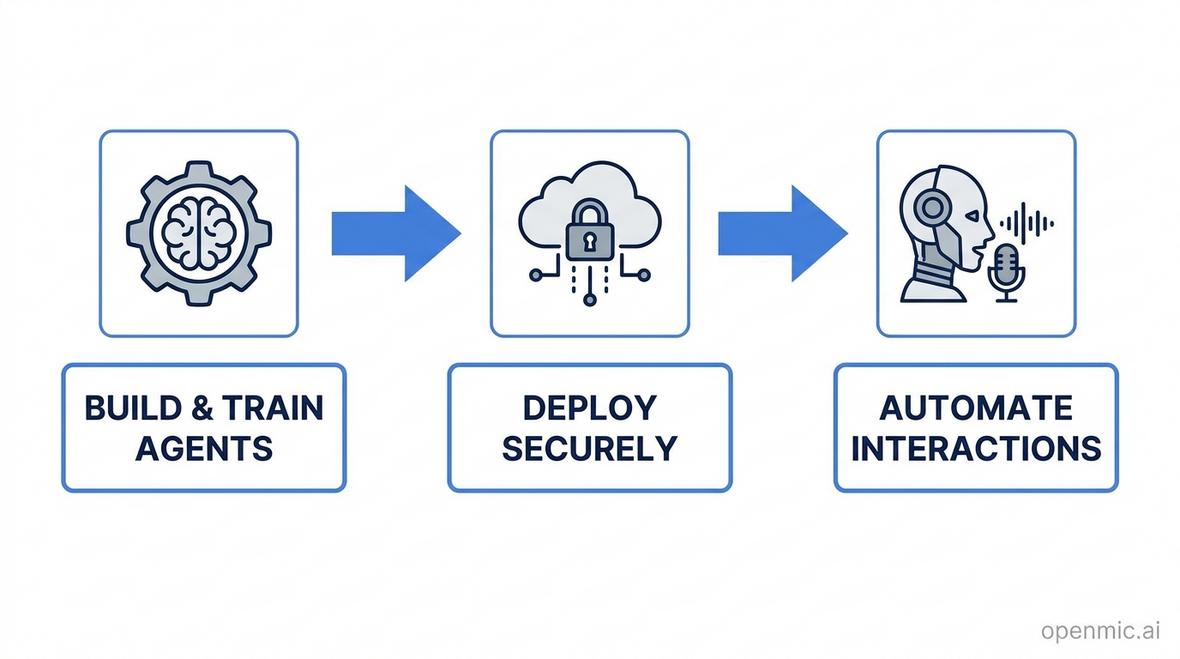
OpenMic.ai stands out among agentic AI providers for its API-first architecture, enterprise-grade security, and extensive integration ecosystem. Designed for developers and business leaders who demand flexibility and control, OpenMic.ai enables you to build, deploy, and scale intelligent voice agents across inbound and outbound use cases.
Key differentiators include:
- Low Latency: Sub-500ms response times ensure natural, human-like conversations.
- CRM Integration: Native support for HubSpot, Pipedrive, and other leading CRMs.
- White-Label Options: Agencies and SaaS providers can resell OpenMic.ai solutions under their own brand.
- Comprehensive Use Case Library: Pre-built agents for cart abandonment, voice surveys, and more.
Whether you're automating customer support, scaling outbound sales, or improving operational efficiency, OpenMic.ai provides the tools and infrastructure to succeed.
Comparing Agentic AI Providers: What Sets the Leaders Apart
The market for agentic AI providers is crowded, with platforms ranging from general-purpose automation tools to industry-specific solutions. Here's what distinguishes the top providers:
Voice Quality and Latency
Nothing frustrates customers more than robotic voices or delayed responses. Leading providers invest heavily in neural text-to-speech (TTS) models and real-time processing infrastructure to deliver natural, conversational experiences. According to industry benchmarks, acceptable latency for voice AI should be under 500ms to maintain conversational flow.
Industry Specialization
Some agentic AI providers focus on specific verticals, offering pre-trained agents and compliance features tailored to industries like healthcare, finance, or automotive. If your business operates in a regulated or specialized sector, choosing a provider with domain expertise can significantly reduce deployment time and regulatory risk.
Developer-Friendliness
For businesses with in-house development teams, API quality and documentation matter. The best agentic AI providers offer RESTful APIs, SDKs, webhooks, and comprehensive guides to accelerate integration and customization.
Frequently Asked Questions About Agentic AI Providers
What is agentic AI?
Agentic AI refers to autonomous AI systems capable of perceiving, reasoning, and acting independently to achieve specific goals. Unlike traditional automation, agentic AI can adapt to dynamic environments and make real-time decisions.
How does agentic AI differ from chatbots?
While chatbots follow scripted flows and respond to predefined inputs, agentic AI can understand context, execute multi-step workflows, and integrate with external systems to perform complex tasks autonomously.
What industries benefit most from agentic AI providers?
Industries with high call volumes and repetitive tasks such as healthcare, real estate, automotive, debt collection, and customer support see the greatest ROI from agentic AI implementations.
Is agentic AI secure for handling sensitive data?
Yes, reputable agentic AI providers implement end-to-end encryption, compliance certifications (HIPAA, GDPR, SOC 2), and role-based access controls to protect sensitive information.
How much does agentic AI cost?
Pricing varies by provider and usage model. Common structures include per-call, per-minute, or subscription-based pricing. It's essential to evaluate total cost of ownership, including integration and training expenses.
Can agentic AI replace human agents entirely?
Agentic AI is best used to augment human teams, handling routine tasks while escalating complex cases to human agents. This hybrid model maximizes efficiency and customer satisfaction.
Conclusion
The landscape of agentic AI providers is evolving rapidly, offering businesses unprecedented opportunities to automate communication, reduce costs, and scale operations. By focusing on key capabilities like natural language understanding, integration flexibility, and enterprise security, you can select a provider that aligns with your strategic goals. Platforms like OpenMic.ai exemplify the future of intelligent voice automation, delivering powerful, API-first solutions that empower developers and business leaders alike. As you evaluate options, prioritize real-world testing, transparent pricing, and long-term scalability to ensure your investment delivers measurable ROI.