
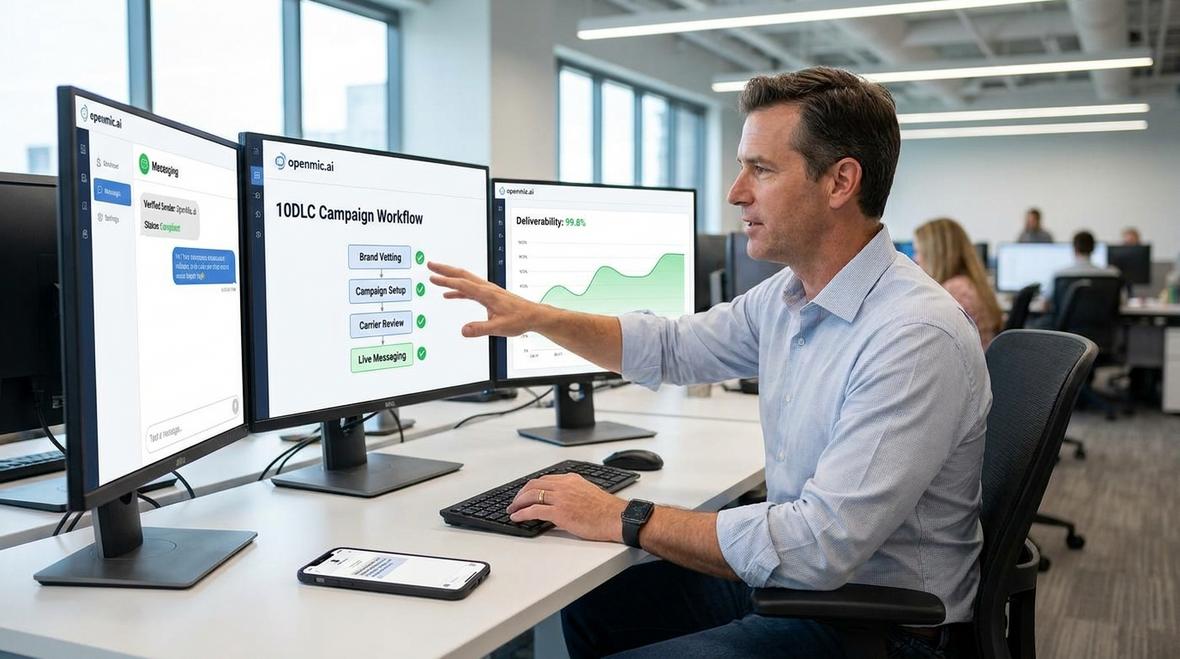
Understanding 10DLC Campaigns: What They Are and Why They Matter
A 10DLC campaign (10-Digit Long Code campaign) represents the industry-standard framework for businesses to send application-to-person (A2P) text messages via standard 10-digit phone numbers. Unlike short codes or toll-free numbers, 10DLC enables companies to maintain local, recognizable phone numbers while delivering high-volume SMS and MMS messages to customers all within a regulated, carrier-approved environment.
The rise of 10DLC campaigns stems from mobile carriers' need to combat spam, protect consumers, and ensure legitimate businesses can communicate effectively. Before 10DLC registration became mandatory in 2021, many businesses unknowingly violated Telephone Consumer Protection Act (TCPA) guidelines, risking fines and carrier filtering. Today, 10DLC campaigns provide a vetted pathway that balances regulatory compliance with operational scalability.
For tech-savvy business leaders and developers managing customer communication at scale, understanding 10DLC is no longer optional. According to Pew Research data on mobile technology and smartphone dependence, a significant share of adults are mobile-first or mobile-only, making SMS one of the most direct channels to reach customers. Whether you're automating appointment reminders, sending transactional alerts, or running marketing campaigns, a properly configured 10DLC campaign ensures your messages reach inboxes not spam folders.
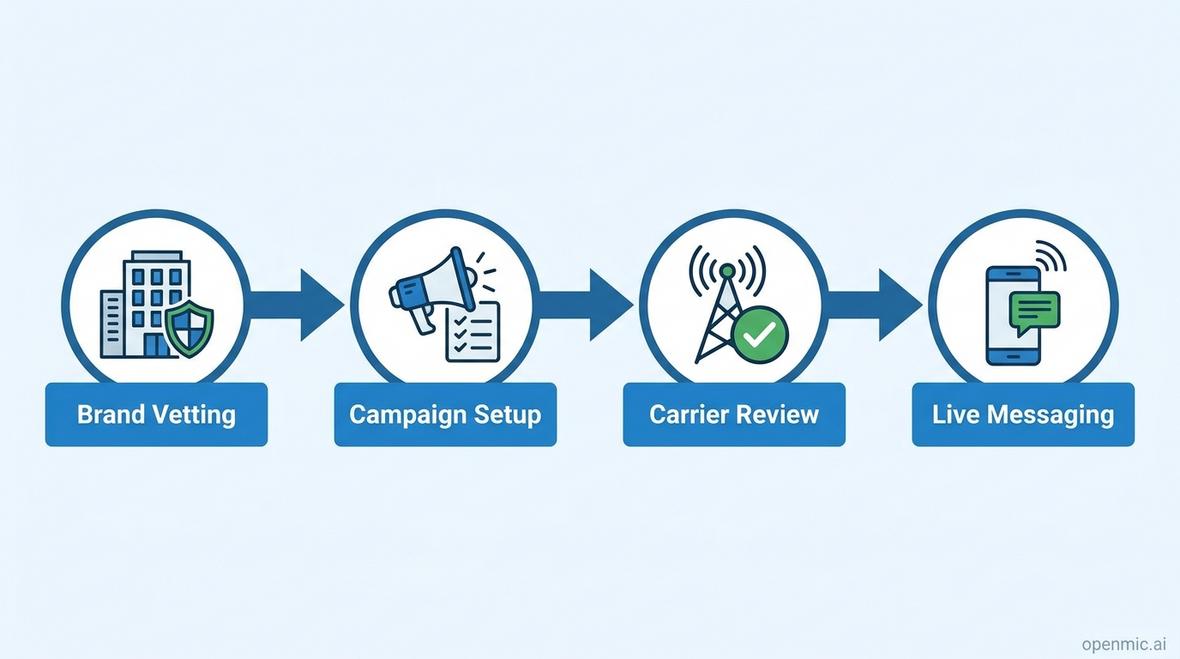
How 10DLC Campaigns Work: The Four-Step Process
Deploying a 10DLC campaign involves a sequential approval process designed to verify your business identity, review your messaging use case, and grant carrier-level authorization. Each step is critical to achieving high deliverability and avoiding message filtering.
Step 1: Brand Vetting
Before you can launch any 10DLC campaign, carriers require proof of your business's legitimacy. This involves submitting your legal business name, Employer Identification Number (EIN), address, vertical (industry), and sometimes stock ticker or website. The Campaign Registry (TCR)—the central clearinghouse for 10DLC validates this information against third-party databases. Verified brands receive a Trust Score, which directly influences throughput limits and filtering thresholds.
Step 2: Campaign Setup
Once your brand is vetted, you create individual campaigns for each messaging use case. A 10DLC campaign must specify its type (e.g., customer care, marketing, account notifications, two-factor authentication) and provide sample message content. Transparency is key: carriers scrutinize whether your messages align with the declared purpose and comply with consent requirements outlined in the FCC's 2020 TCPA Order, which describes regulatory expectations around automated text messaging volume, consent, and consumer protections.
Step 3: Carrier Review
After submission, each major U.S. carrier (AT&T, T-Mobile, Verizon, and others) independently reviews your 10DLC campaign. They assess your Trust Score, message samples, and historical sending patterns (if applicable). High-trust brands with clear, compliant use cases typically gain approval within 24–72 hours, while lower-trust or vague campaigns may face delays or rejections. This gatekeeper model ensures that only legitimate, well-documented campaigns reach subscriber networks.
Step 4: Live Messaging
Once approved, your 10DLC campaign goes live. You can begin sending SMS and MMS messages at the throughput rate assigned by carriers often 60–240 messages per minute for standard campaigns, and higher for vetted, special use cases. Ongoing compliance is mandatory: you must honor opt-outs promptly, maintain valid consent records, and avoid content that triggers spam filters. Violating these rules can result in suspension or permanent de-registration.
Why Businesses Choose 10DLC Campaigns Over Alternatives
Adopting a 10DLC campaign offers measurable advantages over legacy SMS methods, toll-free numbers, or unregistered long codes. Here's why forward-thinking organizations prioritize this framework:
- Higher Deliverability: Registered campaigns bypass carrier spam filters, ensuring messages land in the primary inbox rather than being silently dropped or flagged.
- Local Presence: 10-digit long codes maintain area codes familiar to your customers, boosting open rates and trust compared to anonymous short codes.
- Scalability: With proper vetting, you can send tens of thousands of messages per day from a single number ideal for transactional alerts, reminders, and time-sensitive notifications.
- Regulatory Compliance: A registered 10DLC campaign demonstrates adherence to TCPA consent rules and carrier policies, reducing legal exposure and audit risk.
- Cost Efficiency: Compared to dedicated short codes (which can cost thousands per month), 10DLC offers enterprise-grade throughput at a fraction of the price.
Research from Forrester's State of Customer Messaging report details engagement rates, customer satisfaction gains, and operational efficiencies from structured messaging programs, quantifying improvements in Net Promoter Score (NPS), response time, and cost per interaction when organizations implement robust customer messaging.
Common Use Cases for 10DLC Campaigns
A well-configured 10DLC campaign can power a wide range of customer engagement scenarios. Below are the most popular applications across industries:
Appointment Reminders and Confirmations
Healthcare providers, salons, automotive service centers, and professional services rely on automated SMS reminders to reduce no-shows. A 10DLC campaign tagged as 'Customer Care' or 'Notifications' can send appointment confirmations, pre-visit instructions, and follow-up surveys all while maintaining HIPAA-compliant workflows when integrated with secure platforms. For example, AI-powered appointment booking agents can trigger SMS confirmations instantly after a voice call, ensuring seamless multi-channel communication.
Transactional Alerts and Account Notifications
Banks, fintech companies, and e-commerce platforms use 10DLC campaigns to deliver order confirmations, shipping updates, password resets, and fraud alerts. These high-priority messages demand near-instant delivery and zero tolerance for filtering making carrier-approved 10DLC essential. Integrating with retail automation platforms ensures alerts trigger automatically based on customer actions, reducing manual workload.
Marketing and Promotional Campaigns
Retail brands, restaurants, and service businesses leverage 10DLC campaigns to broadcast limited-time offers, loyalty rewards, and event invitations. Because marketing messages face stricter scrutiny, your campaign must include clear opt-in language and one-click unsubscribe options. Combining SMS outreach with conversational AI for sales teams creates a powerful funnel: SMS drives initial awareness, and AI voice agents handle follow-up qualification.
Two-Factor Authentication (2FA) and Security Codes
High-volume, time-sensitive one-time passwords (OTPs) and verification codes demand the speed and reliability only a vetted 10DLC campaign can provide. Carriers prioritize these messages, often granting elevated throughput to campaigns registered under the '2FA' use case. For developers building secure applications, pairing 10DLC with API-first integration platforms ensures seamless token delivery across web, mobile, and voice channels.
Customer Support and Service Updates
Contact centers and support teams use 10DLC campaigns to send proactive service updates, outage notifications, and post-interaction surveys. When integrated with AI contact center platforms, these messages can trigger based on call outcomes, ticket status changes, or customer sentiment scores creating a truly omnichannel support experience.
10DLC Campaign Compliance: Consent, Opt-Outs, and Legal Requirements
Operating a 10DLC campaign without rigorous compliance protocols exposes your business to regulatory fines, carrier suspensions, and reputational damage. Here are the non-negotiable best practices:
Explicit Consent is Mandatory
Under TCPA rules, you must obtain prior express written consent before sending marketing or promotional texts. Transactional messages (order confirmations, account alerts) require only prior express consent but either way, consent must be clear, documented, and revocable. Never purchase contact lists or assume consent from prior business relationships. The FCC's 2020 TCPA Order clarifies how the TCPA applies to automated calls and texts, including consent requirements, revocation of consent, and enforcement authority.
Instant Opt-Out Mechanisms
Every message in your 10DLC campaign must include clear opt-out instructions typically 'Reply STOP to unsubscribe.' Upon receiving an opt-out, you must cease all messaging to that number within seconds and confirm the action. Failing to honor opt-outs is the fastest route to carrier filtering and legal liability.
Content and Frequency Guidelines
Avoid spam trigger words ('FREE!!!', 'ACT NOW'), excessive punctuation, and misleading claims. Carriers use machine learning to detect spammy patterns, and even a single flagged message can throttle your entire 10DLC campaign. Similarly, respect frequency caps: bombarding users with multiple daily texts even if they consented will degrade engagement and increase complaints.
Record Keeping and Audit Trails
Maintain comprehensive logs of consent timestamps, message content, delivery receipts, and opt-out requests. In the event of an audit or consumer complaint, these records are your primary defense. Many conversational AI platforms offer built-in compliance dashboards that automate record retention and reporting.
10DLC Campaigns vs. Short Codes and Toll-Free Numbers
Choosing the right messaging channel depends on your use case, budget, and scale. Here's how 10DLC campaigns compare to the two primary alternatives:
| Feature | 10DLC Campaign | Short Code (5–6 digits) | Toll-Free SMS |
|---|---|---|---|
| Setup Cost | Low (typically $5–$15/month per number) | High ($500–$1,000/month) | Moderate ($15–$50/month) |
| Approval Time | 1–3 days | 6–12 weeks | 1–2 days |
| Throughput | 60–240 msg/min (standard), higher for vetted | 100–1,000 msg/sec | ~3 msg/sec |
| Local Presence | Yes (area code recognition) | No (anonymous number) | No (toll-free format) |
| Best For | SMBs, transactional alerts, customer care | High-volume marketing, enterprise campaigns | Two-way customer service, support lines |
For most small-to-medium enterprises and developers building scalable communication workflows, 10DLC campaigns strike the optimal balance of cost, speed, and deliverability. Enterprises with multi-million message volumes may still justify short codes, but the majority of use cases are well-served by 10DLC.
Integrating 10DLC Campaigns with Voice AI and Omnichannel Workflows
The true power of a 10DLC campaign emerges when it's embedded within a broader omnichannel strategy. Modern businesses don't rely on SMS in isolation they orchestrate voice, text, email, and chat to create seamless customer journeys.
Consider a scenario where an AI voice agent handles an inbound call from a prospective customer. The agent qualifies the lead, schedules a callback, and immediately triggers a 10DLC campaign to send a confirmation SMS with calendar details and a link to reschedule. Post-call, the same campaign sends a follow-up survey, and based on the response, routes high-intent leads to a live sales rep.
This workflow is entirely automatable with platforms that unify voice AI and SMS APIs. For example, OpenMic.ai offers pre-built integrations with leading 10DLC providers, enabling developers to launch compliant, high-throughput messaging alongside intelligent voice agents all from a single API. By combining AI call services with 10DLC, businesses reduce missed calls, automate follow-ups, and maintain 24/7 responsiveness without the overhead of human agents.
Setting Up Your First 10DLC Campaign: A Step-by-Step Walkthrough
Ready to launch? Here's a practical guide to getting your 10DLC campaign live, from brand registration to first send:
1. Choose a 10DLC-Enabled Messaging Provider
Select a CPaaS (Communications Platform as a Service) or SMS gateway that supports The Campaign Registry (TCR). Popular options include Twilio, Bandwidth, Telnyx, and Plivo. Verify that your provider offers transparent pricing, real-time delivery reports, and robust API documentation.
2. Register Your Brand
Log into your provider's dashboard and submit your business details: legal name, EIN, industry vertical, address, and website. If you're a publicly traded company, include your stock ticker for expedited vetting. Your provider will forward this information to TCR for validation.
3. Create Your Campaign
Define your 10DLC campaign use case (e.g., 'Customer Care,' 'Marketing,' '2FA') and provide 3–5 sample messages. Be specific: vague descriptions like 'General messaging' often trigger manual review or rejection. Include opt-in/opt-out language in your samples.
4. Await Carrier Approval
Carriers typically respond within 1–3 business days. Monitor your dashboard for status updates. If rejected, review feedback carefully common issues include incomplete brand information, ambiguous use cases, or missing consent disclosures.
5. Configure Your API and Test
Once approved, obtain your campaign ID and integrate it into your application or automation platform. Send test messages to internal numbers, verify delivery speed, and confirm opt-out handling. For advanced workflows, connect your 10DLC campaign to Zapier integrations to trigger SMS from CRM events, form submissions, or voice call outcomes.
6. Monitor and Maintain Compliance
Track delivery rates, complaint ratios, and opt-out volumes. Sudden spikes in complaints or drops in deliverability signal potential compliance issues. Regularly audit your consent records and update message templates to reflect current offers and policies.
Cost Considerations and ROI of 10DLC Campaigns
Budgeting for a 10DLC campaign involves several cost layers: brand registration, campaign fees, per-message charges, and carrier surcharges. Here's a typical breakdown for U.S. businesses:
- Brand Registration: One-time fee of $4–$40, depending on your Trust Score tier.
- Campaign Registration: $10–$15 per campaign, paid monthly or quarterly.
- Per-Message Cost: $0.0075–$0.015 per SMS segment (160 characters), slightly higher for MMS.
- Carrier Pass-Through Fees: Some carriers impose additional surcharges (typically fractions of a cent per message).
For a business sending 10,000 transactional messages per month, total costs might range from $90–$175/month a fraction of the expense of dedicated short codes or live call center support. When weighed against the operational savings of automating reminders, reducing no-shows, and accelerating lead response times, the ROI is compelling. According to insights from Forrester's research, structured messaging programs yield measurable improvements in customer satisfaction and cost per interaction.
Common Pitfalls and How to Avoid Them
Even experienced teams encounter challenges when deploying 10DLC campaigns. Here are the most frequent mistakes and how to sidestep them:
Vague or Generic Use Case Descriptions
Carriers reject campaigns that lack clarity. Instead of 'Customer updates,' specify 'Appointment reminders and post-service surveys for dental patients.' Precise language accelerates approval and reduces filtering risk.
Neglecting Consent Documentation
Assuming prior business relationships imply SMS consent is a costly error. Always capture explicit, written consent via web forms, voice prompts, or in-app checkboxes and store timestamped records. Platforms offering customer service automation can automate consent capture during onboarding flows.
Using Shared or Recycled Numbers
Purchasing pre-owned long codes with unknown sending history can result in inherited spam scores. Always provision fresh numbers from your provider and register them immediately to your 10DLC campaign.
Ignoring Deliverability Metrics
Blindly sending messages without monitoring delivery receipts and complaint rates is a recipe for suspension. Set up alerts for anomalies and investigate drops in delivery rates promptly.
The Future of 10DLC Campaigns and Messaging Regulation
As spam and fraud evolve, so too will carrier policies and regulatory frameworks. Industry observers expect continued refinement of Trust Scores, expanded international adoption of 10DLC-like registration systems, and tighter integration with identity verification protocols.
For businesses, the takeaway is clear: 10DLC campaigns are not a temporary workaround they represent the long-term standard for compliant, scalable business messaging. Investing in proper setup, ongoing compliance, and intelligent automation today positions your organization to adapt as regulations tighten and customer expectations rise.
Moreover, the convergence of SMS and voice AI will accelerate. Forward-thinking platforms are already merging voice AI for healthcare, real estate, and automotive industries with 10DLC messaging to create unified, context-aware customer experiences. Imagine an AI agent that not only answers calls but also sends follow-up texts, updates CRM records, and schedules callbacks all orchestrated through a single 10DLC campaign.
Conclusion
A well-executed 10DLC campaign is the cornerstone of modern business SMS, balancing regulatory compliance, carrier trust, and customer engagement. By understanding the four-step registration process, adhering to TCPA consent rules, and integrating with intelligent automation platforms, tech-savvy leaders can unlock the full potential of text messaging at scale, with confidence. Whether you're automating appointment reminders, delivering transactional alerts, or powering marketing outreach, 10DLC provides the vetted, high-deliverability infrastructure your business needs. As mobile-first communication continues to dominate, investing in a compliant, carrier-approved 10DLC campaign isn't just smart it's essential for sustainable growth and customer satisfaction in 2026 and beyond.